The Atlas — Specialties
Food
The dishes, cheeses, and cured meats that define a region — not restaurants to book tonight, but the food worth traveling for. Each entry is an editorial profile: where it came from, what defines a good version, and what to drink with it.
80 entries

Dish · Piemonte
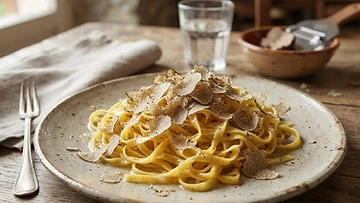
Tajarin al Tartufo
The dish that justifies the trip to Alba in October-November. Tajarin: thin, golden ribbons made with up to 40 egg yolks per kilo of flour. Tossed in butter and shaved with white truffle (tartufo bianco d'Alba), by weight, at the table. The pasta is the vehicle; the truffle is the point. Nothing else should interfere — no garlic, no cream, no tomato. When the truffle is good, this is the best pasta in Italy.

Dish · Piemonte
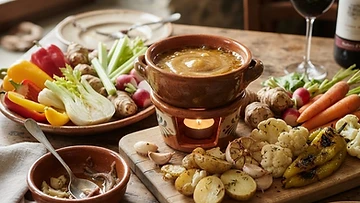
Bagna Càuda
The dish that proves Piedmont eats like no one else in Italy. A warm bath of melted butter, garlic, and salted anchovy (bagna cauda = 'hot sauce'), served in a terrine, with raw winter vegetables — cardoon, jerusalem artichoke, peppers, cabbage, carrots — to dip. Pungent, fishy, and communal — eaten slowly, with friends, with wine. Not for the faint of palate; a revelation for the bold.


Dish · Piemonte
Vitello Tonnato
The cold dish that defines a Piedmontese summer, and that the rest of Italy now eats too. Thin slices of cold braised veal, covered in a sauce of tuna, capers, anchovy, olive oil, and egg — emulsified into a creamy, savory blanket. The sauce is the work; the veal is the canvas. Invented in Turin, eaten across the north all summer. Best made a day ahead, so the flavors marry.


Dish · Piemonte
Grissini di Torino
The breadstick that the world copied, and that Piedmont still does best. Long, pencil-thin, dry, and crisp, originally invented in Turin in the 17th century for a sick duke who couldn't digest bread. Eaten at every Piedmontese meal, as a starter, with prosciutto wrapped around them. The rubatà (hand-rolled) version is thicker and rougher than the industrial one. A small thing, done right.

Dish · Piemonte
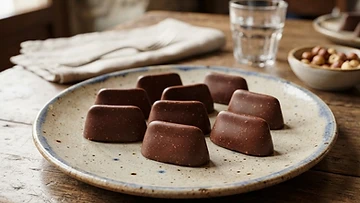
Gianduiotto
The chocolate that Nutella descends from, and is much better than. A small, boat-shaped piece of gianduja — a blend of cocoa and roasted Piedmontese hazelnuts (Tonda Gentile delle Langhe). Invented in Turin in the 1850s; the first wrapped chocolate in Italy. Eat it from a Turinese chocolatier, where it's still made with care. The nut flavor is deeper than the spread that copied it.

Dish · Sardegna
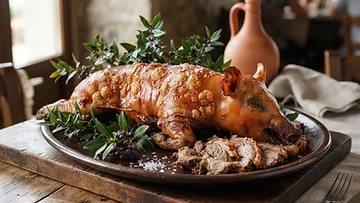
Porceddu
The dish of Sardinian festivals, shepherds, and weddings: a whole suckling pig (porceddu), spit-roasted over an aromatic-wood fire for hours, basted with myrtle and bay, until the skin is glass and the meat falls. Eaten with your hands, with carasau bread, and Cannonau red wine. It's not restaurant food — it's event food — but the best agriturismi on the island still do it right.


Dish · Sardegna
Culurgiones
The filled pasta of the Sardinian interior: small, sealed ravioli, shaped like a sheaf of wheat, filled with potato, pecorino, and a hit of fresh mint. The mint is the surprise — it makes them brighter than any mainland ravioli. Served simply, with tomato and pecorino, or just butter and sage. From Ogliastra, in the east; a protected traditional product.


Dish · Sardegna
Malloreddus
The pasta most Sardinians eat most often. Small, ridged, saffron-tinted gnocchetti (the Sardinian name for gnocchetti sardi), with a tomato and sausage ragù, finished with grated pecorino. Simple, hearty, and the dish that tells you what Sardinian home cooking tastes like — saffron, pork, pecorino, and not much fuss.

Dish · Sardegna
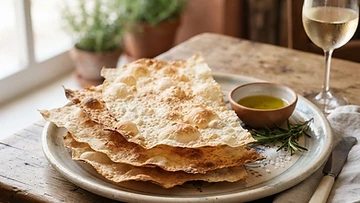
Pane Carasau
The bread of the Sardinian mountains: paper-thin, twice-baked, dry and crisp, originally made for shepherds to carry into the hills for weeks. Eaten dry as a snack, or wetted with water or tomato sauce to soften (pane frattau), or with egg and broth (battute). It keeps for months and is one of the world's great breads. The crunch is the point.

Dish · Sardegna
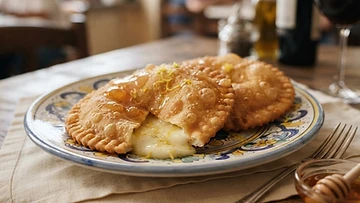
Seadas
The dessert that's not really a dessert. A disk of semolina dough filled with young, melting pecorino, fried until crisp, then drenched in bitter Sardinian honey (miele amaro, often strawberry-tree honey). The cheese is savory, the honey is bitter-sweet, the contrast is what makes it. Eaten as a sweet-savory finish, or sometimes as a mid-meal palate-killer. Nowhere else does this.

Dish · Sardegna
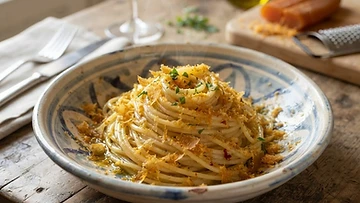
Bottarga di Cabras
The 'caviar of the Mediterranean': salt-cured, dried mullet roe, from the Cabras lagoon in western Sardinia. Hard, amber, and intensely savory-umami. Shaved thin over pasta (spaghetti alla bottarga), sliced over salad, or eaten with just olive oil and lemon. A little is a lot. The Cabras product is the benchmark; the flat grey mullet roe is the original. Buy it to take home.

Dish · Veneto
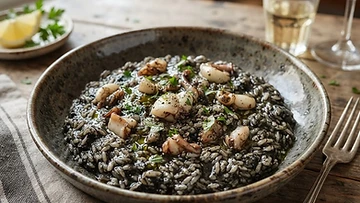
Risotto al Nero di Seppia
The dish that turns a plate black and a fork purple. Carnaroli rice, cooked with cuttlefish, white wine, and the cuttlefish's own ink, until the rice is a glossy, jet-black mass. Briny, mineral, and elegant — the ink is not a flavor, it's a texture and a color. Eaten in a Venetian bacaro or trattoria, looking at a canal. The stain on your lips is the proof you ate it.


Dish · Veneto
Sarde in Saor
The Venetian cicchetto with the longest memory. Fried sardines marinated in a sweet-sour mix of caramelized onions, white wine, vinegar, pine nuts, and raisins — a preserving technique from the days of sea voyages. Eaten at room temperature, in a bacaro, with a glass of prosecco or an ombra. Sweet, sour, fishy, and ancient — a dish from when Venice was an empire.


Dish · Veneto
Fegato alla Veneziana
The liver dish that turned liver-haters into believers. Thin slices of calf's liver, cooked quickly with a pile of softened, caramelized onions, white wine, and a splash of vinegar or polenta on the side. The onions make the liver sweet; the speed keeps it tender. One of the great Venetian classics, and the dish that proves liver can be a luxury.

Dish · Veneto
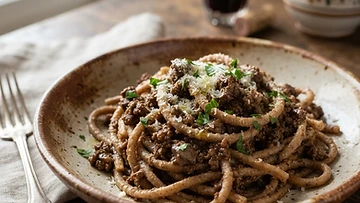
Bigoli all'Anatra
The pasta that's the opposite of refined Venetian food, and is loved for it. Bigoli: thick, long, extruded through a press, so the strand is rough and holds sauce. With a slow duck ragù — duck, onion, tomato, and herbs, simmered until the meat shreds. Heavy, gamey, and the cold-weather pasta of the Veneto mainland. Wash it down with a Valpolicella or an Amarone.

Dish · Puglia
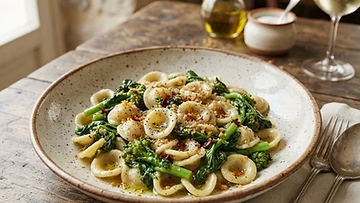
Orecchiette con le Cime di Rapa
The dish that is Puglia in a bowl. Orecchiette — hand-shaped 'little ear' pasta — with bitter turnip tops (cime di rapa), garlic, anchovy, chili, and olive oil. The bitterness of the greens, the salt of the anchovy, and the heat of the chili are the whole point. It's peasant food from Bari, made from things that grow in the garden. Eat it in Bari, or in any Puglian town, and you understand the region.

Dish · Puglia
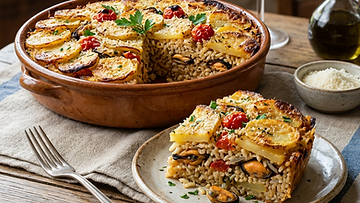
Tiella Barese
The dish that's Puglia's answer to paella: rice, sliced potatoes, and mussels, layered in a pan with onion, tomato, and olive oil, and baked until the bottom is a golden crust. From the Bari fishermen, made to carry to the boats. Eaten hot or cold, in a slice, like a cake. The mussel-and-potato combination is unlikely and works. A street and home dish, not a restaurant one — seek it in a market.


Dish · Puglia
Bombette
The great meat snack of Puglia, and the reason to find a butcher with a grill. Small rolls of thin pork, stuffed with caciocavallo or stracciatella, capocollo, and a little black pepper, grilled until the cheese melts out. Eaten hot, with bread and a Primitivo, in the back of a butcher shop in the Valle d'Itria. Puglia's answer to porchetta, and arguably better.

Dish · Puglia
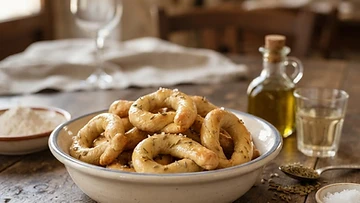
Taralli Pugliesi
The breadstick of the south, and the snack of every Puglian table. Small rings of dough, boiled like bagels, then baked until hard, with olive oil, white wine, and fennel seeds or chili. Crack them open and eat with salumi, cheese, or just a glass of wine. The plain ones are good; the fennel ones are better. A peasant food that became a national snack.

Dish · Sicilia
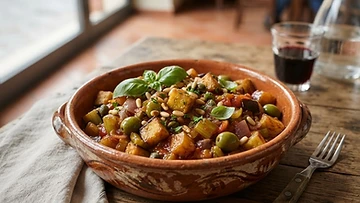
Caponata
The dish that is Sicily on a plate: agrodolce (sweet-sour) at its most complex. Fried eggplant, capers, olives, celery, onion, tomato, and vinegar and sugar, simmered into a relish. Eaten cold, as an antipasto or a side. Every Sicilian town has its version — Palermo with octopus, Catania with peppers — and all of them are the same idea: sweet, sour, savory, and unmistakably island.


Dish · Sicilia
Pasta con le Sarde
The dish that proves Sicilian pasta is Arabic in its roots. Bucatini or spaghetti with fresh sardines, wild fennel, saffron, pine nuts, raisins, and a topping of toasted breadcrumbs (instead of cheese). Sweet, salty, fishy, and aromatic — the flavor of the Arab kitchens of old Palermo. The breadcrumbs are 'the poor man's cheese'; use them. A dish no other region makes.


Dish · Sicilia
Granita
The dessert that Sicilians eat for breakfast. A semi-frozen, hand-scraped ice of fruit, coffee, or almond — coarser than gelato, finer than a slushie. Eaten with a brioche (a sweet, soft bun) for dunking, in the morning, in summer. The almond and the coffee versions are the classics. The Messina and Catania versions are the most famous; the Syracusan lemon one is the purest.


Dish · Trentino-Alto Adige
Canederli
The dumpling that feeds the Dolomites. Balls of stale bread, milk, egg, speck, and cheese, boiled in broth (in brodo) or tossed in butter, with grated cheese. The dish of Alto Adige's mountain huts — heavy, cheap, and exactly what you want after a hike. Made with what's left; meant to be eaten with what's on hand. The Tyrolean knödel, Italian.

Dish · Trentino-Alto Adige
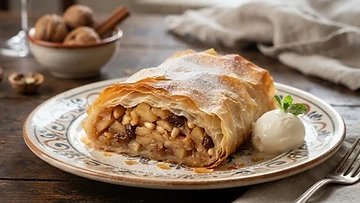
Strudel di Mele
The Austrian dessert that the Italians kept. A strudel of paper-thin, hand-stretched pastry, wrapped around apples, raisins, pine nuts, cinnamon, and breadcrumbs, baked until the pastry is glass. From Alto Adige, where the Germanic pastry tradition stayed. Eaten warm, with vanilla sauce or crema, in a South Tyrolean café. The pastry, if it's right, is so thin you can read a newspaper through it.

Dish · Friuli-Venezia Giulia
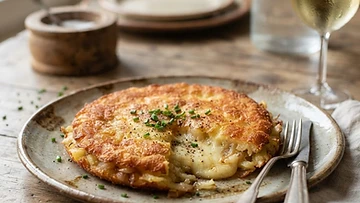
Frico
The cheese crisp that's the snack of Friuli. A pancake of grated Montasio cheese and potato (or just cheese), fried until the outside is a glass-shard crisp and the inside is still stretchy. Eaten hot, as an antipasto or a snack, with a glass of Friulano white. The crisp-only version (frico croccante) is a cheese wafer; the soft one (frico morbido) is the classic.

Dish · Friuli-Venezia Giulia
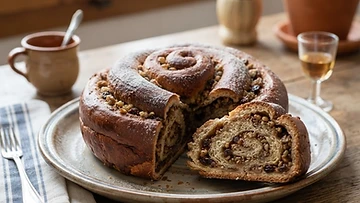
Gubana
The cake of Friulian weddings and Christmas. A round of brioche dough, rolled thin, spread with a filling of walnuts, pine nuts, raisins, citrus zest, grappa, and sugar, then rolled, coiled, and baked — so the cut slice is a spiral. Eaten warm, in slices, with a glass of sweet wine. Slavic in origin (the name is Slovenian), and unlike any other Italian dessert.

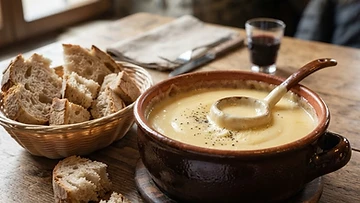
Dish · Valle d'Aosta
Fonduta Valdostana
The Italian fondue, and the dish that proves Fontina is a melting cheese. Fontina, melted slowly with milk, butter, and egg yolks, until smooth and glossy, served in a communal pot, for dipping cubes of crusty bread. Unlike the Swiss version, no wine, no kirsch — just cheese, milk, and egg. The cold-weather dish of the Valle d'Aosta, eaten in a mountain rifugio, after a day in the snow.

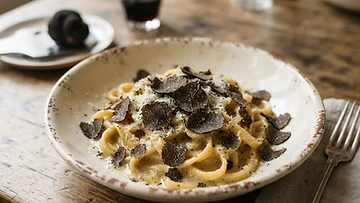
Dish · Umbria
Pasta al Tartufo
The dish that proves black truffle doesn't need white truffle's fame. Long egg pasta (tagliolini or strangozzi), butter, a generous shave of the black summer or winter truffle of Norcia, and a little Parmigiano. Nothing else. The black truffle is more subtle than the white — earthier, less perfumed — but in Umbria, where it's grown, it's the whole dish. Eat it in a Norcia trattoria, in season, with a Sagrantino.

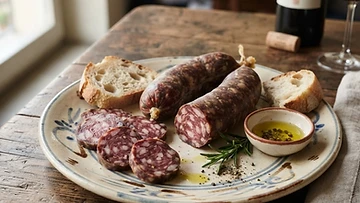
Cured Meat · Umbria
Salsiccia di Norcia
The sausage that made Norcia a word for pork. Coarsely ground pork, salt, garlic, and black pepper, in a natural casing; no fennel, no chili, no nonsense. Eaten grilled, or crumbled into pasta, or with lentils. Norcia has been the pork-butchering town of Italy since the Middle Ages — the word 'norcino' (a pork butcher) comes from it. A simple sausage, made right.

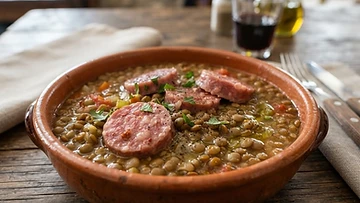
Dish · Umbria
Lenticchie di Castelluccio
The lentil that's the Italian New Year's food, at its source. Tiny, mineral, and tender, from the high plain of Castelluccio, near Norcia, grown at 1,400 meters. Cooked simply, with onion, celery, a little tomato, and often with cotechino or zampone. Eaten on New Year's for prosperity — the small lentils look like coins. The Castelluccio ones are the best in Italy; the 2016 earthquake damaged the town and the crop, but both are back.


Dish · Marche
Brodetto di Pesaro
The fish stew of the Adriatic coast, and Marche's great seafood dish. A rule-bound mix of at least 13 different fish (the number varies by port), cooked with vinegar, tomato, garlic, and pepper, in a wide, shallow pot, so the fish steams rather than boils. Eaten with bread to sop the broth. Each port has its version — Ancona, Fano, San Benedetto — and each insists its own is the only true one. Eat it on the coast, not inland.

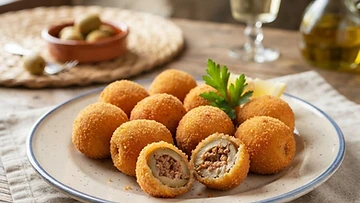
Dish · Marche
Olive Ascolane
The fried snack of Ascoli Piceno, and the best fried olive in Italy. Large, green Ascolana olives, pitted, stuffed with a mix of beef, pork, and Parmigiano, breaded, and fried. Crisp outside, olive-salty, meat-rich inside. Eaten as a fritto misto, with a glass of Verdicchio, in a bar in Ascoli. Three or four is a meal; one is impossible.

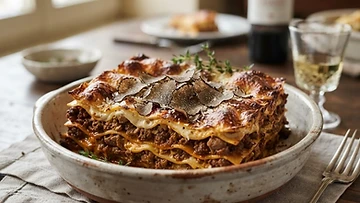
Dish · Marche
Vincisgrassi
The baked pasta of Marche, and the lasagna you've never heard of. Layers of fresh egg pasta, béchamel, and a ragù of beef, pork, and chicken giblets (livers and gizzards), sometimes with a shave of truffle, baked until golden. Richer and more old-fashioned than Bolognese lasagna; the giblets are the Marche touch. A festive, Sunday, or wedding dish, and a genuine alternative to the lasagna everyone knows.

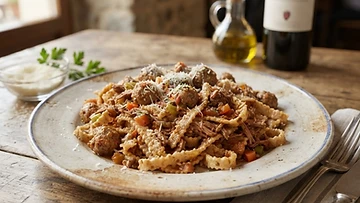
Dish · Abruzzo
Maccheroni alla Chitarra
The pasta of Abruzzo, made on a 'chitarra' — a wooden frame strung with wire, like a guitar, that cuts the rolled dough into square-stranded noodles. Served three ways: with a tomato-and-meat ragù (alla teramana), with tiny meatballs (pallottine), or with white truffles. The square strand is the texture; the chitarra is the tool. Abruzzese comfort food, made with a tool that's a small piece of craft.


Dish · Abruzzo
Arrosticini
The snack of Abruzzo's shepherds, and the easiest great meat in Italy. Small skewers of mutton (castrato) — 1 cm cubes on a wooden stick — grilled over a narrow, long, sloping brazier (la fornacella) so the fat runs down and flavors the meat. Eaten by the dozen, with bread, a glass of Montepulciano d'Abruzzo, and not much else. The cheapest great meat in Italy, and one of the best.

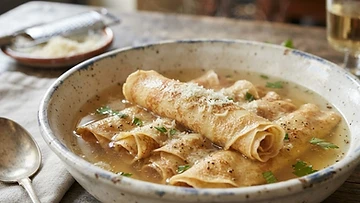
Dish · Abruzzo
Scrippelle 'n Busso
The Teramo version of 'pasta in broth' — but made of crepes. Thin crepes (scrippelle), rolled with grated cheese, dropped into a clear capon broth. The Teramo story says they were invented by a cook who forgot to put pasta in the broth and improvised with crepes. The result is silkier and more delicate than tortellini; the broth does the work. Eaten in winter, in Teramo, with a glass of Trebbiano.

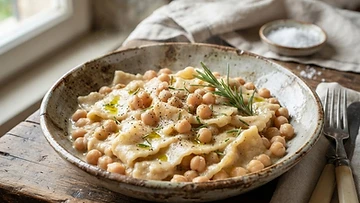
Dish · Basilicata
Lagane e Ceci
The dish that connects Basilicata to ancient Rome. Lagane — wide, flat pasta ribbons, the ancestor of lasagna — with chickpeas, garlic, rosemary, and olive oil. No tomato, no cheese, no meat; just pasta, beans, and herbs. The dish the Romans ate, before Columbus, before tomato, before Italy. A reminder that southern Italian food is older than the ingredients we think of as Italian.

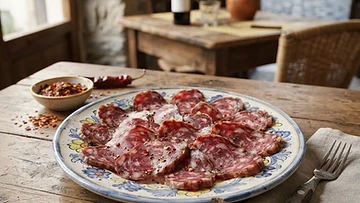
Cured Meat · Calabria
Soppressata di Calabria
The salami that proves Calabria is a chili region, not just a 'nduja one. Pork shoulder and belly, coarsely ground, cured with salt and peperoncino (Calabrian chili), pressed flat, and aged. Sweet in one version (dolce), fiery in another (piccante). Eaten with bread, or with caciocavallo, or just by the slice. The DOP version is from Decollatura and the Savuto valley. Hot, porky, and the taste of the Calabrian south.

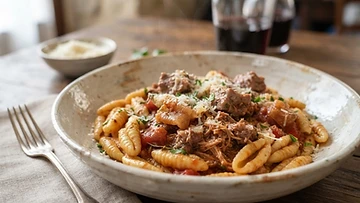
Dish · Molise
Cavatelli
The pasta of Molise, and the dish that shows how small Italy's smallest region is — in scale, not in pride. Small, thumb-indented pasta shells (cavatelli), with a thick, slow-cooked ragù of pork, beef, and tomato. Simple, hearty, and the everyday pasta of the Molise table. Molise is the region most visitors skip; cavatelli with a local ragù is the reason not to. Eat it with a glass of Molise red (Biferno or Pentro).

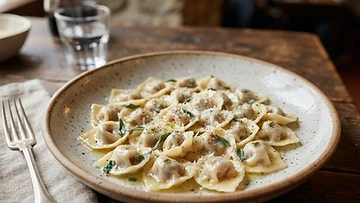
Dish · Piemonte
Agnolotti del Plin
The filled pasta that defines Piedmontese home cooking. Small squares of egg pasta, pinched shut (plin means 'pinch'), filled with a mix of roasted meats — beef, rabbit, pork, and sometimes cabbage. Served either in broth or with butter and sage, or 'al tovagliolo' (on a napkin, dry). Traditionally made with the leftovers of a Sunday roast. The skill is the pinch and the smallness.

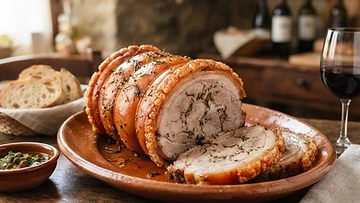
Cured Meat · Lazio
Porchetta
The great Italian street meat. A whole pig, deboned, stuffed with garlic, rosemary, fennel, and wild herbs, rolled and slow-roasted for hours until the skin is crackling and the inside is herb-scented and tender. Sliced and served in a roll, it's the food of markets and festivals across central Italy. The Lazio and Umbrian versions (Ariccia and Norcia) are the famous ones. No sandwich beats it.

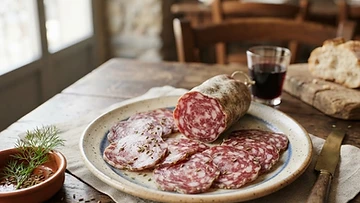
Cured Meat · Toscana
Finocchiona
The salami of Tuscany, and the one you'll eat most without knowing its name. Coarsely ground pork, cured with fennel seeds (finocchio), black pepper, and red wine. The fennel gives it a sweet, anise scent that cuts the richness. Eaten in every Florentine panino and every Tuscan antipasto. The most everyday, and one of the best, of the Tuscan cured meats.

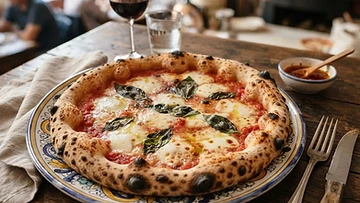
Dish · Campania
Pizza Napoletana
The most famous food in Italy, and the one that genuinely lives up to the hype. Neapolitan pizza is a DOC-regulated product with rules: a wet dough, San Marzano tomatoes from Vesuvius, fior di latte or bufala mozzarella, and an oven that cooks it in under 90 seconds. The crust is the point — soft, foldable, and slightly charred. Go to Naples, stand in line, eat it with your hands.

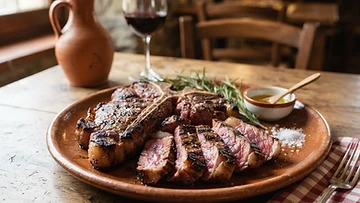
Dish · Toscana
Bistecca alla Fiorentina
The dish of Tuscany, and the one that divides people. A thick T-bone from Chianina cattle, grilled over wood embers, served rare — very rare — with only salt, olive oil, and sometimes rosemary. You order it by the kilo for a group. It's expensive, it's theatrical, and when it's good it's one of the best meat experiences in Europe. When it's bad it's an expensive chew.


Dish · Emilia-Romagna
Tagliatelle al Ragù
What the world calls 'spaghetti Bolognese' is not this. Tagliatelle al ragù is flat egg-ribbon pasta with a slow-cooked sauce of beef, pork, and pancetta, tomato, and wine, simmered for hours. No garlic, no herbs, no cream. It's rich, gentle, and entirely about the meat and the time. Bologna is Italy's food capital for a reason, and this is the reason.

Dish · Lazio
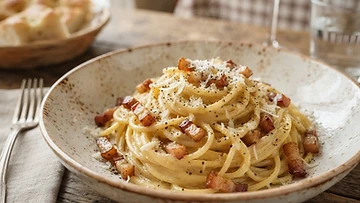
Carbonara
The Roman pasta the world gets most wrong. Real carbonara is guanciale (cured pork jowl), pecorino romano, egg yolk, and black pepper — no cream, no garlic, no bacon. The heat of the pasta cooks the egg into a glossy sauce. It's rich, sharp, and takes 10 minutes. The version with cream is a different dish; this is the one.


Dish · Lazio
Cacio e Pepe
The simplest Roman pasta and the hardest to get right. Three ingredients: tonnarelli pasta, pecorino romano, black pepper. The magic is the emulsion — the starchy pasta water melts the cheese into a sauce that clings to every strand. When it's right, it's the best three-ingredient dish in the world. When it's wrong, it's a clumpy mess.

Dish · Lazio
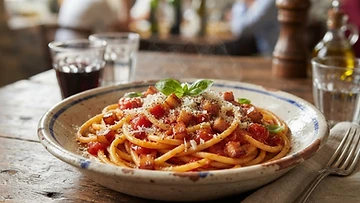
Amatriciana
The Roman pasta with an origin story: from Amatrice, a town on the Lazio-Marche border, brought to Rome. Guanciale, tomato, pecorino, chili, and a little white wine. It's the savory, tangy one — less rich than carbonara, less minimalist than cacio e pepe, and arguably the most balanced of the four. The town of Amatrice was badly damaged in the 2016 earthquake; eating the dish is a small act of memory.

Dish · Lazio
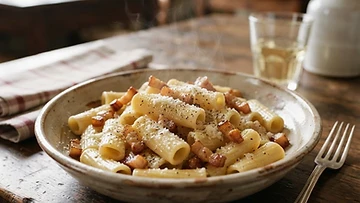
Gricia
The least known of the Roman four, and the one purists love. Guanciale and pecorino, no tomato, no egg — just pork fat and cheese emulsified with pasta water. It's carbonara without the egg, amatriciana without the tomato. The oldest of the family, and the most austere. Order it to complete the set.

Dish · Lombardia
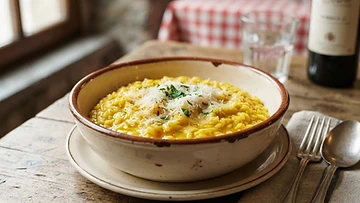
Risotto alla Milanese
Milan's signature dish, and the most golden plate in Italy. Carnaroli rice, saffron threads, beef marrow, Parmigiano, and butter, stirred to a creamy 'all'onda' (wave-like) consistency. Born in the Duomo workshops, legend says, when a saffron-stained window was the inspiration. Rich, fragrant, and the only correct side for ossobuco.

Dish · Lombardia
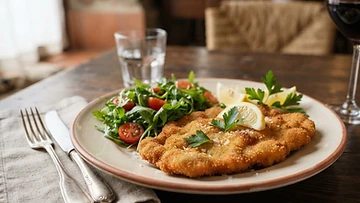
Cotoletta alla Milanese
A bone-in veal cutlet, pounded thin, dipped in egg and breadcrumbs, and fried in butter — not oil. The Milanese version includes the bone (and is thicker) than the Viennese; the dispute over who invented it is endless. Crisp, buttery, and the dish that defines Milanese meat cookery. Eat it with risotto or rocket and tomato.

Dish · Lombardia
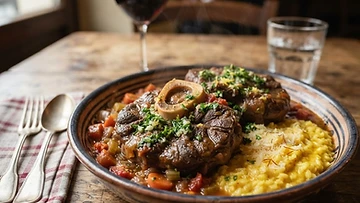
Ossobuco
Cross-cut veal shanks braised with vegetables, white wine, and broth until the meat collapses and the marrow in the bone center turns to butter. Served with a gremolata of lemon zest, garlic, and parsley to cut the richness. The correct pairing is risotto alla Milanese. It's the cold-weather dish of Milan, and a reason to go in winter.

Dish · Liguria
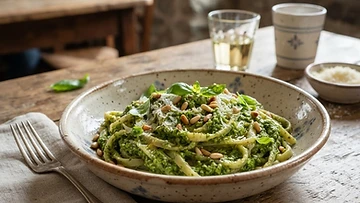
Pesto alla Genovese
The sauce that made Liguria famous. Basil from Pra (the Genoese district), pine nuts, garlic, Parmigiano, pecorino, and Ligurian olive oil, traditionally pounded in a marble mortar. Served with trofie (twisted pasta), trenette, or with potatoes and green beans. The jarred version is fine; the fresh-pounded version in Genoa is a different thing entirely.

Dish · Liguria
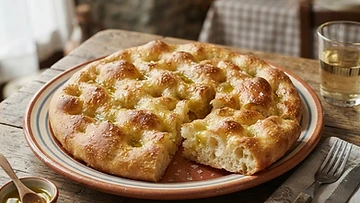
Focaccia Genovese
The bread of Genoa, eaten morning, noon, and night. A high-hydration dough, dimpled with fingers, drenched in olive oil and salt, and baked until the top is golden and the inside is custardy. Eat it plain, with cheese, or split and filled with stracchino. The Genoese eat it for breakfast with a cappuccino — don't judge.

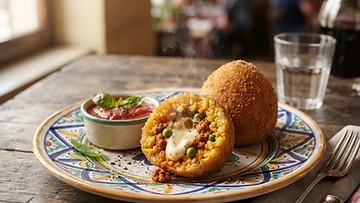
Dish · Sicilia
Arancini
Sicily's great hand food: balls of saffron risotto, stuffed with meat ragù, mozzarella, and peas, breaded and fried. In eastern Sicily they're called arancini (masculine, the size of small oranges); in the west, arancine (feminine). The Catania version has a conical shape, said to imitate Etna. Eat them hot from a fry shop, on the street, for a euro or two.

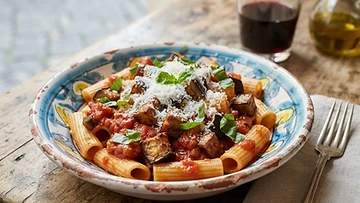
Dish · Sicilia
Pasta alla Norma
Catania's gift to pasta: short pasta with tomato sauce, fried eggplant, grated ricotta salata, and fresh basil. Named after Bellini's opera Norma by a Catania playwright who thought the dish was as perfect as the music. It's the dish that makes the case for eggplant as a main, not a side. Etna Rosso is the local pairing.


Dish · Sicilia
Cannoli
The dessert that defines Sicily: crisp, fried pastry shells filled with sweetened ricotta (traditionally sheep's milk), with candied orange or pistachios at the ends. The key is that they're filled to order — a pre-filled cannoli is a soggy cannoli. Get them from a pasticceria in Palermo or Catania, watch them fill it, eat it immediately. Not the airport version.

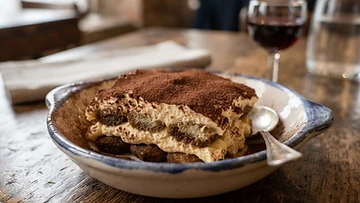
Dish · Veneto
Tiramisù
The dessert every Italian restaurant in the world serves, born in Treviso in the 1960s. Ladyfingers dipped in espresso, layered with a cream of mascarpone, egg yolks, and sugar, dusted with cocoa. Simple, rich, and better than its reputation — the bad imitations gave it a bad name. In Treviso and Venice, the original is worth re-evaluating.


Dish · Toscana
Pappardelle al Cinghiale
The pasta of the Tuscan autumn and winter. Wide, flat pappardelle with a slow-cooked ragù of wild boar (cinghiale) — tomato, red wine, rosemary, juniper, and the game itself. It's the dish that makes the case for Tuscany as a meat region, not just a wine one. Order it in a country trattoria in the Siena province, with a Brunello or a Chianti.


Dish · Toscana
Ribollita
The Tuscan peasant dish that proves poverty cookery is its own cuisine. Stale bread, cannellini beans, cavolo nero (black kale), carrots, celery, and onion, simmered and then reboiled the next day (ribollita means 'reboiled') until it's thick enough to stand a spoon in. It's the opposite of bistecca — cheap, slow, and, done right, one of the best things in Tuscan cooking.

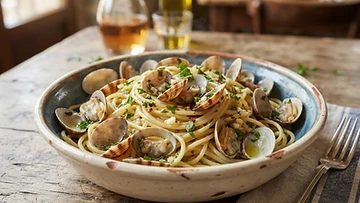
Dish · Campania
Spaghetti alle Vongole
The dish that proves Italian seafood pasta doesn't need tomato. Spaghetti with fresh vongole (clams), garlic, white wine, olive oil, parsley, and a little chili. No cream, no tomato, no complication — the clams are the sauce. The Neapolitan and Venetian versions both claim it; the Campania version, with the sweet local clams, is the benchmark. Eat it on the coast, looking at the sea.

Dish · Emilia-Romagna
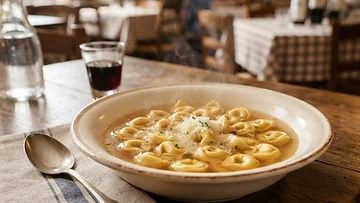
Tortellini in Brodo
The dish that separates Bologna's cooks from everyone else's. Tortellini — tiny, hand-shaped pasta rings filled with pork, prosciutto, and Parmigiano — served in a clear, golden capon broth. The broth is the work: it must be clear, not cloudy, and deep in flavor. It's the dish Bolognese grandmothers are judged by. In Bologna, in winter, it's the most comforting thing on the menu.

Cheese · Emilia-Romagna
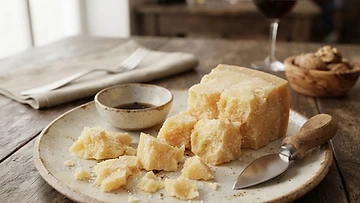
Parmigiano Reggiano
The most important cheese in Italy, and possibly in the world. Made from skimmed evening milk and whole morning milk, aged a minimum of 12 months (usually 24-36, sometimes 48+). Only from the zone between Parma and Reggio Emilia, from cows fed on local forage. Crystalline, granular, and umami-rich. The 36-month version is the everyday luxury; the 48-month is the revelation. No 'parmesan' is the same.

Cheese · Lombardia
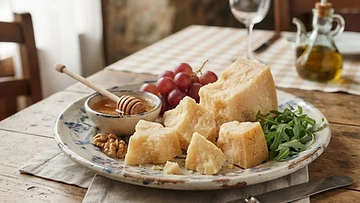
Grana Padano
Parmigiano's less famous, less expensive, slightly less complex sibling. Made similarly (skimmed milk, aged) but across a wider zone (Lombardy, Veneto, Emilia, Piedmont, Trentino) and with fewer restrictions. The 16-month version is the workhorse of Italian cooking; the 24-month is a genuinely fine cheese. If you can't get Parmigiano, Grana is the answer — and it's cheaper because the zone is bigger, not because it's bad.


Cheese · Lazio
Pecorino Romano
The cheese that makes Roman pasta work. Sheep's milk, aged 5-8 months for table use, longer for grating. Salty, sharp, and dry — it's the pecorino in cacio e pepe, carbonara, and amatriciana. Most is now made in Sardinia (the milk is the same; the zone was extended), but the Roman tradition is the reason it exists. Try it young and soft, not just grated and dry.

Cheese · Toscana
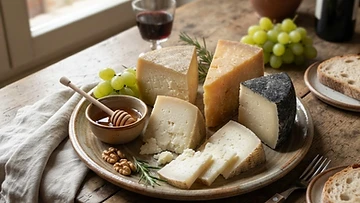
Pecorino di Pienza
The pecorino that proves Tuscany does sheep's milk as well as Lazio. From the hills around Pienza, in the Val d'Orcia, made in styles from fresh (pecorino fresco, soft and mild) to aged (stagionato, hard and nutty) to ash-rubbed (infossato, buried in walnut leaves). The aged version is a great pecorino for eating, not just grating. Buy it in Pienza and eat it with honey.


Cheese · Lombardia
Gorgonzola
The blue cheese that divides people, and that's the point. Two versions: Gorgonzola Dolce (sweet, soft, creamy, young) and Gorgonzola Piccante (sharp, crumbly, aged). Made in the zone between Milan and Novara. The Dolce is for spreading on bread or polenta; the Piccante is for eating with a spoon and a glass of Barolo. Both are better than the pre-crumbled version in the supermarket.


Cheese · Campania
Mozzarella di Bufala Campana
The mozzarella that changes minds about mozzarella. Made from water buffalo milk in a DOP zone south of Naples (Caserta, Salerno, and parts of Lazio and Molise). Softer, wetter, and more lactic than the cow's-milk version (fior di latte), with a grassy, almost tangy flavor. Eat it the day it's made, at room temperature, with nothing. The stuff on supermarket pizzas is not this.


Cheese · Puglia
Burrata
The cheese that became a restaurant trend everywhere, and is still best in Puglia. A pouch of mozzarella filled with stracciatella (shredded mozzarella and cream). Eat it the day it's made, at room temperature, with good bread and a tomato. In Puglia, it's breakfast food, not a dinner-party starter. The version that travels is never the same.


Cheese · Lombardia
Taleggio
The stinky cheese that Italy does best. A washed-rind cow's milk cheese from the Val Taleggio in the Bergamo Alps, soft and square, with a pink-orange rind and a pungent, beefy smell. The inside is gooey and mild — the smell is scarier than the taste. Eat it with polenta, or melt it over radicchio. One of the great winter cheeses.


Cheese · Valle d'Aosta
Fontina
The cheese of the Alps, from the Valle d'Aosta. Cow's milk, aged 3 months, semi-soft, with a dense, earthy flavor. The melting cheese for fonduta valdostana (the Italian fondue) and for fontina polenta. Eat it young and firm, or melted. The DOP version is only from the Valle d'Aosta; the imitations are from everywhere.

Cheese · Basilicata
Caciocavallo
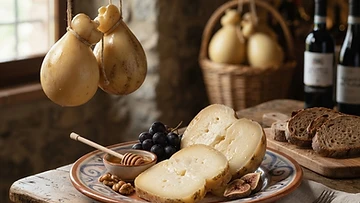
The cheese of the south, shaped like a teardrop and hung in pairs (cacio a cavallo — cheese on horseback) over a beam. Made from cow's milk, aged from soft and mild (young) to hard and sharp (stagionato). The Ragusano version from Sicilia is a DOP cousin. Eat the young version with bread, or grill the aged one. Underknown outside Italy, and worth seeking out.

Cured Meat · Emilia-Romagna
Prosciutto di Parma
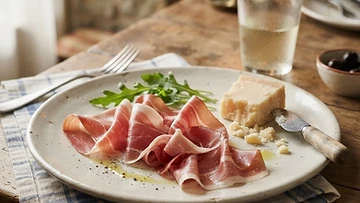
The ham that defines Italian cured meat. Pork leg, cured with only salt and air (no nitrates, no smoke), aged 12-36 months in the Parma hills, where the air from the sea and the mountains does the work. Sweet, silky, and pale. The 24-month version is the benchmark; the 36-month is deeper and more complex. Parma and San Daniele are the two great hams; Parma is the sweeter, more famous one.

Cured Meat · Friuli-Venezia Giulia
Prosciutto di San Daniele
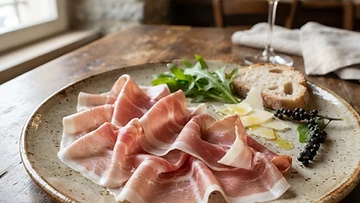
The other great Italian ham, and for many, the better one. Cured in San Daniele del Friuli, where the Alpine air meets the Adriatic humidity — a microclimate that makes a sweeter, more delicate ham than Parma. Only salt and air, aged 13 months minimum, pressed flatter than Parma. Less famous than Parma, and that's the appeal — fewer tourists, better value, and arguably more elegant.

Cured Meat · Emilia-Romagna
Culatello di Zibello
The luxury cut of Italian cured meat: the heart of the prosciutto, deboned and cured on its own, in the foggy lowlands near Zibello. Aged 12-36 months in damp cellars where the mold is part of the process. Sweeter, softer, and more expensive than whole prosciutto. If Parma ham is the everyday luxury, culatello is the special-occasion one.


Cured Meat · Emilia-Romagna
Mortadella di Bologna
The cold cut that America renamed 'bologna' and forgot. The real Mortadella di Bologna is a vast, rosy-pink emulsion of pork, studded with pistachios, gently spiced, and sliced thin enough to see through. It's delicate, not the rubbery deli loaf it became. Eat it in Bologna on a piece of focaccia, or with a tigella (a small flatbread). IGP-protected, and a point of civic pride.


Cured Meat · Trentino-Alto Adige
Speck
The ham of the Alps. Pork leg, dry-cured like prosciutto, then lightly cold-smoked over juniper, laurel, and other woods, and aged. The result is somewhere between prosciutto and smoked ham — savory, smoky, and leaner than Parma. From Alto Adige, where the Germanic and Italian food cultures meet. Eat it with dark bread, mustard, and a beer, or in a canederlo (bread dumpling).

Cured Meat · Lombardia
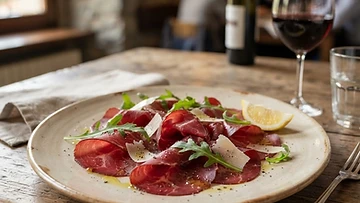
Bresaola della Valtellina
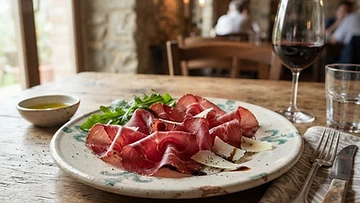
The lean cured meat, for when you can't face pork. Beef (usually from the underleg), salted and air-dried in the Valtellina valley for 2-3 months, with spices and wine. Sliced thin, ruby-red, lean, and tender. Eaten with olive oil, lemon, and black pepper, or with arugola and Parmigiano. The PGI zone is the Valtellina, in the Lombard Alps north of Lake Como.


Cured Meat · Calabria
'Nduja
The cured meat that doesn't slice — it spreads. A fermented, spreadable pork sausage from Spilinga in Calabria, laced with local peperoncino (chili) until it's brick-red and ferociously hot. Melt it onto pizza, stir it into pasta, or eat it on bread. It's the taste of Calabria in a tube — spicy, porky, and unlike anything else in Italian cured meat. A little goes a long way.


Cured Meat · Toscana
Lardo di Colonnata
The cured meat that sounds worst and is most surprising: pure pork fatback, aged in white marble basins (conche) from the Carrara quarries, layered with salt, garlic, rosemary, and spices. After 6 months, it's silky, translucent, and aromatic — sliced thin, it melts on warm bread. From Colonnata, a quarry village above Carrara. IGP-protected, and a genuine one-of-a-kind.