Cheese · Friuli-Venezia Giulia
Montasio
The Verdict
Montasio is worth knowing because of frico — the dish of melted cheese and potato that is the best thing to eat in Friuli. The aged cheese is grated or shaved; the younger one melts. Buy both and make the distinction.
Why go
Carnic Alps pastures, village dairies, and a cheese cookery that is unlike the rest of Italy.
The Field Guide take
Travelers heading to the northeastern corner of Italy will find that the culinary identity of Friuli-Venezia Giulia owes much to the slopes of the Carnic Alps. Here, the primary dairy product is Montasio, a cow’s milk cheese that stands apart from the softer varieties common in other Alpine regions. It is the backbone of the regional diet, serving as the essential ingredient in frico.
What it is
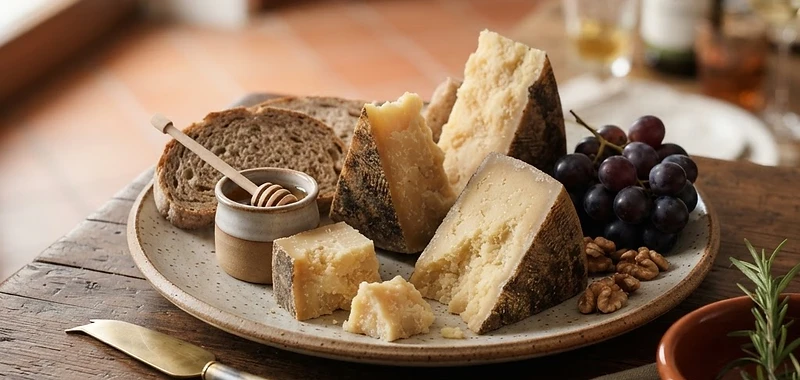
Montasio is a firm, cooked-press cheese made from cow’s milk. Its character changes drastically based on maturity. Fresco (aged two to four months) has a supple texture and mild, milky flavor, making it suitable for melting. Mezzano (five to ten months) and Stagionato (over ten months) grow progressively harder, saltier, and more concentrated in flavor. As it ages, the paste turns from straw-yellow to a deeper gold, and the texture becomes crumbly rather than pliable. It is never a spreadable cheese; even at its youngest, it holds a definitive, dense shape.
Origin and history
The history of Montasio is tied to the Moggio Udinese abbey. Monks began producing the cheese in the thirteenth century, utilizing the milk from cattle grazing in the high-altitude pastures of the Montasio massif. Over centuries, the techniques for producing this cheese moved from monastic cloisters to village dairies across the province of Udine and the broader Friuli region. It remains one of the few cheeses that links modern Friulian agriculture directly to the medieval monastic economy of the Canal del Ferro.
How it's made
The production of Montasio involves heating milk to higher temperatures than those typically used for other Alpine cheeses. This process creates a distinct, dense paste that resists breaking down during the aging process. The milk is curdled, cut, and cooked before being pressed into wheels. While the cheese is produced year-round, the version designated as prodotto della montagna is made exclusively during the summer months when herds are moved to higher-altitude pastures. This summer production is prized for a greater complexity of flavor, derived from the diversity of alpine grasses consumed by the cows.
Where to eat it
The most effective way to understand Montasio is to visit the agriturismi and trattorias located in the valleys surrounding the Julian and Carnic Alps. In these establishments, the focus is on frico. This dish involves frying thin strips of younger Montasio, sometimes combined with boiled potatoes, until it forms a crisp, golden crust. It is a savory, heavy preparation that reveals the high fat content and melting properties of the younger wheels. For the aged, granular versions, look to local markets in Udine or specialty cheese shops in towns like Tolmezzo. These outlets allow for side-by-side tastings of different aging stages, which is the most reliable way to discern the cheese’s evolution.
When and how
Montasio is available throughout the year, but the summer months offer the specific chance to source mountain-pasture wheels. In a restaurant, it is almost always served cooked. If you buy a block to take with you, treat it as a two-fold ingredient. Buy a young piece for melting into polenta or potatoes, and a shard of stagionato for grating over pasta or serving alongside fruit. It does not perform well in a standard picnic setting unless it is paired with bread and high-quality cured meats; it is a kitchen cheese, intended for heat and preparation rather than simple snacking.
What to drink with it
Because Montasio is a product of Friuli-Venezia Giulia, it pairs naturally with the wines of the region. The white wines of the Friuli Colli Orientali DOC—particularly those made from the Friulano grape—provide the necessary acidity to cut through the density and fat of the cheese. If you prefer red, choose a structured local Refosco dal Peduncolo Rosso. For the most traditional regional pairing, serve it with thin, translucent slices of Prosciutto di San Daniele, which is produced in the same province. The salt of the prosciutto and the savory, cooked quality of the Montasio represent the essential flavor profile of the region.
The Story
Where Montasio comes from
The cheese is named for the Montasio mountain above the Canal del Ferro and has been made by the monks of Moggio abbey since the thirteenth century.
The Method
How it's made
Cow's milk is cooked at a higher temperature than most Alpine cheeses, which gives a dense, hard paste. Aging from two months to a year and more; the oldest forms are used for grating.
Timing
When to eat it
Made all year, but the mountain pasture version is summer-only.
Serve With
Classic pairings
Friuli Colli Orientali DOC
wineProsciutto di San Daniele
cured meatWhat makes it worth going
A hard cow's cheese from the Carnic Alps, aged up to a year and used in Friuli's signature dish.
What's nearby & pairs with
More food from Friuli-Venezia Giulia
Dish
Frico
Crisp Montasio cheese and potato pancake — Friuli's great cheese snack, with a stretchy middle.
Dish
Gubana
A spiral loaf of sweet brioche filled with nuts, raisins, and grappa — Friuli's festive cake.
Cured Meat
Prosciutto di San Daniele
Dry-cured ham from San Daniele, sweeter and more delicate than Parma, cured in the Alpine air.
Ready to plan?
Ready to turn discovery into a trip?
Italy Field Guide helps you decide where to go. When you're ready to build the actual day-by-day itinerary, take your saved places to Travel Itinerary Co — your interests go with you.
Turn your saved Italy places into a trip