The Atlas
Destinations
Every traveler-relevant place in Italy, judged by Trip Role. Filter by tier to find major anchors, or by role to find day trips, detours, and quick stops.
67 places

Cooking Experience · Campania
Source VerifiedNeapolitan Pizza, Hands On
Worth it for the oven discipline alone, provided the class actually lets you fire your own pizza.

Food Tour · Veneto
Source VerifiedRialto Market at Dawn
The one genuinely local ritual left in central Venice, and it costs nothing but an early alarm.

Cooking Experience · Emilia-Romagna
Source VerifiedMaking Sfoglia in Bologna
The most useful cooking class in Italy: the technique is teachable in a morning and travels home.

Cooking Experience · Toscana
Source VerifiedFarmhouse Cooking in Chianti
The best version of this is small, seasonal, and in someone's own kitchen — avoid anything with a coach outside.

Food Tour · Lazio
Source VerifiedTestaccio Market Walk
The most efficient way to understand Roman food in a single morning, and there is no booking needed.

Town · Lazio
Source VerifiedAmatrice
Not a sightseeing stop. If you go, go to understand what the earthquake took and to support the recovery.

Town · Liguria
Source VerifiedRecco
Not much of a town, but the focaccia is a genuine regional institution and the bay is easy.

Town · Lombardia
Source VerifiedTirano
A railway junction with a good sanctuary and a great train. Stop for the connection, stay for the view.
City · Molise
Source VerifiedIsernia
A functional provincial city rather than a destination, but the Paleolithic site makes it a defensible stop.
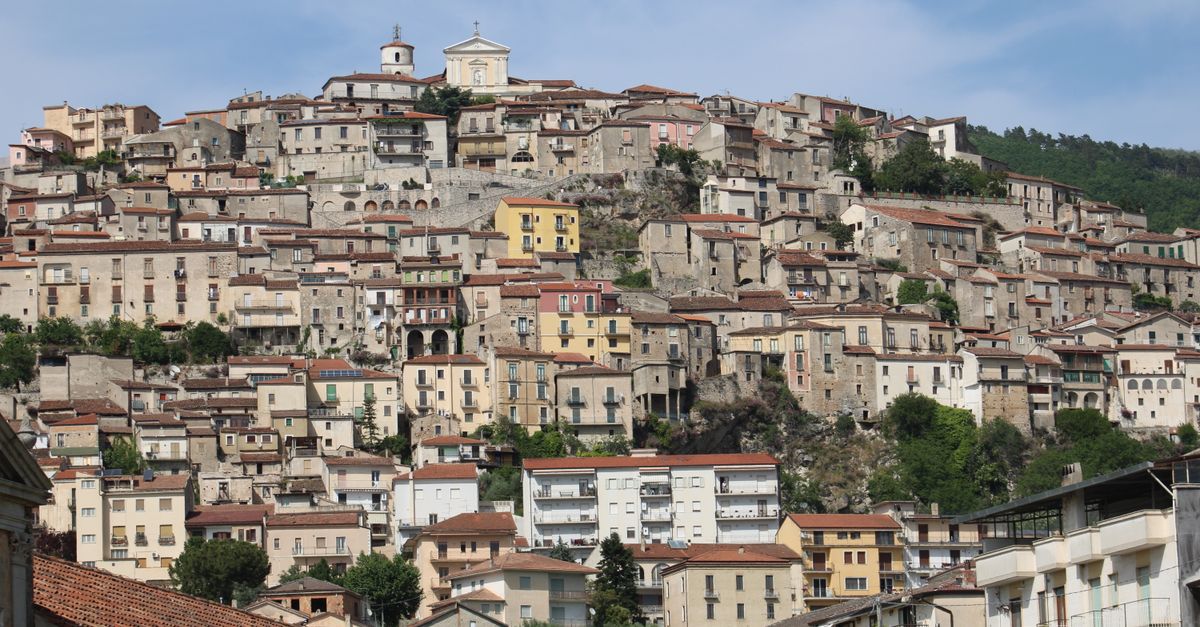
City · Calabria
Source VerifiedCrotone
The modern city is not lovely, but the castle, the museum, and the ancient history underneath justify a half day.

Town · Marche
Source VerifiedAcqualagna
Not a sightseeing town. It is a working truffle market with a couple of good seasons, and you come for that or not at all.

City · Calabria
Source VerifiedCosenza
The old town is genuinely atmospheric and half-empty after years of abandonment. Worth a couple of hours, not a trip.

City · Sardegna
Source VerifiedSassari
Sassari is a half day, and a good one, mainly for the old quarter and the food. It is the least touristy city on the island and the most unvarnished, which is either its charm or its drawback. Use it as a stop between Alghero and the north coast.

Town · Sardegna
Source VerifiedOlbia
Olbia is a logistics town and should be treated as one. Do not plan a holiday around it, but do not write it off either: the market, the seafood, and the ferry to Tavolara make a night here useful at either end of a trip. It is the correct place to sleep if you have an early flight.

Archaeological Site · Lazio
Source VerifiedPalatine Hill
Included on the Colosseum/Forum combined ticket. Walk up for the view; the palace ruins are fragmentary but the panorama is the point.

Garden · Lazio
Source VerifiedVilla Borghese Gardens
Worth a walk, not a destination. Use it to recover between museums.

Scenic Drive · Lombardia
Source VerifiedStrada della Forra
The 'road of the gorge', a cliffside road above Lake Garda — a spectacular cut into the rock, the gorge, and the view. Worth the detour for drivers; the 20-min thrill, on the way to the lake.

Lake · Trentino-Alto Adige
Source VerifiedLago di Carezza
The most photogenic of the alpine lakes — a small turquoise pool in the Dolomites, with the Latemar and the Catinaccio (Rosengarten) behind, and the Ondina (water nymph) legend. Worth a stop on any Dolomites drive.

Beach · Sicilia
Source VerifiedMondello
Palermo's beach — a sandy crescent with art-nouveau villas and the Monte Pellegrino backdrop. Worth a day if you're in Palermo in summer; skip in August when it's wall-to-wall umbrellas.

Town · Basilicata
Source VerifiedMetaponto
The Tavole Palatine — 15 standing columns of a 6th-century BC Greek temple — and the ruins of Metapontum, where Pythagoras lived and taught. Worth a stop if you're in Basilicata's Ionian coast.

Town · Calabria
Source VerifiedPizzo
The home of the Tartufo di Pizzo — the chocolate-truffle ice cream — and a castle on the cliff. Worth a stop if you're at Tropea, for the ice cream and the view.


Dish · Puglia
Source VerifiedBombette
The great meat snack of Puglia, and the reason to find a butcher with a grill. Small rolls of thin pork, stuffed with caciocavallo or stracciatella, capocollo, and a little black pepper, grilled until the cheese melts out. Eaten hot, with bread and a Primitivo, in the back of a butcher shop in the Valle d'Itria. Puglia's answer to porchetta, and arguably better.


Dish · Sicilia
Source VerifiedGranita
The dessert that Sicilians eat for breakfast. A semi-frozen, hand-scraped ice of fruit, coffee, or almond — coarser than gelato, finer than a slushie. Eaten with a brioche (a sweet, soft bun) for dunking, in the morning, in summer. The almond and the coffee versions are the classics. The Messina and Catania versions are the most famous; the Syracusan lemon one is the purest.

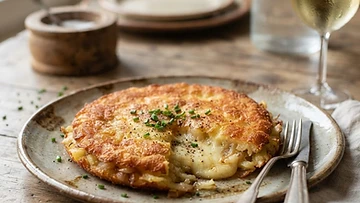
Dish · Friuli-Venezia Giulia
Source VerifiedFrico
The cheese crisp that's the snack of Friuli. A pancake of grated Montasio cheese and potato (or just cheese), fried until the outside is a glass-shard crisp and the inside is still stretchy. Eaten hot, as an antipasto or a snack, with a glass of Friulano white. The crisp-only version (frico croccante) is a cheese wafer; the soft one (frico morbido) is the classic.

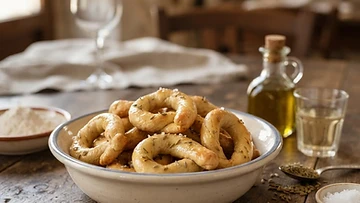
Dish · Puglia
Source VerifiedTaralli Pugliesi
The breadstick of the south, and the snack of every Puglian table. Small rings of dough, boiled like bagels, then baked until hard, with olive oil, white wine, and fennel seeds or chili. Crack them open and eat with salumi, cheese, or just a glass of wine. The plain ones are good; the fennel ones are better. A peasant food that became a national snack.

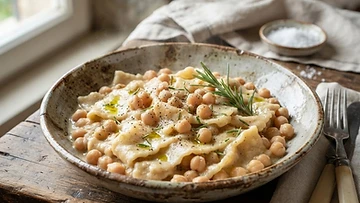
Dish · Basilicata
Source VerifiedLagane e Ceci
The dish that connects Basilicata to ancient Rome. Lagane — wide, flat pasta ribbons, the ancestor of lasagna — with chickpeas, garlic, rosemary, and olive oil. No tomato, no cheese, no meat; just pasta, beans, and herbs. The dish the Romans ate, before Columbus, before tomato, before Italy. A reminder that southern Italian food is older than the ingredients we think of as Italian.

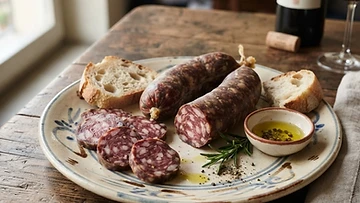
Cured Meat · Umbria
Source VerifiedSalsiccia di Norcia
The sausage that made Norcia a word for pork. Coarsely ground pork, salt, garlic, and black pepper, in a natural casing; no fennel, no chili, no nonsense. Eaten grilled, or crumbled into pasta, or with lentils. Norcia has been the pork-butchering town of Italy since the Middle Ages — the word 'norcino' (a pork butcher) comes from it. A simple sausage, made right.

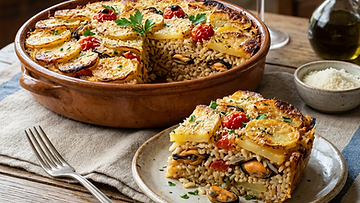
Dish · Puglia
Source VerifiedTiella Barese
The dish that's Puglia's answer to paella: rice, sliced potatoes, and mussels, layered in a pan with onion, tomato, and olive oil, and baked until the bottom is a golden crust. From the Bari fishermen, made to carry to the boats. Eaten hot or cold, in a slice, like a cake. The mussel-and-potato combination is unlikely and works. A street and home dish, not a restaurant one — seek it in a market.

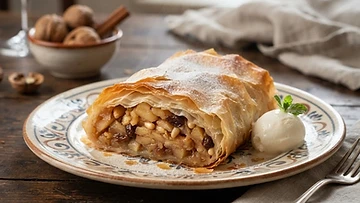
Dish · Trentino-Alto Adige
Source VerifiedStrudel di Mele
The Austrian dessert that the Italians kept. A strudel of paper-thin, hand-stretched pastry, wrapped around apples, raisins, pine nuts, cinnamon, and breadcrumbs, baked until the pastry is glass. From Alto Adige, where the Germanic pastry tradition stayed. Eaten warm, with vanilla sauce or crema, in a South Tyrolean café. The pastry, if it's right, is so thin you can read a newspaper through it.

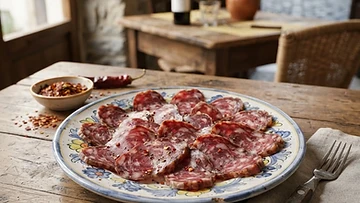
Cured Meat · Calabria
Source VerifiedSoppressata di Calabria
The salami that proves Calabria is a chili region, not just a 'nduja one. Pork shoulder and belly, coarsely ground, cured with salt and peperoncino (Calabrian chili), pressed flat, and aged. Sweet in one version (dolce), fiery in another (piccante). Eaten with bread, or with caciocavallo, or just by the slice. The DOP version is from Decollatura and the Savuto valley. Hot, porky, and the taste of the Calabrian south.

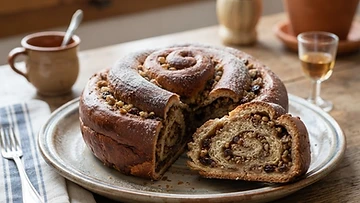
Dish · Friuli-Venezia Giulia
Source VerifiedGubana
The cake of Friulian weddings and Christmas. A round of brioche dough, rolled thin, spread with a filling of walnuts, pine nuts, raisins, citrus zest, grappa, and sugar, then rolled, coiled, and baked — so the cut slice is a spiral. Eaten warm, in slices, with a glass of sweet wine. Slavic in origin (the name is Slovenian), and unlike any other Italian dessert.

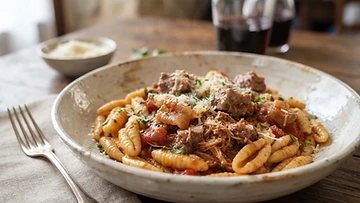
Dish · Molise
Source VerifiedCavatelli
The pasta of Molise, and the dish that shows how small Italy's smallest region is — in scale, not in pride. Small, thumb-indented pasta shells (cavatelli), with a thick, slow-cooked ragù of pork, beef, and tomato. Simple, hearty, and the everyday pasta of the Molise table. Molise is the region most visitors skip; cavatelli with a local ragù is the reason not to. Eat it with a glass of Molise red (Biferno or Pentro).

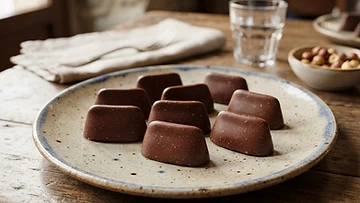
Dish · Piemonte
Source VerifiedGianduiotto
The chocolate that Nutella descends from, and is much better than. A small, boat-shaped piece of gianduja — a blend of cocoa and roasted Piedmontese hazelnuts (Tonda Gentile delle Langhe). Invented in Turin in the 1850s; the first wrapped chocolate in Italy. Eat it from a Turinese chocolatier, where it's still made with care. The nut flavor is deeper than the spread that copied it.

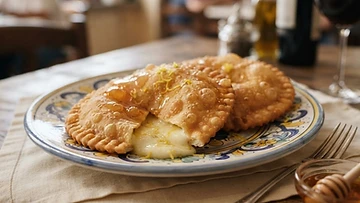
Dish · Sardegna
Source VerifiedSeadas
The dessert that's not really a dessert. A disk of semolina dough filled with young, melting pecorino, fried until crisp, then drenched in bitter Sardinian honey (miele amaro, often strawberry-tree honey). The cheese is savory, the honey is bitter-sweet, the contrast is what makes it. Eaten as a sweet-savory finish, or sometimes as a mid-meal palate-killer. Nowhere else does this.


Dish · Veneto
Source VerifiedSarde in Saor
The Venetian cicchetto with the longest memory. Fried sardines marinated in a sweet-sour mix of caramelized onions, white wine, vinegar, pine nuts, and raisins — a preserving technique from the days of sea voyages. Eaten at room temperature, in a bacaro, with a glass of prosecco or an ombra. Sweet, sour, fishy, and ancient — a dish from when Venice was an empire.


Dish · Abruzzo
Source VerifiedArrosticini
The snack of Abruzzo's shepherds, and the easiest great meat in Italy. Small skewers of mutton (castrato) — 1 cm cubes on a wooden stick — grilled over a narrow, long, sloping brazier (la fornacella) so the fat runs down and flavors the meat. Eaten by the dozen, with bread, a glass of Montepulciano d'Abruzzo, and not much else. The cheapest great meat in Italy, and one of the best.

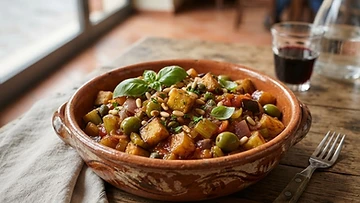
Dish · Sicilia
Source VerifiedCaponata
The dish that is Sicily on a plate: agrodolce (sweet-sour) at its most complex. Fried eggplant, capers, olives, celery, onion, tomato, and vinegar and sugar, simmered into a relish. Eaten cold, as an antipasto or a side. Every Sicilian town has its version — Palermo with octopus, Catania with peppers — and all of them are the same idea: sweet, sour, savory, and unmistakably island.

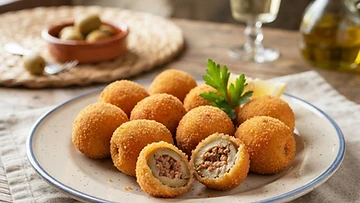
Dish · Marche
Source VerifiedOlive Ascolane
The fried snack of Ascoli Piceno, and the best fried olive in Italy. Large, green Ascolana olives, pitted, stuffed with a mix of beef, pork, and Parmigiano, breaded, and fried. Crisp outside, olive-salty, meat-rich inside. Eaten as a fritto misto, with a glass of Verdicchio, in a bar in Ascoli. Three or four is a meal; one is impossible.


Dish · Sardegna
Source VerifiedMalloreddus
The pasta most Sardinians eat most often. Small, ridged, saffron-tinted gnocchetti (the Sardinian name for gnocchetti sardi), with a tomato and sausage ragù, finished with grated pecorino. Simple, hearty, and the dish that tells you what Sardinian home cooking tastes like — saffron, pork, pecorino, and not much fuss.


Dish · Piemonte
Source VerifiedVitello Tonnato
The cold dish that defines a Piedmontese summer, and that the rest of Italy now eats too. Thin slices of cold braised veal, covered in a sauce of tuna, capers, anchovy, olive oil, and egg — emulsified into a creamy, savory blanket. The sauce is the work; the veal is the canvas. Invented in Turin, eaten across the north all summer. Best made a day ahead, so the flavors marry.


Dish · Piemonte
Source VerifiedGrissini di Torino
The breadstick that the world copied, and that Piedmont still does best. Long, pencil-thin, dry, and crisp, originally invented in Turin in the 17th century for a sick duke who couldn't digest bread. Eaten at every Piedmontese meal, as a starter, with prosciutto wrapped around them. The rubatà (hand-rolled) version is thicker and rougher than the industrial one. A small thing, done right.

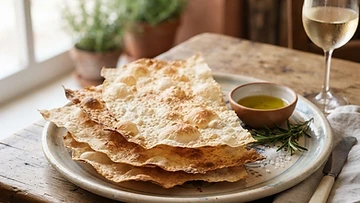
Dish · Sardegna
Source VerifiedPane Carasau
The bread of the Sardinian mountains: paper-thin, twice-baked, dry and crisp, originally made for shepherds to carry into the hills for weeks. Eaten dry as a snack, or wetted with water or tomato sauce to soften (pane frattau), or with egg and broth (battute). It keeps for months and is one of the world's great breads. The crunch is the point.

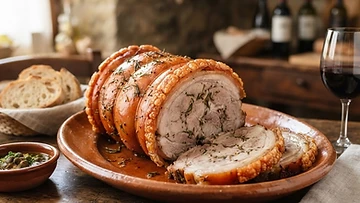
Cured Meat · Lazio
Source VerifiedPorchetta
The great Italian street meat. A whole pig, deboned, stuffed with garlic, rosemary, fennel, and wild herbs, rolled and slow-roasted for hours until the skin is crackling and the inside is herb-scented and tender. Sliced and served in a roll, it's the food of markets and festivals across central Italy. The Lazio and Umbrian versions (Ariccia and Norcia) are the famous ones. No sandwich beats it.

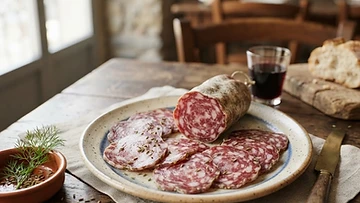
Cured Meat · Toscana
Source VerifiedFinocchiona
The salami of Tuscany, and the one you'll eat most without knowing its name. Coarsely ground pork, cured with fennel seeds (finocchio), black pepper, and red wine. The fennel gives it a sweet, anise scent that cuts the richness. Eaten in every Florentine panino and every Tuscan antipasto. The most everyday, and one of the best, of the Tuscan cured meats.


Dish · Sicilia
Source VerifiedCannoli
The dessert that defines Sicily: crisp, fried pastry shells filled with sweetened ricotta (traditionally sheep's milk), with candied orange or pistachios at the ends. The key is that they're filled to order — a pre-filled cannoli is a soggy cannoli. Get them from a pasticceria in Palermo or Catania, watch them fill it, eat it immediately. Not the airport version.

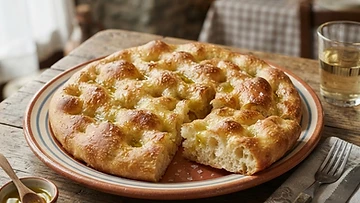
Dish · Liguria
Source VerifiedFocaccia Genovese
The bread of Genoa, eaten morning, noon, and night. A high-hydration dough, dimpled with fingers, drenched in olive oil and salt, and baked until the top is golden and the inside is custardy. Eat it plain, with cheese, or split and filled with stracchino. The Genoese eat it for breakfast with a cappuccino — don't judge.

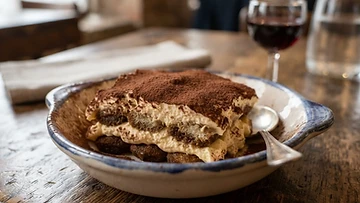
Dish · Veneto
Source VerifiedTiramisù
The dessert every Italian restaurant in the world serves, born in Treviso in the 1960s. Ladyfingers dipped in espresso, layered with a cream of mascarpone, egg yolks, and sugar, dusted with cocoa. Simple, rich, and better than its reputation — the bad imitations gave it a bad name. In Treviso and Venice, the original is worth re-evaluating.

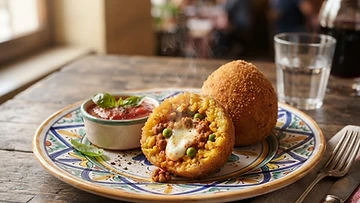
Dish · Sicilia
Source VerifiedArancini
Sicily's great hand food: balls of saffron risotto, stuffed with meat ragù, mozzarella, and peas, breaded and fried. In eastern Sicily they're called arancini (masculine, the size of small oranges); in the west, arancine (feminine). The Catania version has a conical shape, said to imitate Etna. Eat them hot from a fry shop, on the street, for a euro or two.


Dish · Lazio
Source VerifiedCacio e Pepe
The simplest Roman pasta and the hardest to get right. Three ingredients: tonnarelli pasta, pecorino romano, black pepper. The magic is the emulsion — the starchy pasta water melts the cheese into a sauce that clings to every strand. When it's right, it's the best three-ingredient dish in the world. When it's wrong, it's a clumpy mess.


Cheese · Lombardia
Source VerifiedTaleggio
The stinky cheese that Italy does best. A washed-rind cow's milk cheese from the Val Taleggio in the Bergamo Alps, soft and square, with a pink-orange rind and a pungent, beefy smell. The inside is gooey and mild — the smell is scarier than the taste. Eat it with polenta, or melt it over radicchio. One of the great winter cheeses.

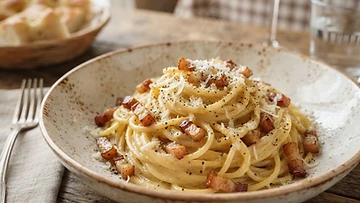
Dish · Lazio
Source VerifiedCarbonara
The Roman pasta the world gets most wrong. Real carbonara is guanciale (cured pork jowl), pecorino romano, egg yolk, and black pepper — no cream, no garlic, no bacon. The heat of the pasta cooks the egg into a glossy sauce. It's rich, sharp, and takes 10 minutes. The version with cream is a different dish; this is the one.


Cheese · Lazio
Source VerifiedPecorino Romano
The cheese that makes Roman pasta work. Sheep's milk, aged 5-8 months for table use, longer for grating. Salty, sharp, and dry — it's the pecorino in cacio e pepe, carbonara, and amatriciana. Most is now made in Sardinia (the milk is the same; the zone was extended), but the Roman tradition is the reason it exists. Try it young and soft, not just grated and dry.

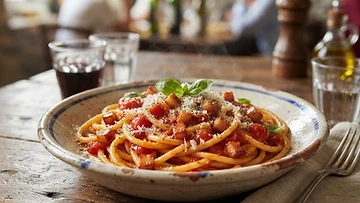
Dish · Lazio
Source VerifiedAmatriciana
The Roman pasta with an origin story: from Amatrice, a town on the Lazio-Marche border, brought to Rome. Guanciale, tomato, pecorino, chili, and a little white wine. It's the savory, tangy one — less rich than carbonara, less minimalist than cacio e pepe, and arguably the most balanced of the four. The town of Amatrice was badly damaged in the 2016 earthquake; eating the dish is a small act of memory.

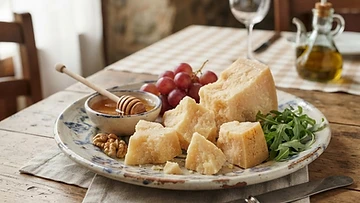
Cheese · Lombardia
Source VerifiedGrana Padano
Parmigiano's less famous, less expensive, slightly less complex sibling. Made similarly (skimmed milk, aged) but across a wider zone (Lombardy, Veneto, Emilia, Piedmont, Trentino) and with fewer restrictions. The 16-month version is the workhorse of Italian cooking; the 24-month is a genuinely fine cheese. If you can't get Parmigiano, Grana is the answer — and it's cheaper because the zone is bigger, not because it's bad.


Cheese · Lombardia
Source VerifiedGorgonzola
The blue cheese that divides people, and that's the point. Two versions: Gorgonzola Dolce (sweet, soft, creamy, young) and Gorgonzola Piccante (sharp, crumbly, aged). Made in the zone between Milan and Novara. The Dolce is for spreading on bread or polenta; the Piccante is for eating with a spoon and a glass of Barolo. Both are better than the pre-crumbled version in the supermarket.

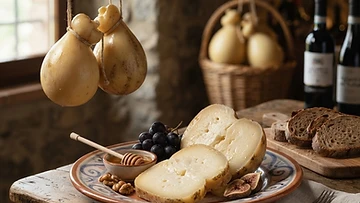
Cheese · Basilicata
Source VerifiedCaciocavallo
The cheese of the south, shaped like a teardrop and hung in pairs (cacio a cavallo — cheese on horseback) over a beam. Made from cow's milk, aged from soft and mild (young) to hard and sharp (stagionato). The Ragusano version from Sicilia is a DOP cousin. Eat the young version with bread, or grill the aged one. Underknown outside Italy, and worth seeking out.

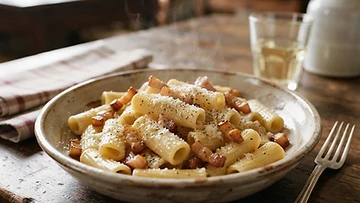
Dish · Lazio
Source VerifiedGricia
The least known of the Roman four, and the one purists love. Guanciale and pecorino, no tomato, no egg — just pork fat and cheese emulsified with pasta water. It's carbonara without the egg, amatriciana without the tomato. The oldest of the family, and the most austere. Order it to complete the set.
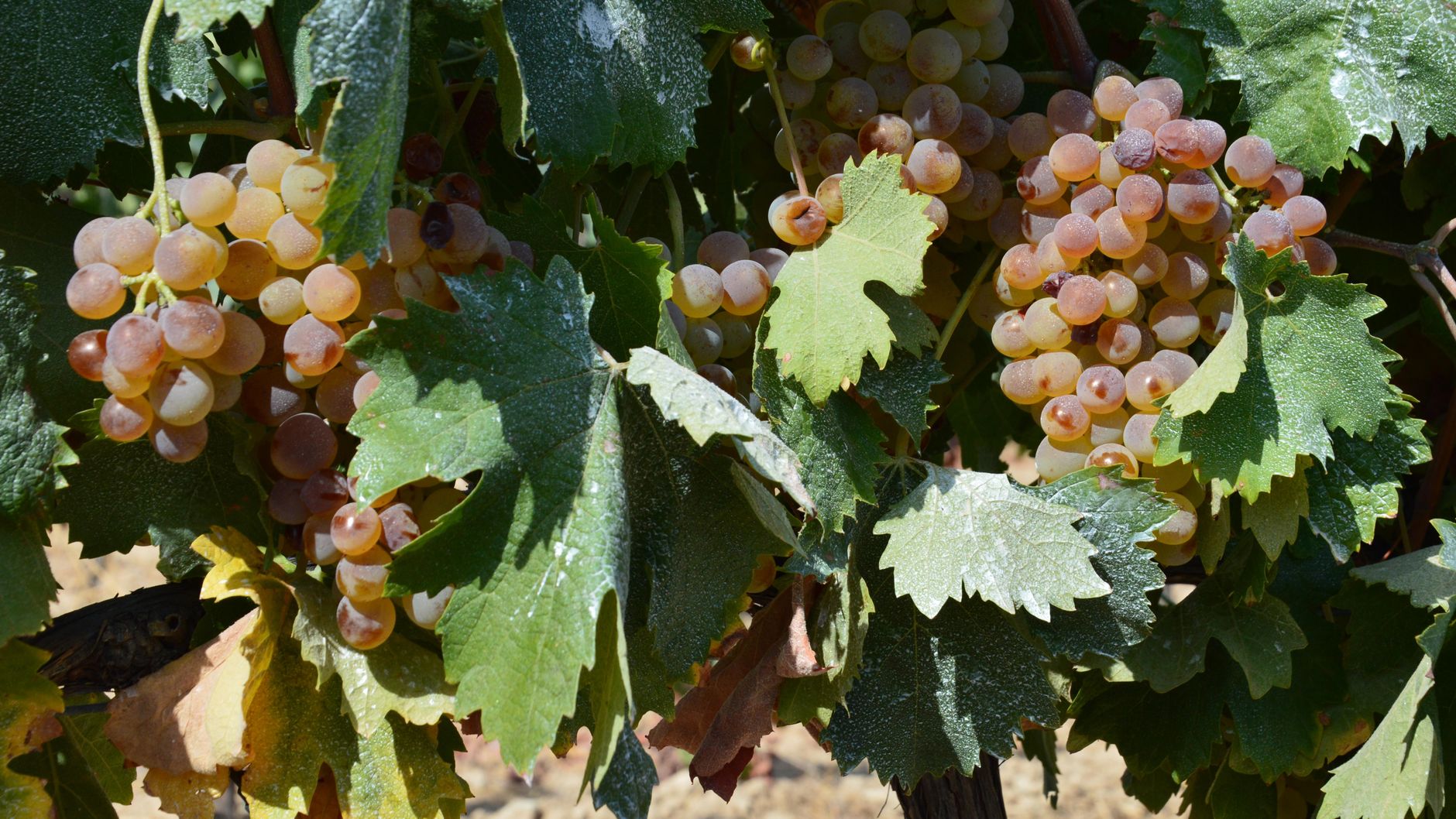
Wine Appellation · Toscana
Source VerifiedVernaccia di San Gimignano DOCG
Tuscany's only notable indigenous white, and it's been famous since the Renaissance. Crisp, slightly almond-bitter, and the perfect break from a diet of red. The towers of San Gimignano are right there.

Town · Sicilia
Source VerifiedModica
Modica is worth a half-day on the Val di Noto circuit. The town is stacked in a ravine, and the chocolate — cold-pressed, grainy, and unique — is the reason to stop. Pair with Ragusa.

Town · Sicilia
Source VerifiedRagusa
Ragusa is worth a half-day on the Val di Noto circuit. Ragusa Ibla, the lower old town, is the beautiful part — a cascade of Baroque facades down a hillside. Pair with Noto and Modica.

Town · Campania
Source VerifiedRavello
Ravello is worth a half-day from Amalfi or Positano. Villa Cimbrone's Terrace of Infinity is the view. It is quieter and cooler than the coast towns, which is why it's the retreat.

Town · Sicilia
Source VerifiedNoto
Noto is worth a half-day on the Val di Noto Baroque circuit from Syracuse. The cathedral and the streets of golden stone are the most unified Baroque town in Sicily. Go at golden hour.

Town · Lombardia
Source VerifiedSirmione
Sirmione is worth a half-day on Lake Garda's south shore. The castle and the Roman ruins (Grotte di Catullo) are the essentials. It is crowded in summer; go early.

Town · Puglia
Source VerifiedAlberobello
Alberobello is worth a half-day stop. The trulli are genuinely unique and worth seeing, but the town is touristy. Go early, walk both districts, and don't stay overnight unless you want to sleep in a trullo.

Town · Toscana
Source VerifiedPienza
Pienza is worth a half-day and a lunch. It is the smallest of the major Val d'Orcia towns and the most architecturally coherent. Buy pecorino, eat it with honey, leave happy.

City · Toscana
Source VerifiedPisa
Pisa is worth a half-day stop, usually paired with Lucca. The Piazza dei Miracoli is genuinely extraordinary; the rest of the town is pleasant but not essential. Don't build a trip around it.

Town · Toscana
Source VerifiedSan Gimignano
San Gimignano is worth a half-day. It is beautiful and very crowded — go early or late, and don't stay overnight unless you want the town empty. The towers are the point; the souvenir shops are not.