
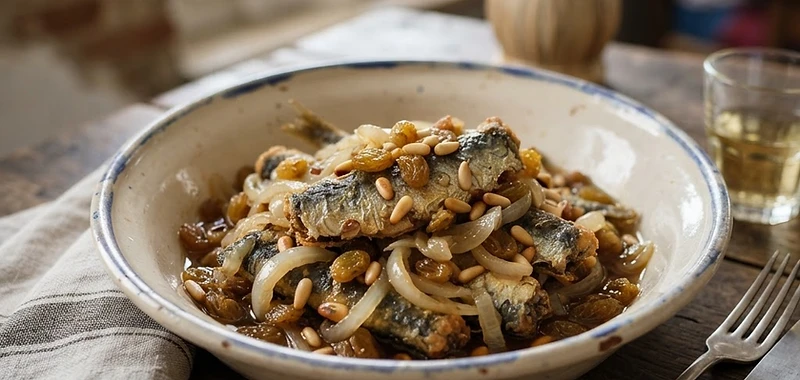
The Verdict
The Venetian cicchetto with the longest memory. Fried sardines marinated in a sweet-sour mix of caramelized onions, white wine, vinegar, pine nuts, and raisins — a preserving technique from the days of sea voyages. Eaten at room temperature, in a bacaro, with a glass of prosecco or an ombra. Sweet, sour, fishy, and ancient — a dish from when Venice was an empire.
Why go
To taste Venice's oldest street food — sweet-sour sardines, eaten with an ombra of wine.
The Field Guide take
Sarde in saor is the defining flavor of the Venetian lagoon. It is a dish that exists at the intersection of practical necessity and the historical reach of the Venetian Republic. By balancing the sharp bite of vinegar with the sweetness of onions and dried fruit, this preparation of fried sardines offers a taste of how the city once fueled its sailors and how it continues to view its relationship with the sea.
What it is
Sarde in saor consists of small, oily sardines that are fried and then submerged in a marinade of translucent, soft-cooked onions, vinegar, raisins, and pine nuts. The word saor is derived from the Venetian term for "flavor" or "taste," indicating the dish's reliance on the acidity of the vinegar to balance the richness of the fish. It is almost always served as a cicchetto—a small snack found in the city’s traditional bacari—and is served at room temperature to allow the flavors of the marinade to fully integrate into the fried flesh of the sardines.
Origin and history
The dish emerged from the logistical challenges of the Venetian maritime empire. Sailors and merchants required food that could survive weeks at sea without spoiling; the acidic marinade provided a natural preservative, while the sweetness of the raisins and pine nuts reflected the exotic ingredients flowing into the port of Venice through the spice trade. What began as a ration for long-distance travel evolved into a local staple. Today, the dish is most tightly bound to the Festa del Redentore, a major annual Venetian holiday held on the third Sunday of July. It serves as a reminder of the city’s identity as a crossroads between Mediterranean fish stocks and imported Eastern aromatics.
How it’s made
The preparation is a study in patience. Fresh sardines are cleaned, lightly dredged in flour, and deep-fried until crisp. Separately, thin slices of white onion are cooked very slowly in oil until they reach a soft, translucent consistency, avoiding any browning or caramelization that would introduce the wrong flavor profile. White wine vinegar, raisins, and pine nuts are added to the onions.
The essential phase is the resting period: the fried fish are layered in a ceramic vessel and covered with the onion mixture, where they must sit for at least 24 to 48 hours. This allows the acidity to penetrate the fish, softening its texture and marrying the sweet and sour elements. A well-made saor is neither dry nor overly sharp; the fish should remain intact, having absorbed the liquid without turning mushy.
Regional variations
While the canonical recipe from Venice strictly mandates white onions, sardines, vinegar, raisins, and pine nuts, variations exist elsewhere in the region. In the fishing port of Chioggia, cooks may substitute the sardines with mackerel or sprats depending on the morning's catch. Moving inland toward the mainland, some variations incorporate red onions from Treviso. While these reflect local agricultural strengths, purists generally view the use of anything other than white onions as a departure from the traditional Venetian standard.
Where to eat it
You will find sarde in saor in virtually every bacaro—a traditional Venetian wine bar—throughout the historic center of Venice. Because the dish requires a long resting period, it is almost never prepared à la minute. When choosing where to order it, look for establishments where the glass cases show the fish layered systematically in ceramic or glass dishes. Avoid venues where the dish appears to have been hastily assembled or where the onions look overly browned; a quality saor requires a steady hand and enough time to marinate.
When and how
Although the dish is tied to the mid-summer Festa del Redentore, it is available year-round. It is served at room temperature, which helps the flavors of the onion and vinegar bloom compared to a chilled preparation. It is customary to eat it as a midday snack or an appetizer before a meal, usually standing at the counter of a bacaro.
What to drink with it
The sharp, acidic, and slightly sweet nature of the saor demands a drink that can cut through the oil of the fried fish while complementing the marinade. The classic pairing is an ombra—a small, simple glass of local white wine—or a glass of Prosecco Superiore DOCG. The dry, crisp bubbles of the sparkling wine offer a clean finish that resets the palate between bites. If eating this as part of a larger lunch, a piece of soft, grilled polenta is the only appropriate starch to accompany the fish.
The Story
Where Sarde in Saor comes from
Sarde in saor finds its origins in the historical need of Venetian sailors and merchants to preserve fish during long voyages across the Mediterranean. The term saor derives from the Venetian word for flavor or taste, referring to the vinegar-based marinade that prevents spoilage while mellowing the potent, oily character of the sardines. It serves as a culinary relic of the Venetian Republic's maritime dominance, bridging the gap between local seafood and the exotic spices and dried fruits brought to the lagoon through the spice trade.
Over time, the dish evolved from a functional preservation method into a staple of Venetian culinary culture. It is inextricably linked to the Feast of the Redentore, a major Venetian holiday held on the third Sunday of July. While now a common fixture in the city's bacari (traditional wine bars), it remains a dish steeped in the history of the lagoon, representing the resourceful and mercantile identity of the Venetian people.
What Defines It
Signature ingredients
Fresh sardines
The backbone of the dish; their high oil content provides the necessary richness to balance the sharp acidity of the vinegar.
White onions
Sliced thin and caramelized slowly, they provide the essential sweet, jammy body of the marinade.
White wine vinegar
Provides the required acidic bite that cuts through the fat of the fried fish and preserves the structure of the onions.
Sultana raisins
Rehydrated in the vinegar and oil, they add bursts of sweetness that define the characteristic agrodolce flavor profile.
Pine nuts
Added for a subtle earthy crunch that rounds out the interplay between the sweet fruits and acidic marinade.
The Method
How it's made
The process begins by dredging cleaned sardines in flour and deep-frying them until crisp. The onions are cooked slowly in olive oil until they are soft and translucent, not browned. Vinegar and sometimes a splash of white wine are added to the onions, followed by the raisins and pine nuts. The fried fish are layered in a ceramic dish, covered with the onion mixture, and left to rest for at least 24 to 48 hours. A superior version is defined by the resting time; the fish must absorb the liquid without losing its structural integrity. A careless version often uses fish that was not fried fresh or omits the necessary marination time, resulting in a dish that is either too dry or lacks the depth of the integrated vinegar and onion reduction.
Across Italy
Regional variants
Venice
The canonical preparation; strictly relies on white onions, sardines, vinegar, raisins, and pine nuts.
Chioggia
Local variations sometimes incorporate different oily fish like mackerel or sprats depending on the daily catch.
Mainland Veneto
Variations in the hinterland may occasionally use red onions from Treviso, though this is considered a modern departure from the classic white onion base.
Timing
When to eat it
While available year-round in Venetian bacari, the dish is historically and ritually consumed in July during the Festa del Redentore. It is best enjoyed at room temperature, making it a reliable choice throughout the year, provided the sardines are fresh.
Serve With
Classic pairings
Prosecco Superiore DOCG
wineThe high acidity and fine bubbles of a dry Prosecco from Valdobbiadene cut through the oily fish and sweet raisins.
Ombra
wineA small glass of local white table wine, typically served in a bacaro, matches the simple, functional nature of the snack.
Polenta
other foodOften served with a slice of grilled white polenta to soak up the leftover vinegar and onion marinade.
What makes it worth going
Fried sardines in a sweet-sour onion and raisin marinade — Venice's original sailors' snack.
Things to do
- bacaro
Cantina Do Mori (Venice)
The oldest bacaro (cicchetti bar) in Venice, since 1462. The sarde in saor is the classic cicchetto; the sweet-sour is the test.
1 hr
- osteria
Osteria al Squero
Near the gondola yard. The sarde in saor is the benchmark; the onions, the pine nuts, the raisins.
1 hr
- experience
A cicchetti crawl in Venice
The Venetian tapas crawl: sarde in saor, baccalà mantecato, crostini, with an ombra (a glass of wine) at each. The bacari are the way.
- market
The Rialto fish market
The source of the sardines; the market is where the freshest are sold. The sarde in saor is the preserve.
Eat
- cicchetto
Sarde in saor
The classic: fried sardines, marinated in a sweet-sour sauce of onions, vinegar, pine nuts, and raisins. The agrodolce is the mark; the sardines are the base.
- cicchetto
Baccalà mantecato
The companion; the whipped salt cod. Order both, with an ombra.
- drink
An ombra (ombra de vin)
The Venetian glass of wine, the companion to the cicchetti. The name is from the shadow (ombra) of the Campanile, where the wine was once sold.
Stay
- neighborhood
Venice (Cannaregio or San Polo)
Near the bacari and the fish market. The most authentic Venice base.
- neighborhood
Rialto area
Near the fish market and the oldest bacari. The central, walkable base.
Experiences Worth Booking
Cicchetti crawl with a guide
3 hrsA guided tour of 3-4 bacari, with sarde in saor, baccalà, and ombre at each.
The bacari are hidden; a guide finds the oldest and the best, and explains the ombra.
Suits: Anyone who wants the Venetian tapas tradition.
Venetian cooking class
3 hrsSarde in saor, baccalà mantecato, risotto al nero di seppia. The Venetian classics in one class.
The saor is a marinade; a class shows you the vinegar, the onions, and the rest.
Suits: Anyone who wants the Venetian sweet-sour and the fish at home.
What's nearby & pairs with
More food from Veneto
Dish
Risotto al Nero di Seppia
Rice blackened with cuttlefish ink — Venice's most dramatic plate and the cleanest seafood risotto.
Dish
Fegato alla Veneziana
Calf's liver and onions, cooked soft and sweet — the dish that made liver famous.
Dish
Bigoli all'Anatra
Thick, rough-stranded whole-wheat pasta with duck ragù — the rustic pasta of the Veneto.
Dish
Tiramisù
Coffee-soaked ladyfingers layered with mascarpone and egg — the dessert the world adopted, born in Treviso.
Ready to plan?
Ready to turn discovery into a trip?
Italy Field Guide helps you decide where to go. When you're ready to build the actual day-by-day itinerary, take your saved places to Travel Itinerary Co — your interests go with you.
Turn your saved Italy places into a trip