Cheese · Veneto
Asiago
The Verdict
Asiago is the Alpine cheese most travelers have eaten without knowing where it came from. The aged d'Alpeggio, made on the summer pastures, is a different cheese entirely from the supermarket block and worth seeking on the Altopiano.
Why go
Summer pasture dairies on the Asiago plateau, with mountain roads and the First World War landscape around them.
The Field Guide take
Drive north from Vicenza into the Altopiano di Asiago, and the geography shifts from the flat Venetian plains to the rugged, high-altitude meadows of the Vicentine Alps. This is the home of Asiago cheese, a product defined by the altitude of its production. While mass-produced versions are available in grocery stores throughout Italy, the true version requires a trip to the mountain dairies, or malghe, where the cheesemaking process remains tied to the summer grazing cycle.
The nature of the cheese
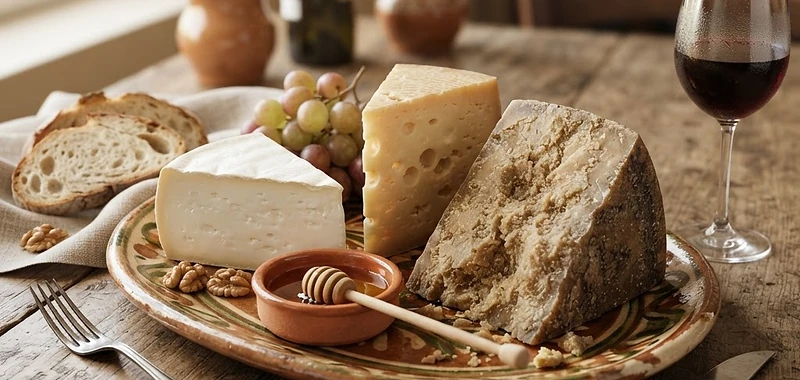
Asiago is a cow's milk cheese that exists in two distinct forms. The first is Asiago Pressato (fresh), a mild, elastic cheese produced primarily in the valley dairies. It is sweet, creamy, and intended for quick consumption. The second, and more significant variety, is Asiago d'Allevo (aged). This version is hard, granular, and savory. When aged for a year or more, it develops a sharp, concentrated piquant flavor. The d’Alpeggio designation indicates that the cheese was made exclusively on summer mountain pastures, resulting in a complex, herbaceous profile that reflects the specific grasses and wildflowers consumed by the herd.
History on the plateau
Cheesemaking on the Asiago plateau dates to the eleventh century. The region’s culinary identity was shaped by German-speaking settlers who arrived with specific techniques for curdling and pressing cow’s milk in the Alpine style. For centuries, the cheese was made exclusively from sheep’s milk, but a transition to cow’s milk occurred as agriculture evolved on the plateau. In the twentieth century, the industry diverged. Large-scale dairies in the lower valleys began producing a standardized, high-volume product, while the high-altitude malghe maintained the traditional, artisanal methods that favor seasonal milk quality over industrial yield.
The production cycle
The process begins with cow’s milk, which is curdled, heated, and then pressed into wheels. The Pressato variety is ready for sale within a few weeks of production. The d’Allevo variety, however, is the result of patience and labor. It is aged for months or years in cool, ventilated rooms, which draws out moisture and allows the flavor to deepen into a crystalline, savory state. When you purchase d’Alpeggio, you are buying cheese made only between June and September, when the cattle are moved to the highest summer pastures. These specific wheels carry a unique fingerprint of the mountain environment that cannot be replicated in a controlled, low-altitude factory.
Finding the best product
To experience the cheese in its proper context, avoid the supermarket aisles in Venice or Milan. Instead, travel to the Altopiano di Asiago in the province of Vicenza. Visit the mountain malghe during the summer months. These working dairies often serve the cheese directly on-site, accompanied by other products from the surrounding pastures. The landscape here is marked by the history of the First World War; visiting these dairies often involves traversing roads that pass through significant historical sites and military memorials. If you are not traveling into the Veneto mountains, skip the purchase. The "Asiago" sold in generic settings is rarely the mountain-made product that justifies a specific search.
Seasonal consumption
The d’Alpeggio is at its best when purchased near the source, shortly after the summer grazing season ends. While the aged d’Allevo is shelf-stable and maintains its quality during travel, the Pressato is highly perishable and should be eaten within days of purchase. Use the fresh variety for melting or simple snacks, and reserve the aged, hard varieties for shaving over polenta or eating as a standalone course.
Classic accompaniments
The sharpness of aged Asiago requires a wine with enough character to balance its intensity. A dry, crisp Soave DOC from the nearby hills provides the necessary acidity to cut through the fat of the cheese. For a traditional mountain plate, pair the cheese with Speck, the lightly smoked, dry-cured ham common to the Alpine border regions. Together, the salt of the meat and the savory, aged notes of the d’Allevo offer a clear representation of the Veneto mountain diet. Serve with plain, crusty bread to avoid distracting from the cheese itself.
The Story
Where Asiago comes from
The cheese has been made on the plateau since the eleventh century, when German-speaking settlers brought the technique. Production split between the mountain pasture version and the plains version in the twentieth century.
The Method
How it's made
Cow's milk is curdled and cooked, then pressed. Fresh Asiago is eaten within weeks; mezzano is aged for a few months; the d'Alpeggio is made only on mountain pasture and aged far longer, becoming hard and piquant.
Timing
When to eat it
Summer pasture cheese is made June to September.
Serve With
Classic pairings
Soave DOC
wineSpeck
cured meatWhat makes it worth going
The cheese of the Vicentine Alps — mild and elastic when fresh, hard and savory after a year on the plateau.
What's nearby & pairs with
More food from Veneto
Dish
Risotto al Nero di Seppia
Rice blackened with cuttlefish ink — Venice's most dramatic plate and the cleanest seafood risotto.
Dish
Sarde in Saor
Fried sardines in a sweet-sour onion and raisin marinade — Venice's original sailors' snack.
Dish
Fegato alla Veneziana
Calf's liver and onions, cooked soft and sweet — the dish that made liver famous.
Dish
Bigoli all'Anatra
Thick, rough-stranded whole-wheat pasta with duck ragù — the rustic pasta of the Veneto.
Dish
Tiramisù
Coffee-soaked ladyfingers layered with mascarpone and egg — the dessert the world adopted, born in Treviso.
Ready to plan?
Ready to turn discovery into a trip?
Italy Field Guide helps you decide where to go. When you're ready to build the actual day-by-day itinerary, take your saved places to Travel Itinerary Co — your interests go with you.
Turn your saved Italy places into a trip