The Verdict
Venice is worth at least two nights. A day trip from the mainland sells it short — Venice at dawn and after the day-trippers leave is a different city. Stay overnight or don't bother.
Why go
There is nowhere else like it. The absence of cars alone changes how you experience a city.
The Field Guide take
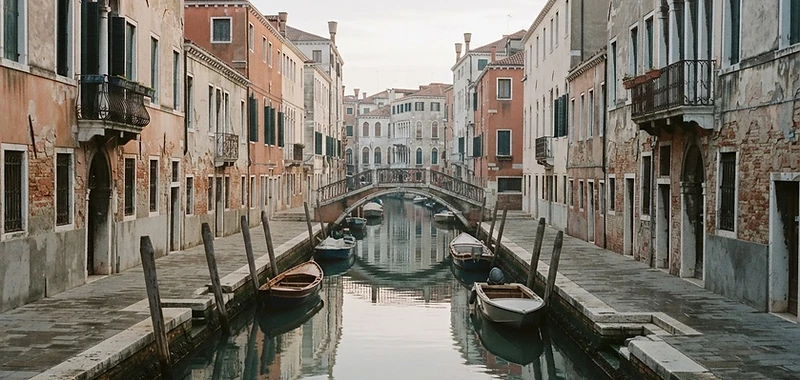
Venice is a logistical marvel, a city built on millions of timber piles driven into the mud of the Venetian Lagoon. In the Veneto region, it stands as a singular entity where the car is replaced by the boat and the street by the canal. The absence of automotive traffic is the primary reason the city retains its distinct atmosphere, but it also creates a unique set of challenges for any visitor. ## The Experience of the Canals Getting around requires either walking over hundreds of bridges or relying on the Vaporetto water bus system. The city is dense, labyrinthine, and intentionally confusing. Maps are secondary to your own sense of direction, which will inevitably fail you in the narrower alleys of the San Polo or Castello districts. This is not a city designed for efficiency; it is designed for observation. ## Why Staying Matters Many visitors try to see Venice in a single day trip, disembarking from trains to shuffle through St. Mark’s Square before returning to the mainland. This approach misses the reality of the city. Venice is worth at least two nights. The true character of the place only emerges at dawn, when the delivery boats are the only things moving on the canals, or after dusk when the cruise ship crowds have returned to their vessels. You pay a premium for the privilege, but staying inside the historical center is the only way to experience the quietude that once defined this maritime republic. ## Navigating the Sights Beyond the Basilica and the Doge’s Palace, the value of Venice lies in the architecture of the palazzi lining the Grand Canal. It is a city that has preserved its medieval and Renaissance core through strict regulations and the physical impossibility of suburban sprawl. Spend your time visiting the smaller churches that house individual paintings by Tintoretto or Veronese, rather than spending your entire budget on the most famous cafes in the tourist hubs. If you are looking for an authentic, albeit expensive, Italian experience, you must treat the city with patience.
What makes it worth going
A city built on water — no cars, no roads, just canals, bridges, and five centuries of architecture that hasn't changed.
Things to do
- Piazza
St. Mark's Square & Basilica
Go early morning before the crowds arrive. The basilica is free but timed.
2 hours
- Palace
Doge's Palace
Book ahead. The Secret Itineraries tour is worth it.
2 hours
- Experience
Grand Canal by vaporetto
Take the No. 1 or No. 2 line at dusk. Cheaper than a gondola and better views.
1 hour
- Neighborhood
Dorsoduro & Accademia
Quieter side of the Grand Canal. The Accademia gallery is excellent.
Half day
- Market
Rialto market
Morning fish market. Best early, before 10am.
1 hour
Eat
- Snack
Cicchetti
Venetian tapas at a bàcaro. Stand at the bar, order a spritz, eat with your hands.
- Dish
Sarde in saor
Sweet-and-sour sardines with onions and pine nuts. An acquired taste, but Venetian.
- Dish
Bigoli in salsa
Thick whole-wheat pasta with onion and salted fish. A Venice classic.
Stay
- Neighborhood
Dorsoduro / Accademia
Quieter, residential, good value relative to San Marco.
- Neighborhood
Cannaregio
Near the train station, authentic, less touristy than San Marco.
- Neighborhood
San Marco
Most central and most expensive. Worth it only if you want to step out into the empty piazza at dawn.
Experiences Worth Booking
Doge's Palace Secret Itineraries tour
1.5 hoursGuided access to hidden rooms and the attic prisons
Accesses areas closed to standard visitors, including Casanova's prison cell.
Suits: History-focused visitors
Burano & Murano half-day boat tour
4 hoursBoat transport, glass and lace demonstrations
Convenient if you don't want to navigate the vaporetto schedules yourself.
Suits: First-time visitors
What's nearby & pairs with
What to eat here
The regional specialties — not tonight's restaurant, the food worth understanding before you go.
Dish
Risotto al Nero di Seppia
Risotto al Nero di Seppia is deeply rooted in the fishing traditions of the Venetian lagoon. Historically, coastal communities valued every part of the catch, and ink sacs—often discarded in other culinary traditions—were utilized to add moisture and depth to rice dishes. It evolved as a humble, utilitarian meal for fishermen who used the freshest, ink-filled cuttlefish caught in the brackish waters of the Adriatic. Over time, it transitioned from a local home-cooked staple to a signature dish of Venetian trattorias, serving as an expression of the city's unique maritime environment. While its origins are debated regarding specific timelines, it is undeniably tied to the Venetian identity and the city's historical reliance on the lagoon’s biodiversity.
Dish
Sarde in Saor
Sarde in saor finds its origins in the historical need of Venetian sailors and merchants to preserve fish during long voyages across the Mediterranean. The term saor derives from the Venetian word for flavor or taste, referring to the vinegar-based marinade that prevents spoilage while mellowing the potent, oily character of the sardines. It serves as a culinary relic of the Venetian Republic's maritime dominance, bridging the gap between local seafood and the exotic spices and dried fruits brought to the lagoon through the spice trade. Over time, the dish evolved from a functional preservation method into a staple of Venetian culinary culture. It is inextricably linked to the Feast of the Redentore, a major Venetian holiday held on the third Sunday of July. While now a common fixture in the city's bacari (traditional wine bars), it remains a dish steeped in the history of the lagoon, representing the resourceful and mercantile identity of the Venetian people.
Dish
Fegato alla Veneziana
Fegato alla Veneziana is a historic staple of Venetian cuisine, rooted in the city's long-standing connection to trade and animal husbandry. The dish relies on the combination of calf's liver and white onions, a pairing that reflects the influence of the Romans, who were known to cook liver with figs to balance the organ's metallic intensity. In the Venetian context, the figs were eventually replaced by the abundant, mild-tasting onions of the region, particularly those from Chioggia or Treviso. While simple in composition, the dish was historically considered a luxury due to the cost of high-quality calf's liver. It solidified its place in the Venetian culinary canon as a domestic comfort food that demanded high-quality, fresh ingredients. It is a quintessential example of 'cucina povera' techniques applied to what was essentially a prized, nutrient-dense cut, transformed through careful temperature control and the balancing of sweet and acidic notes.
Dish
Bigoli all'Anatra
Bigoli is a signature pasta of the Veneto, traditionally made using a 'torchio bigolaro,' a hand-cranked wooden or metal press that produces thick, porous strands with a distinct, rough texture. Unlike the egg-rich, silky pasta doughs of Emilia-Romagna, bigoli dough relies on whole-wheat flour, water, and sometimes duck eggs, resulting in a firm, chewy bite that is designed to stand up to heavy, gamey sauces. The tradition of using duck in the sauce is centered in the provinces of Vicenza and Padua, where the rural tradition of keeping ducks on farms made them a staple protein for special occasions and Sunday family meals. The dish is essentially a product of the 'cucina povera' of the Venetian mainland, reflecting the ingenuity of using seasonal, farm-raised poultry and grains to create a substantial, filling meal. It is a dish born of the flat, agricultural plains of the Veneto, distinct from the fish-heavy cuisine of the Venetian lagoon.
Dish
Tiramisù
Tiramisù is a relatively modern invention, surfacing in the Veneto region in the late 20th century. It quickly became the world's most famous Italian dessert due to its comforting combination of coffee and mascarpone. It is a balanced dish, with the bitterness of the coffee checking the sweetness of the cream.
Local wine
Wine Appellation
Amarone della Valpolicella DOCG
Powerful dried-grape red from the Valpolicella hills north of Verona — Corvina, Rondinella, and Molinara, dried on racks for months before fermentation.
Wine Appellation
Prosecco di Valdobbiadene DOCG
Glera-based sparkling wine from the steep hills of Valdobbiadene, in the Veneto — the good Prosecco, not the mass-market version.
Wine Appellation
Soave DOC
Garganega-based white from the volcanic hills east of Verona — far better than its cheap reputation suggests.
Wine Region
Valpolicella
The wine hills north of Verona — home to Amarone, Ripasso, and Recioto, and the most accessible serious wine region in Italy.
Getting there & around
Train
Well-connected by rail.
Car
A car is not necessary.No cars exist in Venice. Park at Piazzale Roma or arrive by train.
We don't publish real-time schedules. Confirm train times on Trenitalia or Italo, and check current ZTL boundaries locally.
Ready to plan?
Ready to turn discovery into a trip?
Italy Field Guide helps you decide where to go. When you're ready to build the actual day-by-day itinerary, take your saved places to Travel Itinerary Co — your interests go with you.
Turn your saved Italy places into a trip