The Verdict
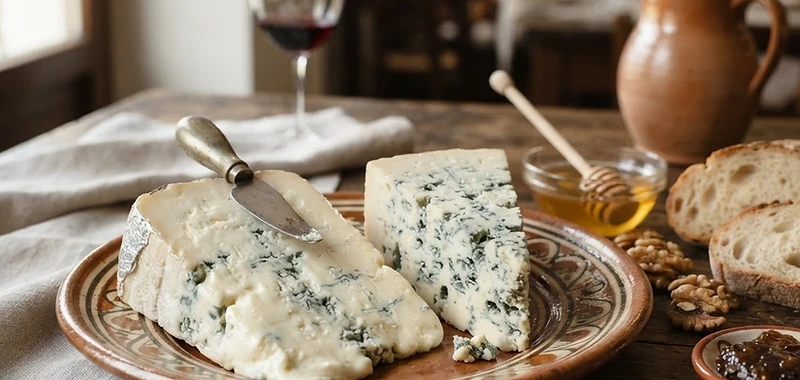
The blue cheese that divides people, and that's the point. Two versions: Gorgonzola Dolce (sweet, soft, creamy, young) and Gorgonzola Piccante (sharp, crumbly, aged). Made in the zone between Milan and Novara. The Dolce is for spreading on bread or polenta; the Piccante is for eating with a spoon and a glass of Barolo. Both are better than the pre-crumbled version in the supermarket.
Why go
To taste both Gorgonzolas — the sweet and the sharp — and learn the difference.
The Field Guide take
Gorgonzola is the defining blue cheese of Northern Italy, a product of the moist, low-lying plains that stretch between Milan and the border of Piedmont. It is a cheese of dual personality, existing in two distinct forms—dolce and piccante—that differ in texture, aging, and intensity. While mass-produced versions are available globally, the cheese takes on a different character when sourced from producers in the provinces of Milan and Novara, where the traditional methods of cooling and inoculation remain the standard.
What it is
Gorgonzola is a cow’s milk cheese characterized by the growth of Penicillium roqueforti, the mold that creates its signature blue-green veining. The dolce (sweet) variety is the younger of the two. It is high in moisture, buttery, and maintains a semi-liquid consistency at room temperature. The piccante (sharp) variety is aged longer, resulting in a firmer, crumbly paste with a pronounced, pungent aroma and a much sharper flavor profile. Both styles are protected by the European Union’s DOP (Denominazione di Origine Protetta) status, which mandates that the cheese must be produced and matured within specific areas of Lombardy and Piedmont using milk from local herds.
Origin and history
The name of the cheese comes from the town of Gorgonzola, located just east of Milan. While the exact date of its inception is unclear, it is widely regarded as one of Italy’s oldest blue cheeses. Local lore often cites a "mistake" as the catalyst: a cheesemaker, perhaps distracted, combined a fresh curd batch with the leftovers of a previous day’s curd, only to find later that the resulting mold had transformed the cheese into something complex and edible. Whether or not this is historical fact, the cheese became a staple of the agricultural economy of the Po Valley, where the damp climate and access to pasture supported a robust dairy industry.
How it’s made
Gorgonzola begins with pasteurized whole cow's milk. Producers add lactic ferments along with the Penicillium roqueforti spores to the milk. Once the curd is set and drained, the cheese is salted and pierced with metal needles. This process creates air channels within the wheel, allowing oxygen to enter and fueling the development of the mold. The dolce wheels are aged for approximately 50 to 60 days, which keeps the texture soft. The piccante wheels are aged for at least 80 days, often up to six months, which dries the curd, tightens the structure, and allows the mold to spread more aggressively, creating a deeper, spicier bite.
Where to eat it
To understand Gorgonzola, look for it in the provinces of Milan and Novara. In these regions, high-quality caseifici (dairies) sell the product directly to consumers. In Milan, visit dedicated formaggerie or gastronomie—specialized food shops—rather than supermarkets. These shops will handle the cheese with care, cutting it from the whole wheel at the moment of purchase, which prevents the edges from drying out and maintains the integrity of the texture. If dining out, look for menus that feature polenta concia, where the cheese is stirred into warm cornmeal until melted, a common preparation in the mountain-adjacent regions of Lombardy.
When and how
Gorgonzola is available year-round. When serving it at home, remove it from the refrigerator at least 30 to 60 minutes before eating. The dolce variety should be nearly spreadable; if it is cold, the texture will be waxy and the flavor muted. Use a knife for the dolce and a small spoon for the piccante. Because of its intensity, it is best served simply: on a slice of rustic, unsalted bread or alongside a slice of fresh pear, which provides a clean, acidic sweetness to counter the salt and fat of the cheese.
What to drink with it
The pairing depends entirely on the style of cheese. The dolce style requires a wine with enough body to stand up to the fat, such as a soft, fruit-forward red or a sparkling wine like Franciacorta, which cuts through the creaminess. The piccante style demands something more robust. A high-tannin red, such as a Barolo or a Gattinara, provides a necessary structural contrast to the sharp, salty mold. Alternatively, a dessert wine like a Passito di Pantelleria is a canonical choice; the high sugar content of the passito balances the assertive saltiness of the piccante, creating a savory-sweet profile that highlights the complexity of the mold.
The Story
Where Gorgonzola comes from
Gorgonzola is one of the world's oldest blue cheeses, with legends suggesting it was discovered when a cheesemaker accidentally left a curd batch out to spoil. Named after a small town in Lombardy, it has become a staple of Northern Italian cuisine. It is split into two distinct styles based on aging time and mold intensity.
What Defines It
Signature ingredients
Penicillium roqueforti
The mold cultures responsible for the blue-green veining and pungent aroma.
Whole cow's milk
Provides the rich, creamy foundation needed to balance the sharp mold.
The Method
How it's made
The curds are inoculated with mold spores and aged in caves. Dolce is aged for a shorter period, keeping it soft and spoonable, while Piccante is left longer for a firmer texture and stronger, deeper flavor.
Timing
When to eat it
Year-round.
Serve With
Classic pairings
Passito di Pantelleria
wineA sweet, golden dessert wine that cuts right through the funk of the blue mold.
Pear
foodThe classic pairing; the grainy, sweet texture of the fruit softens the cheese's punch.
What makes it worth going
Italy's great blue cheese — cow's milk, veined with Penicillium, in two styles: sweet (dolce) and sharp (piccante).
Things to do
- producer
A gorgonzola producer in the Po valley (e.g. Novara or the town of Gorgonzola)
The home of gorgonzola, in the Po valley. The blue is the mold (penicillium); the age is the taste. Visit a producer; book ahead.
1.5 hrs
- latteria
A Milan latteria or enoteca
In the city, for gorgonzola without the drive. The gorgonzola dolce and the piccante are the two; taste both.
1 hr
- trattoria
A Lombard restaurant for gorgonzola risotto or pasta
The gorgonzola is the sauce for the risotto or the gnocchi; the Lombard table is the context.
2 hrs
- experience
A cheese-tasting with polenta
The alpine-Lombard pairing: gorgonzola, polenta, and a red wine. The cheese and the corn are the table.
Eat
- cheese
Gorgonzola dolce
The sweet, creamy version; the blue is soft, the paste is spreadable. The younger gorgonzola; the dessert cheese.
- cheese
Gorgonzola piccante
The sharp, aged version; the blue is stronger, the paste is crumbly. The older gorgonzola; the table cheese.
- pairing
With polenta or pears
The two classic pairings; the polenta is the savory, the pears are the sweet. Both work.
Stay
- neighborhood
Milan center
The urban base, with good latterias and restaurants. Walkable.
- town
Novara or the town of Gorgonzola
At the source, in the Po valley. A car is required.
Experiences Worth Booking
Gorgonzola producer visit and tasting
2 hrsThe blue mold, the aging caves, the dolce and piccante tasting. The penicillium is the context.
The gorgonzola is a blue; a producer visit shows you the mold, the age, and the two styles.
Suits: Cheese lovers who want the blue at its source.
Lombard cheese day
full dayA gorgonzola producer, a Grana Padano cellar, a Taleggio tasting. The full Lombard cheese arc.
The three Lombard cheeses are the table; a day covers all three at their source.
Suits: Cheese travelers with a day for Lombardy.
What's nearby & pairs with
More food from Lombardia
Dish
Risotto alla Milanese
Saffron risotto from Milan — the dish that made saffron the flavor of northern Italian rice.
Dish
Cotoletta alla Milanese
Breaded veal cutlet, fried in butter — Milan's answer to the Wiener Schnitzel, or its predecessor.
Dish
Ossobuco
Braised veal shanks with the marrow bone — slow-cooked until the meat falls, served with gremolata.
Cheese
Grana Padano
The other great hard Italian cheese — aged cow's milk, from a broader zone across the Po Valley.
Cheese
Taleggio
Washed-rind cow's milk cheese from the Val Taleggio — soft, pungent, and one of Italy's best table cheeses.
Cured Meat
Bresaola della Valtellina
Air-dried, salt-cured beef from the Valtellina valley — lean, ruby-red, and Italy's answer to bresaola.
Ready to plan?
Ready to turn discovery into a trip?
Italy Field Guide helps you decide where to go. When you're ready to build the actual day-by-day itinerary, take your saved places to Travel Itinerary Co — your interests go with you.
Turn your saved Italy places into a trip