
The Verdict
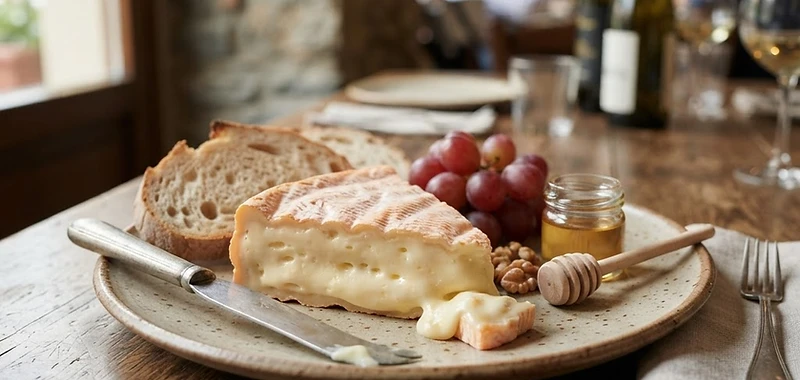
The stinky cheese that Italy does best. A washed-rind cow's milk cheese from the Val Taleggio in the Bergamo Alps, soft and square, with a pink-orange rind and a pungent, beefy smell. The inside is gooey and mild — the smell is scarier than the taste. Eat it with polenta, or melt it over radicchio. One of the great winter cheeses.
Why go
To taste Italy's best stinky cheese — pungent outside, gentle inside.
The Field Guide take
Taleggio is a foundational cheese of northern Italy, defined by the contrast between its aggressive, savory aroma and its approachable, mild interior. It is a square, washed-rind cow’s milk cheese originating from the Val Taleggio, a narrow valley in the Bergamo Alps of Lombardia. For those traveling through the Italian north, it serves as a primary example of how geography and traditional handling techniques create a product that remains distinct from the fresher, lighter cheeses found further south.
What it is
Taleggio is a soft-ripened, washed-rind cheese. Visually, it is recognized by its square shape and its thin, wrinkled rind, which ranges in color from light ochre to a dusty, sunset orange. This color is not a result of additives, but the byproduct of regular washing with brine, which encourages the growth of specific bacteria on the surface. When sliced, the paste is pale, straw-colored, and dense, becoming increasingly gooey and runny as it approaches room temperature. Its smell is robust and earthy—often described as beefy or swampy—but the flavor on the palate is surprisingly delicate, reminiscent of butter, toasted nuts, and faint citrus.
Origin and history
The history of Taleggio traces back to the Roman period, though it gained its modern identity as a product of the Bergamo Alps. Historically, it was a seasonal cheese made in the autumn, produced only after the dairy herds had descended from the high-altitude alpine pastures to the lower valley floors. This timing was dictated by necessity; the cool, humid climate of the Val Taleggio and the local caves provided the ideal environment for the cheese to age properly during the winter months. While it is now produced year-round in larger, controlled facilities, the cheese retains its character as a cool-weather staple.
How it’s made
The production of Taleggio relies on whole cow’s milk. After the curd is formed, drained, and placed into square molds, the cheese begins its maturation in controlled rooms or natural caves. The defining stage of its development is the washing of the rind. Cheesemakers periodically wipe the exterior with a saltwater brine. This process prevents the rind from hardening too quickly and fosters the development of the microflora that give the cheese its signature pungent aroma. This labor-intensive technique ensures that the interior remains soft and supple while the rind develops a slightly tacky, pungent surface.
Where to eat it
The most authentic way to experience Taleggio is in its home region of Lombardia, specifically throughout the province of Bergamo. You will find it in local markets, specialized alimentari (delicatessen shops), and on the menus of mountain trattorie. In the Val Taleggio itself, the cheese is often served at the end of a meal or as a central component of a tagliere (cheese board). Because it is a PDO (Protected Designation of Origin) product, the label "Taleggio" guarantees that the cheese adheres to strict regional production standards. If you are dining in Bergamo, ask for it as part of a polenta taragna—a traditional Lombard dish of polenta mixed with buckwheat flour and local cheeses, where the Taleggio adds a necessary saltiness and creaminess.
When and how
While available in Italian supermarkets throughout the year, Taleggio is at its peak in the fall and winter months, aligning with its historical production cycle. To eat it correctly, remove it from the refrigerator at least 30 to 60 minutes before serving. If the cheese is served too cold, the complex fats in the paste will remain waxy and muted. Once it has reached room temperature, the cheese should yield easily to a knife. You should eat the rind; it is the source of the cheese's character. If the aroma is too intense for your preference, pair it with mostarda—a spicy, fruit-based condiment common in Lombardy that provides a sharp, sweet contrast to the pungent funk of the rind.
What to drink with it
Because Taleggio is rich and salty with a creamy texture, it requires a wine that can cut through the fat without being overwhelmed by the rind's strength. A dry, aromatic white wine like a Gewürztraminer from the nearby Alto Adige region is a classic choice, as its floral and spiced notes mirror the earthy profile of the cheese. If you prefer red wine, reach for a lighter, high-acid bottle like a Pinot Nero (Pinot Noir) or a Barbera, which provides enough acidity to cleanse the palate between bites. Avoid heavy, tannic red wines, which will clash with the cheese’s delicate, buttery interior.
The Story
Where Taleggio comes from
Taleggio is a washed-rind cheese from the Val Taleggio, with history dating back to the Roman times. It was traditionally produced in the autumn after cows returned from alpine pastures. The distinctive orange rind comes from the regular washing of the surface with brine, which encourages specific microflora to develop its savory, pungent aroma.
What Defines It
Signature ingredients
Whole cow's milk
Provides the lush, buttery base that becomes almost liquid at room temperature.
Brine
Used to wash the rind, creating the signature 'stinky' aroma and complex, yeasty flavor.
The Method
How it's made
After molding, the cheeses are placed in caves and washed repeatedly with salt water. This process creates a rind that is slightly sticky to the touch and hides a soft, pale interior.
Timing
When to eat it
Year-round, but traditionally a fall and winter cheese.
Serve With
Classic pairings
Gewürztraminer
wineAn aromatic white that stands up to the pungent notes of the rind.
Mostarda
foodFruit preserved in mustard oil provides a spicy kick that cuts through the cheese's fat.
What makes it worth going
Washed-rind cow's milk cheese from the Val Taleggio — soft, pungent, and one of Italy's best table cheeses.
Things to do
- producer
A producer in the Val Taleggio
The home of the cheese, in the Lombard Prealps. The cheese is washed-rind; the age is the rind. Visit a producer; book ahead.
1.5 hrs
- latteria
A Bergamo or Milan latteria
In the city, for Taleggio without the drive. The washed rind is the smell; the paste is the taste.
1 hr
- trattoria
A Lombard restaurant for Taleggio risotto or polenta
The Taleggio is the sauce for the risotto or the polenta; the melting cheese of the north.
2 hrs
- experience
A cheese and polenta tasting
The alpine pairing: Taleggio, polenta, and a red wine. The cheese and the corn are the table.
Eat
- cheese
Taleggio
The classic: a washed-rind, semi-soft cow's milk cheese from the Val Taleggio, in the Lombard Prealps. The rind is orange (the wash), the paste is soft and tangy. The smell is stronger than the taste.
- use
Melted over polenta or in risotto
The melting cheese of the north; the Taleggio is the sauce for the polenta and the risotto.
- pairing
With honey or mostarda
The sweet companion; the honey or the mostarda (the fruit mustard) cut the tang.
Stay
- city
Bergamo (Città Alta)
The beautiful upper city, near the Val Taleggio. Walkable and central.
- neighborhood
Milan center
The urban base, with good latterias and restaurants.
Experiences Worth Booking
Taleggio producer visit
2 hrsThe washed rind, the aging cellar, the tasting. The wash is the smell; the age is the rind.
The Taleggio is a washed-rind; a producer visit shows you the wash, the cellar, and the rind.
Suits: Cheese lovers who want the washed-rind at its source.
Lombard cheese day
full dayA Taleggio producer, a gorgonzola tasting, a Grana Padano cellar. The full Lombard cheese arc.
The three Lombard cheeses are the table; a day covers all three.
Suits: Cheese travelers with a day for Lombardy.
What's nearby & pairs with
More food from Lombardia
Dish
Risotto alla Milanese
Saffron risotto from Milan — the dish that made saffron the flavor of northern Italian rice.
Dish
Cotoletta alla Milanese
Breaded veal cutlet, fried in butter — Milan's answer to the Wiener Schnitzel, or its predecessor.
Dish
Ossobuco
Braised veal shanks with the marrow bone — slow-cooked until the meat falls, served with gremolata.
Cheese
Grana Padano
The other great hard Italian cheese — aged cow's milk, from a broader zone across the Po Valley.
Cheese
Gorgonzola
Italy's great blue cheese — cow's milk, veined with Penicillium, in two styles: sweet (dolce) and sharp (piccante).
Cured Meat
Bresaola della Valtellina
Air-dried, salt-cured beef from the Valtellina valley — lean, ruby-red, and Italy's answer to bresaola.
Ready to plan?
Ready to turn discovery into a trip?
Italy Field Guide helps you decide where to go. When you're ready to build the actual day-by-day itinerary, take your saved places to Travel Itinerary Co — your interests go with you.
Turn your saved Italy places into a trip