The Verdict
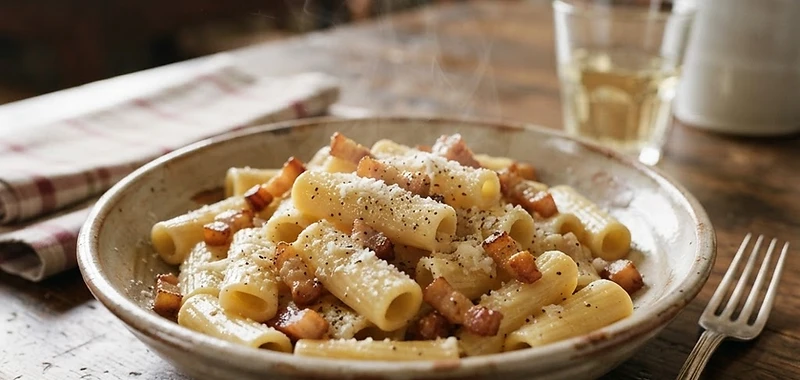
The least known of the Roman four, and the one purists love. Guanciale and pecorino, no tomato, no egg — just pork fat and cheese emulsified with pasta water. It's carbonara without the egg, amatriciana without the tomato. The oldest of the family, and the most austere. Order it to complete the set.
Why go
To complete the Roman pasta quartet — and to taste the root of all of them.
The Field Guide take
Pasta alla gricia is the fundamental dish of the Roman pasta canon. While the city’s other signature preparations—carbonara, amatriciana, and cacio e pepe—frequently dominate global attention, the gricia is their austere predecessor. It is built from only three primary components: guanciale (cured pork jowl), Pecorino Romano, and black pepper. By omitting the tomato of the amatriciana and the egg of the carbonara, the gricia forces a direct encounter with the quality of its fats and the salinity of its cheese.
What it is
Gricia is a pasta dish categorized by its simplicity and reliance on technical execution. It functions as a foundational study in emulsion. When prepared correctly, the rendered fat of the pork jowl combines with starchy pasta water and finely grated sheep’s milk cheese to create a uniform, creamy coating for the noodles. It is technically a "white" pasta dish, lacking any acidic additives. The flavor profile is defined by the sharp, salty punch of the pecorino and the deep, funky richness of the cured pork.
Origin and history
The dish traces its origins to the Apennine Mountains, specifically the area surrounding the town of Amatrice, which sits on the border between Lazio and Abruzzo. Historical accounts suggest the dish was a staple for shepherds. These men spent months moving flocks across the mountains, carrying only ingredients that were shelf-stable and easy to transport: dried pasta, chunks of cured pork, and blocks of hard sheep’s cheese.
The name "gricia" is thought by some to derive from Griciano, a hamlet near Accumoli, though linguistic historians also point to the term gricio, which in 19th-century Rome was used to describe bread and vegetable vendors who often dressed in grey or worn-out clothing. Regardless of the etymology, the dish represents the transition of mountain survival food into the urban kitchens of Rome, where it remains the primary reference point for the city’s pasta tradition.
How it's made
The success of a gricia depends on heat management. The guanciale is cut into strips or cubes and rendered in a pan until the fat has liquified and the meat is golden and crisp. The fat is then typically drained, leaving only enough to coat the pan, or it is utilized as the base for the emulsion.
The pasta, usually rigatoni or spaghetti, is boiled in salted water—though the water must be salted sparingly, as the pork and cheese provide significant salinity. The pasta is transferred to the pan just before it is fully cooked. A splash of starchy cooking water is added to the pan, and the grated Pecorino Romano is folded in off the heat. The goal is to create a thick, glossy sauce without the cheese clumping or the fat separating. A heavy dusting of freshly cracked black pepper finishes the dish, providing the necessary heat to cut through the richness of the pork.
Where to eat it
The dish is ubiquitous in trattorias across Rome and the surrounding province of Lazio. You will find it most reliably in traditional establishments that specialize in "cucina romana." If a restaurant features the classic Roman quartet (Carbonara, Amatriciana, Gricia, and Cacio e Pepe), the Gricia is often the test of the kitchen’s discipline. It is a dish that hides nothing; if the ingredients are low-grade or the emulsion is broken, the result is immediately apparent. Seek it out in neighborhoods with a high density of long-standing, family-run trattorias, such as Testaccio or Trastevere, where adherence to regional standards is typically higher.
When and how
Gricia is a year-round dish, though it feels most appropriate in the cooler months when its dense, fatty profile is most satisfying. It is served as a primo piatto in a standard Italian meal structure. It is not an accompaniment; it is a substantial dish that functions best when followed by a lighter course, such as bitter greens.
What to drink with it
Because the dish is rich and fatty, it requires a wine with sufficient acidity to cleanse the palate. A crisp, dry white from Lazio, such as a Trebbiano di Grotte di Castro or a Frascati Superiore, provides the necessary tension to balance the salt and pork fat. Avoid heavy, tannic reds, which can clash with the sharp, acidic bite of the Pecorino Romano. On the table, it is traditional to serve a side of puntarelle (a chicory variety) dressed with anchovy and garlic; the bitterness of the greens acts as a functional counterpoint to the weight of the pasta.
The Story
Where Gricia comes from
Often called the ancestor of all Roman pasta, 'Gricia' is the original, rustic dish of the Apennine shepherds. It relies on the bounty of the mountain: cured pork and sheep's cheese. It has survived for centuries because it requires no fancy ingredients, just patience and heat control.
What Defines It
Signature ingredients
Guanciale
The source of the fat and salt for the entire dish.
Pecorino Romano
The primary flavor component, providing deep savory depth.
Black pepper
Freshly cracked to add a sharp, pungent kick to the rich sauce.
The Method
How it's made
Guanciale is crisped, and the rendered fat is emulsified with cheese and starchy pasta water to create a creamy coating. It is essentially an Amatriciana without the tomato or a Carbonara without the egg.
Timing
When to eat it
Year-round
Serve With
Classic pairings
Trebbiano
wineA crisp white wine to cleanse the palate of the heavy pork fat.
Puntarelle
foodBitter salad greens that provide a necessary bite against the salt.
What makes it worth going
The oldest Roman pasta — guanciale and pecorino, no tomato, no egg. 'White amatriciana.'
Things to do
- trattoria
Felice a Testaccio
The benchmark gricia, in Testaccio. The guanciale is crisp, the pecorino is sharp, the pepper is generous. Reserve.
1.5 hrs
- salumeria
Salumeria Roscioli
The most deliberate version; the guanciale is cured in-house. Reserve.
2 hrs
- trattoria
Trattoria da Danilo
In Esquilino. The gricia is the specialty; the tonnarelli is hand-cut.
1.5 hrs
- experience
Roman pasta crawl
Gricia at one, carbonara at another, amatriciana at a third. The four Roman pastas in one night, if you can.
Eat
- pasta
Tonnarelli alla gricia
The 'white amatriciana': guanciale, pecorino romano, black pepper, no tomato. The oldest of the four; the guanciale and the cheese are the whole dish.
- side
A green salad
The gricia is rich and salty; a salad is the only correct accompaniment.
Stay
- neighborhood
Testaccio
The home of the gricia; Felice and Flavio are here. The most authentic food quarter.
- neighborhood
Monti
Near the Colosseum, with good trattorias and less crowd than Trastevere.
Experiences Worth Booking
Roman four-pasta class
3 hrsGricia, carbonara, amatriciana, cacio e pepe — the four, in one class.
The gricia is the hardest — no tomato to hide behind, no egg to bind; the class shows you the water-to-cheese ratio.
Suits: Anyone who wants the Roman pastas correct; the gricia is the test of the emulsion.
Testaccio food walk
3 hrsThe old market, the trattorias, the gricia and the carbonara. The working food neighborhood.
Testaccio is where Roman cooking was born; the walk explains the offal and the four pastas.
Suits: Eaters who want the authentic quarter, not the postcard.
What's nearby & pairs with
More food from Lazio
Cured Meat
Porchetta
Whole deboned pig, stuffed with herbs and garlic, slow-roasted until crackling — the great Italian street meat.
Dish
Carbonara
Rome's most famous pasta — guanciale, pecorino, egg yolk, and pepper, emulsified into a sauce with no cream.
Dish
Cacio e Pepe
Rome's minimalist masterpiece — pasta, pecorino, and pepper, emulsified with pasta water into a sauce.
Dish
Amatriciana
Rome's tomato pasta — guanciale, tomato, pecorino, and chili. The root of the Roman pasta family.
Cheese
Pecorino Romano
Sheep's milk cheese, salty and sharp — the grating cheese of Rome and the base of cacio e pepe.
Ready to plan?
Ready to turn discovery into a trip?
Italy Field Guide helps you decide where to go. When you're ready to build the actual day-by-day itinerary, take your saved places to Travel Itinerary Co — your interests go with you.
Turn your saved Italy places into a trip