The Verdict
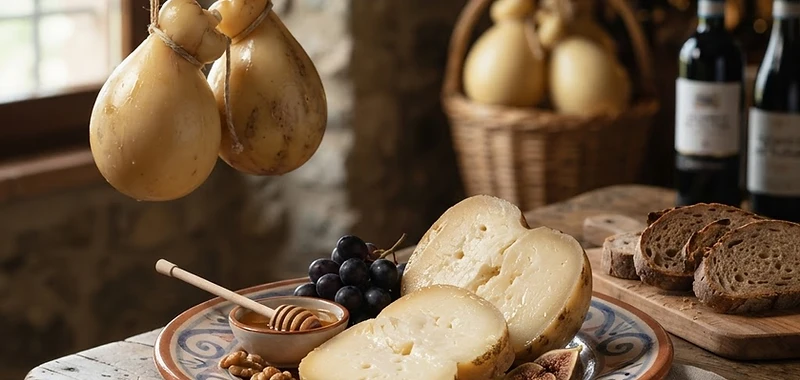
The cheese of the south, shaped like a teardrop and hung in pairs (cacio a cavallo — cheese on horseback) over a beam. Made from cow's milk, aged from soft and mild (young) to hard and sharp (stagionato). The Ragusano version from Sicilia is a DOP cousin. Eat the young version with bread, or grill the aged one. Underknown outside Italy, and worth seeking out.
Why go
To taste the southern cheese that most visitors never meet — hung in pairs, aged to sharp.
The Field Guide take
Caciocavallo is the definitive cheese of southern Italy, a firm, stretched-curd product that serves as a staple of the Basilicata diet. It is easily identified by its signature teardrop shape and the way it is suspended in pairs from wooden beams, a traditional preservation method that dictates both its name and its texture. While the term caciocavallo covers various regional iterations across the south, the versions found in the rugged highlands of Basilicata are distinguished by the specific use of milk from the Podolica cow.
What it is
Caciocavallo is a pasta filata (stretched-curd) cheese made from cow’s milk and rennet. In Basilicata, producers prize milk from the Podolica breed—a hardy, grey-coated cattle that grazes on the wild herbs and shrubs of the Apennine Mountains. The cheese ranges in flavor and texture depending on the duration of its aging process. A young caciocavallo (aged for a few months) is firm, pale, and mild. A stagionato (long-aged) wheel is dense, straw-colored, and develops a sharp, nutty profile that can become increasingly spicy or piquant over time.
Origin and history
The history of caciocavallo is tied to transhumance, the seasonal migration of livestock between mountain pastures and lowland plains. Historically, shepherds needed a food source that could endure long journeys and varying temperatures. Hanging the cheeses in pairs over a pole—or a cavallo (on horseback)—allowed the rounds to be balanced easily across a pack animal’s back for transport. Over centuries, this practical solution became a standard aging technique. By suspending the cheese, producers ensure uniform air circulation, which helps the rind develop while the interior hardens into its distinctive structure.
How it’s made
The production process begins by heating raw cow's milk and adding rennet to form curds. Once the curd settles, it is broken down and left to acidify. The key step is the stretching: the curd is immersed in near-boiling water and pulled by hand, manipulated until it becomes smooth and elastic. The maker shapes the mass into a pear-like gourd, often incorporating a small, rounded head at the top to secure the rope. After being molded, the cheese is briefly brined and then hung from wooden beams in a temperature-controlled cellar. The length of time it remains hanging determines its final character, as the cheese slowly loses moisture and its flavor compounds concentrate.
Where to eat it
Basilicata is the best place to encounter high-quality caciocavallo. The town of Potenza and the surrounding mountain villages are home to numerous artisanal producers who maintain traditional methods. Seek out caciocavallo podolico, which is the most prized version due to the complexity the mountain-grazed milk imparts. While it is rarely found on restaurant menus as a complex prepared dish, it is a fixture in local markets, butcher shops, and deli counters (salumerie). In Matera and the smaller hilltop towns, it is frequently served as part of an antipasto board or sliced simply as a snack.
When and how
Caciocavallo is available year-round. How you choose to eat it depends entirely on its age. Young caciocavallo is best sliced thin and eaten with crusty bread or served with seasonal fruit, such as local dried figs. If the cheese is aged, it is often too firm for a simple sandwich. Instead, try it grilled. Placing a thick slice of aged caciocavallo on a hot griddle allows the exterior to char while the center becomes molten and elastic, a method common in southern Italian home kitchens.
What to drink with it
Because the cheese is rich, salty, and increasingly sharp with age, it requires a partner with sufficient body and structure. The canonical pairing in Basilicata is Aglianico del Vulture, a full-bodied, tannic red wine made from grapes grown in the volcanic soil near the extinct volcano, Monte Vulture. The acidity and bold fruit notes of an Aglianico cut through the fat of the cheese, balancing the savory intensity of the Podolica milk. If you prefer a lighter pairing, a dry, crisp white wine from the region can work with the younger, milder wheels, but the bold intensity of a matured caciocavallo almost always demands the stature of a red.
The Story
Where Caciocavallo comes from
Caciocavallo is one of the oldest cheeses in southern Italy, often linked to the transhumance practices of shepherds who would carry it on their horses. The name, literally 'cheese on horseback', refers to the practice of hanging the gourd-shaped wheels in pairs over a wooden beam to age. It is a stretched-curd cheese that changes character dramatically with age.
What Defines It
Signature ingredients
Cow's milk
Often from Podolica cows, which yield a high-quality milk despite the rugged, sparse landscape.
Rennet
Typically lamb or kid rennet, which contributes a slightly spicy, distinctive character.
The Method
How it's made
The curds are stretched, hand-molded into a pear shape, and then tied with a rope to hang for aging. As it ages, it develops a sharp, nutty, and slightly spicy flavor that hardens significantly.
Across Italy
Regional variants
Basilicata
Noted for the particular quality of Podolica milk, giving a deep, complex flavor.
Timing
When to eat it
Year-round.
Serve With
Classic pairings
Aglianico del Vulture
wineA powerful, volcanic red wine that matches the intensity of the long-aged cheese.
Dried figs
foodProvides a concentrated sweetness that complements the salty, savory profile.
What makes it worth going
Stretched-curd cow's milk cheese, hung in pairs over a beam — southern Italy's great table cheese.
Things to do
- producer
A caciocavallo producer in Basilicata
The home of the caciocavallo, in the Lucanian interior. The cheese is shaped like a gourd, hung to age. Visit a producer; book ahead.
1.5 hrs
- trattoria
A Lucanian restaurant for caciocavallo alla griglia
The caciocavallo is grilled until it melts; the dish is the south. The Lucanian table is the context.
2 hrs
- caseificio
A southern salumeria or caseificio
In any southern town, for caciocavallo at different ages. The smoked and the unsmoked are the two.
1 hr
- experience
A cheese-tasting with bread and olives
The southern pairing: caciocavallo, bread, olives, and a red wine. The cheese and the bread are the table.
Eat
- cheese
Caciocavallo (fresco)
The fresh version; the paste is soft, the flavor is mild. The table cheese of the south.
- cheese
Caciocavallo (stagionato)
The aged version; the paste is hard, the flavor is sharp and piquant. The grating and table cheese.
- dish
Caciocavallo alla griglia or silano
The grilled version (melted on bread) or the pasta dish (caciocavallo silano, with eggplant and tomato). The south on a plate.
Stay
- city
Matera or Potenza
The Lucanian bases, with good producers and restaurants. A car is useful.
- farm-stay
A southern agriturismo
In the interior, where the caciocavallo is made on the farm. A car is required.
Experiences Worth Booking
Caciocavallo producer visit
2 hrsThe cows, the gourd shape, the hanging age, the tasting. The Lucanian interior is the context.
The caciocavallo is shaped like a gourd, hung to age; a producer visit shows you the shape, the age, and the taste.
Suits: Cheese lovers who want the southern cheese at its source.
Basilicata food day
full dayA caciocavallo producer, a griglia lunch, a Matera visit. The full Lucanian arc.
The caciocavallo, the griglia, and Matera are the Lucanian trinity; a day covers all.
Suits: Food and culture travelers with a day for Basilicata.
What's nearby & pairs with
More food from Basilicata
Ready to plan?
Ready to turn discovery into a trip?
Italy Field Guide helps you decide where to go. When you're ready to build the actual day-by-day itinerary, take your saved places to Travel Itinerary Co — your interests go with you.
Turn your saved Italy places into a trip