
The Verdict
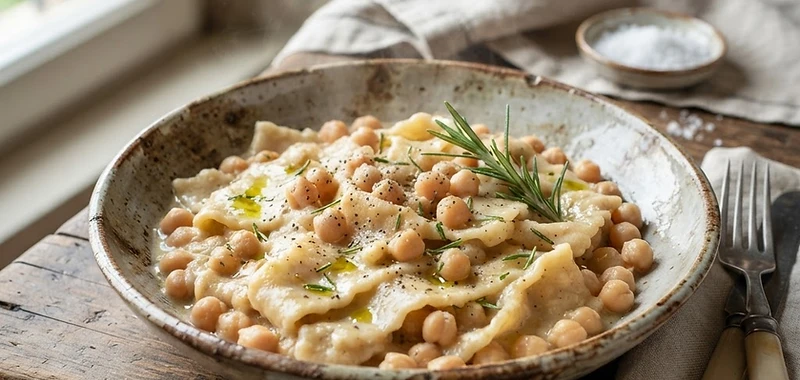
The dish that connects Basilicata to ancient Rome. Lagane — wide, flat pasta ribbons, the ancestor of lasagna — with chickpeas, garlic, rosemary, and olive oil. No tomato, no cheese, no meat; just pasta, beans, and herbs. The dish the Romans ate, before Columbus, before tomato, before Italy. A reminder that southern Italian food is older than the ingredients we think of as Italian.
Why go
To taste the pasta-and-chickpea dish the Romans ate — older than tomato, in Basilicata.
The Field Guide take
Lagane e ceci is a bridge to the ancient world. In the inland reaches of Basilicata, this combination of hand-cut pasta ribbons and legumes serves as a direct link to the diet of the Roman Empire, persisting long after the culinary shifts that transformed the rest of the Italian peninsula. It is a dish defined by austerity, relying entirely on the interplay of flour, water, legumes, and aromatics.
What it is
The dish consists of lagane—wide, rustic ribbons of pasta made from semolina flour and water—tossed with chickpeas, garlic, rosemary, and olive oil. It contains no tomato, no cheese, and no meat. It is a defining element of cucina povera, the tradition of resourcefulness born of necessity. By omitting the ingredients that many travelers associate with "Italian" food, lagane e ceci offers a taste of the Mediterranean as it existed for centuries before the Columbian Exchange introduced the tomato to European soil.
Origin and history
The history of lagane is documented as far back as the first century BCE. The Roman poet Horace, a native of Venosa in northern Basilicata, referenced lagana in his writings, describing them as thin sheets of dough. These early versions were the direct ancestors of what we now call lasagna.
In the rural culture of Lucania—the ancient name for the region encompassing modern-day Basilicata—this dish survived as a primary fuel for land-working families. Because livestock was expensive to maintain and fresh ingredients were seasonal, rural households relied on dried pulses like chickpeas and hard wheat. The dish has remained largely unchanged in its essential composition for nearly two millennia, acting as a historical anchor in the Vulture-Melfese region and the province of Potenza.
How it’s made
The preparation is deceptively simple and requires technical precision to avoid a dry or disjointed result. The pasta dough is made strictly from semolina flour and water, rolled thin, and cut into wide, irregular strips.
The chickpeas are simmered slowly until tender, typically infused with garlic and rosemary. The hallmark of a properly executed dish is the final marriage of the two components: the pasta is often cooked directly in the chickpea broth or finished in a small amount of starchy pasta water. This creates an emulsion—a silky, light sauce that binds the pasta and beans together. A poorly made version will appear as two separate elements sitting in a thin liquid; the correct version is cohesive and comforting, with the starch from the pasta thickening the broth into a light, savory coating.
Where to find it
To experience this dish in its most authentic form, focus your search in the inland towns of Basilicata, particularly in the Vulture-Melfese area and the mountain villages surrounding Potenza. While the dish has migrated into neighboring regions—you will find versions in Cilento (Campania) that may include a small amount of tomato, or in Calabria where it is frequently topped with peperoni cruschi (dried, fried sweet peppers)—it is best sought in the small, traditional trattorias of the Lucanian interior where the recipe remains unadulterated.
When and how
Lagane e ceci is a staple of the cooler months. It is at its best during autumn and winter, when the heartiness of dried legumes is most appreciated. It is served hot, usually in a wide, shallow bowl. Given its minimalist profile, it is often served alongside peperoni cruschi for a necessary textural contrast—the crunch of the fried peppers cuts through the soft, starchy consistency of the pasta and beans.
What to drink with it
The logical companion to a dish from the Vulture-Melfese region is a glass of Aglianico del Vulture. This volcanic red wine, produced from grapes grown on the slopes of the extinct Monte Vulture volcano, provides the tannins and acidity needed to balance the earthiness of the chickpeas. If you prefer bread, look for pane di Altamura from the nearby border of Puglia; its dense, crusty structure is ideal for finishing the bowl once the pasta and beans are gone.
The Story
Where Lagane e Ceci comes from
Lagane e Ceci is widely considered one of the oldest pasta dishes in the Mediterranean, with its roots tracing back to Ancient Rome. The poet Horace, who was born in Venosa, Basilicata, famously referenced 'lagana' in his works—a thin, flat sheet of dough that serves as the progenitor of modern lasagna. In the peasant culture of Lucania, this dish persisted through centuries as a staple of the 'cucina povera' tradition, defined by ingredients available to land-working families who relied on dried pulses and grains rather than expensive livestock or imported goods.
The dish is fundamentally a snapshot of the region's pre-Columbian history, existing long before the introduction of the tomato from the Americas. It remains a canonical symbol of Basilicata, specifically associated with the inland areas like Potenza and the Vulture-Melfese region. Its survival is due to its reliance on humble, accessible pantry staples, cementing it as an anchor of local identity that remains largely unchanged by the culinary trends of the modern era.
What Defines It
Signature ingredients
Semolina flour
Provides the structural integrity and chew required for the hand-cut, rustic ribbons of pasta.
Dried chickpeas
The primary source of protein and texture, they must be soaked and slow-cooked to achieve a creamy, tender consistency.
Extra virgin olive oil
Acts as the emulsifier and flavor binder; high-quality, peppery local oil is essential since there is no animal fat.
Fresh rosemary
Provides the essential aromatic profile that cuts through the starchiness of the pasta and beans.
Garlic
Gently sautéed in the oil to form the base aromatics without overwhelming the earthiness of the chickpeas.
The Method
How it's made
The authentic preparation relies on making the pasta by hand using only flour and water. The dough is rolled thin and cut into irregular, wide ribbons. The chickpeas are slow-simmered separately, often with a piece of garlic and a sprig of rosemary, until they are soft. A crucial step involves finishing the pasta directly in the cooking liquid of the beans or a small amount of starchy water to create a light, silky emulsion that coats the ribbons. A careless version will present the pasta and beans as two separate, dry components, whereas the proper technique ensures the starch from the pasta thickens the broth into a cohesive, comforting dish.
Across Italy
Regional variants
Calabria
Often includes the addition of 'cruschi' peppers—dried, fried sweet peppers—that provide a smoky crunch.
Campania
In the Cilento area, the dish is sometimes prepared with a wider, almost pappardelle-like cut of pasta and occasionally includes a touch of tomato purée, a later historical adaptation.
Timing
When to eat it
This is a quintessential autumn and winter dish, favored for its warmth and heartiness during the colder months when dried legumes are most prized.
Serve With
Classic pairings
Aglianico del Vulture
wineAn earthy, full-bodied red from the same volcanic region as the dish, which stands up to the density of the chickpeas.
Peperoni Cruschi
foodThese sun-dried, fried peppers from Senise provide a necessary crunch and sweet-smoky contrast to the softness of the stew.
Crusty Altamura bread
foodUsed to mop up the remaining garlicky, rosemary-infused broth at the bottom of the bowl.
What makes it worth going
Wide pasta ribbons with chickpeas, garlic, and rosemary — Lucania's ancient peasant dish.
Things to do
- trattoria
A trattoria in Matera or Potenza
The benchmark lagane e ceci, in the Lucanian cities. The pasta, the chickpeas, the rosemary, the garlic. Reserve.
2 hrs
- farm
A Basilicata agriturismo
The lagane are made on the farm; the chickpeas are local, the rosemary is the herb. The farm is the source.
half day
- festival
A Sagra delle Lagane e Ceci
The village festivals in summer, where the lagane are rolled and the ceci are stewed in the square.
full day
- experience
A lagane-making class
The lagane are a wide, rough pasta, the ancestor of lasagna; the chickpeas are the stew. The technique is the roughness.
Eat
- pasta
Lagane e ceci
The classic: wide, rough flat pasta (lagane, the ancestor of lasagna), with chickpeas, garlic, rosemary, and oil. The peasant dish of Basilicata; the lagane hold the chickpeas.
- side
With peperoni cruschi
The Lucanian companion: the 'crusco' peppers (dried, sweet, fried). The crunch and the sweet are the side.
- wine
A glass of Aglianico del Vulture
The Lucanian red; the correct pairing for the chickpeas and the rosemary.
Stay
- city
Matera
The cave city, with good trattorias and easier access. A car is useful.
- farm-stay
A Basilicata agriturismo
In the interior, where the lagane are made. A car is required.
Experiences Worth Booking
Lagane-making class
3 hrsThe dough, the rough roll, the chickpea stew. The roughness is the secret.
The lagane are a pre-roman pasta; a class shows you the rough surface that holds the chickpeas.
Suits: Pasta makers who want the ancient technique; the lagane are the ancestor of lasagna.
Basilicata food day
full dayA lagane e ceci lunch, a peperoni cruschi tasting, an Aglianico cellar. The full Lucanian arc.
The lagane, the peppers, and the Aglianico are the Lucanian trinity; a day covers all.
Suits: Food travelers with a day for Basilicata.
What's nearby & pairs with
More food from Basilicata
Ready to plan?
Ready to turn discovery into a trip?
Italy Field Guide helps you decide where to go. When you're ready to build the actual day-by-day itinerary, take your saved places to Travel Itinerary Co — your interests go with you.
Turn your saved Italy places into a trip