
The Verdict
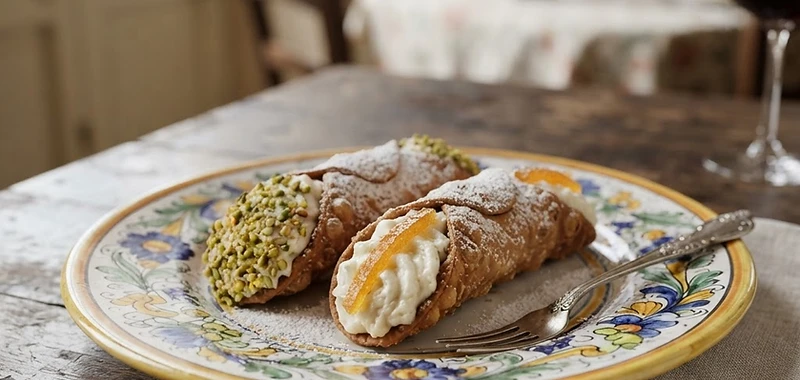
The dessert that defines Sicily: crisp, fried pastry shells filled with sweetened ricotta (traditionally sheep's milk), with candied orange or pistachios at the ends. The key is that they're filled to order — a pre-filled cannoli is a soggy cannoli. Get them from a pasticceria in Palermo or Catania, watch them fill it, eat it immediately. Not the airport version.
Why go
To eat cannoli filled to order, before the shell goes soft — the only correct way.
The Field Guide take
The cannolo is the singular dessert of Sicily. It is a study in structural integrity and temperature: a blistered, deep-fried pastry shell holding a dense, cool filling of sweetened sheep’s-milk ricotta. While versions of this pastry appear in bakeries across the world, the experience of eating a proper cannolo in Sicily is distinct. It relies on the freshness of the island’s dairy and the rule that the shell must be filled only at the moment of consumption.
The composition of a cannolo
A cannolo consists of two components: the scorza (the shell) and the crema di ricotta. The shell is a stiff dough made of wheat flour, sugar, lard or vegetable oil, and often a splash of wine or vinegar, which helps create its signature air bubbles during frying. When fried, the dough becomes fragile and crisp.
The filling is exclusively sheep’s-milk ricotta, or ricotta di pecora. Unlike cow’s-milk versions found elsewhere, sheep’s-milk ricotta is notably higher in fat and possesses a distinct, assertive tang that balances the added sugar. Authentic preparations often incorporate tiny shavings of dark chocolate or candied fruit, typically orange peel, and the ends are traditionally finished with a dusting of chopped Bronte pistachios or more candied citrus.
Historical context
The origins of the cannolo are linked to the long history of foreign occupation in Sicily. Food historians often point to the Roman period as the inception of the pastry, though the specific combination of fried dough and sweetened sheep’s-milk cheese bears the marks of Arab influence. During the Arab rule of Sicily, ingredients like sugar, citrus, and ricotta became staples of the local diet. The name itself is derived from the canna, the river reed around which the dough was traditionally wrapped before being dropped into hot oil. It remains a deeply rooted Sicilian institution, representing a synthesis of the island's agricultural bounty and its complex cultural lineage.
The necessity of the "made-to-order" rule
The defining failure of an inferior cannolo is moisture. Because the ricotta is high in water content, the moisture will migrate into the fried shell within minutes, turning the crunch into a limp, soggy texture.
In any reputable pasticceria in Sicily, the shells are stored empty. You will see rows of hollow, golden-brown tubes behind the counter. When you order, the pastry chef takes a shell, fills it from a piping bag, and adds the garnishes. If you are served a cannolo that has been sitting in a display case already filled, the structural contrast that defines the dish is lost. A traveler should always look for a shop where the piping happens in front of them.
Where to find them
While cannoli are ubiquitous across the island, the standard of quality is highest in the major urban centers of Palermo and Catania. In Palermo, look for traditional pasticcerie that specialize in dolci di convento (convent-style sweets), where the craft of ricotta-based pastries has been preserved for centuries. In Catania, the influence of the nearby dairy farms ensures exceptionally fresh ricotta. Avoid purchasing cannoli at airports or convenience-oriented tourist stops; these are almost universally pre-filled and stored in refrigerated cases, which guarantees the shell will be soft.
When to eat and what to drink
Cannoli are available year-round, as the sheep’s-milk ricotta production is a continuous industry in the Sicilian interior. They are commonly eaten as a morning snack with an espresso or as an afternoon indulgence.
When pairing, the primary goal is to cut through the richness of the sheep's milk. A standard, strong espresso is the classic choice, as the bitterness of the coffee grounds the sugar in the cream. For a more traditional Sicilian pairing, seek out a glass of chilled Marsala—specifically a secco (dry) or semisecco version—whose oxidative, nutty notes provide a sharp counterpoint to the dense, milky sweetness of the ricotta. If you are sensitive to the gamey, earthy profile of sheep's milk, approach this dessert with the expectation of a robust dairy flavor rather than the neutral, mild sweetness of a cow's-milk cannoli.
The Story
Where Cannoli comes from
Cannoli are a Sicilian institution, with roots reaching back to the Roman occupation. The crispy shell and sweet, creamy filling represent the island's diverse culinary influences, including the use of sheep's milk ricotta, which is a regional staple. It is a dessert that balances crunch, cream, and subtle sweetness.
What Defines It
Signature ingredients
Sheep's milk ricotta
Must be fresh and strained to avoid a watery, grainy texture.
Crispy fried pastry
Contains a touch of cocoa or wine for color and flavor complexity.
Candied orange peel
Provides a bright, zesty contrast to the richness of the cheese.
The Method
How it's made
The shells are fried, then filled just before serving to maintain their essential crunch. A soggy shell indicates a subpar, pre-filled cannolo.
Timing
When to eat it
Year-round
Serve With
Classic pairings
Marsala
wineA fortified wine that echoes the nuttiness and sweetness of the dessert.
Espresso
foodThe bitterness of the coffee cuts through the creamy sweetness.
What makes it worth going
Crisp fried pastry tubes filled with sweetened sheep's-milk ricotta — Sicily's most famous dessert.
Things to do
- pasticceria
Pasticceria Cappello (Palermo)
The most famous pasticceria in Palermo, since 1970. The cannoli are filled to order. The pistachio version, with Bronte nuts on the ends, is the one.
20 min
- pasticceria
Pasticceria La Vespa (Palermo)
In the Ballarò market. Filled to order, from a window. The most authentic Palermo cannolo experience.
15 min
- pasticceria
Pasticceria Cavasinni (Catania)
The Catania benchmark; the ricotta is from the Etna slopes. Eat at the counter.
20 min
- experience
A street food walk in the Vucciria or Ballarò
Cannoli, arancine, panelle — the Palermo circuit, with the market noise.
3 hrs
Eat
- dessert
Cannolo con ricotta di pecora
The original: sheep's-milk ricotta, sweetened, in a crisp fried shell, with candied orange or pistachio at the ends. Filled to order — never pre-filled.
- dessert
Cannolo al pistacchio di Bronte
The luxury version: pistachio cream or crushed Bronte pistachio on the ends. The nut is the upgrade.
- drink
Espresso
The correct pairing. Cannoli and coffee, standing, at the counter.
Stay
- neighborhood
Palermo center (Kalsa / Ballarò)
Near the markets and the best pasticcerie. The most authentic Palermo base.
- neighborhood
Catania center
Near Cavasinni and the Etna-slope ricotta. The east-Sicily cannoli base.
Experiences Worth Booking
Sicilian pastry class
3 hrsCannoli shells, ricotta filling, and the filled-to-order technique. Often includes cassata too.
The shell must be filled at the last second; a class shows you why and how.
Suits: Sweet tooths who want the original; the filling technique is the secret.
Palermo street food tour
3-4 hrsCannoli, arancine, panelle, sfincione, granita. The full circuit, with a guide.
The best cannoli in Palermo is at a market stand, not a restaurant; a guide knows which.
Suits: Eaters who want the markets at their loudest.
What's nearby & pairs with
More food from Sicilia
Dish
Caponata
Sweet-sour eggplant caponata with capers, olives, and vinegar — Sicily's most famous vegetable dish.
Dish
Pasta con le Sarde
Pasta with sardines, fennel, saffron, and breadcrumbs — Palermo's most complex pasta.
Dish
Granita
Frozen, scraped ice with fruit or nuts — Sicily's breakfast, and the world's best frozen dessert.
Dish
Arancini
Fried rice balls stuffed with ragù, mozzarella, and peas — Sicily's most famous street food.
Dish
Pasta alla Norma
Pasta with tomato, fried eggplant, ricotta salata, and basil — Catania's signature dish.
Ready to plan?
Ready to turn discovery into a trip?
Italy Field Guide helps you decide where to go. When you're ready to build the actual day-by-day itinerary, take your saved places to Travel Itinerary Co — your interests go with you.
Turn your saved Italy places into a trip