The Verdict
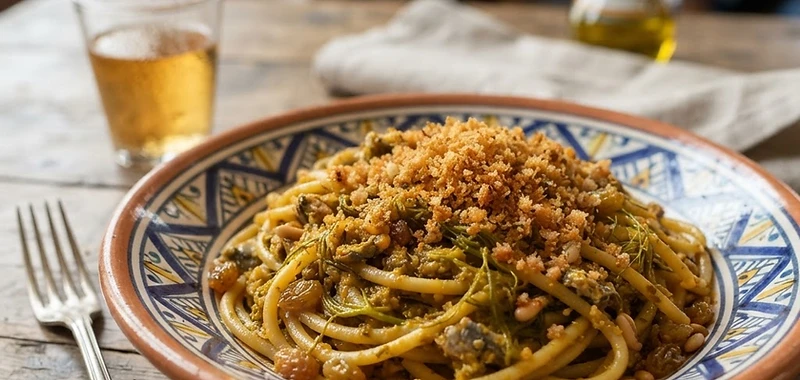
The dish that proves Sicilian pasta is Arabic in its roots. Bucatini or spaghetti with fresh sardines, wild fennel, saffron, pine nuts, raisins, and a topping of toasted breadcrumbs (instead of cheese). Sweet, salty, fishy, and aromatic — the flavor of the Arab kitchens of old Palermo. The breadcrumbs are 'the poor man's cheese'; use them. A dish no other region makes.
Why go
To taste the Arab-Sicilian pasta — sardines, fennel, saffron, and raisins, in Palermo.
The Field Guide take
Pasta con le sarde is the primary record of Sicily’s history as a Mediterranean crossroads. A complex, aromatic pasta dish built from sardines, wild fennel, saffron, pine nuts, and raisins, it is the culinary signature of Palermo. Unlike the tomato-heavy preparations found across much of Italy, this dish is defined by the Arab influence on the island between the 9th and 11th centuries, favoring the balance of savory fish with sweet aromatics.
What it is
The dish is a long-strand pasta—traditionally bucatini or spaghetti—coated in a thick, cohesive sauce of fresh sardines and wild fennel. It is characterized by the presence of saffron, which provides both color and a distinct earthy depth, and the inclusion of raisins and pine nuts, which offer structural sweetness and texture. It is famously finished with muddica atturrata, or toasted breadcrumbs, which serve as the traditional substitute for grated cheese.
Origins and history
Pasta con le sarde is often cited as the definitive example of Arab-Sicilian cuisine. During the Arab rule of Sicily, the sophisticated courtly kitchens of Palermo adopted the practice of pairing fish with dried fruits and exotic spices. The dish persists today not only as a meal but as a historical document of the island's medieval past. The reliance on breadcrumbs as a topping is a result of historical economic necessity; for the working class, imported hard cheeses were often cost-prohibitive. Toasted breadcrumbs seasoned with olive oil became the standard, providing a crunchy, savory texture that has remained an essential element of the dish long after it stopped being a mere substitute for cheese.
How it is prepared
A standard version relies on the careful management of textures. The wild fennel—a plant that grows abundantly in the Sicilian countryside—is blanched, and the resulting water is reserved to boil the pasta, ensuring the noodles are infused with the flavor of the herb from the start. The sauce is built by slowly sautéing onions, pine nuts, and raisins, followed by the cleaned sardines and the chopped fennel.
In a well-executed preparation, the sardines are not left in large, dry chunks; they are cooked down until they largely disintegrate, thickening the sauce. The saffron is added to bind the profile together. The final step is crucial: the pasta is tossed with the sauce and finished with a generous coating of golden, olive-oil-toasted breadcrumbs.
Regional variations
While Palermo is the home of the canonical recipe—marked by the presence of saffron and a golden-yellow hue—the dish changes as one moves west. In the provinces of Trapani and Agrigento, versions often omit the saffron and occasionally incorporate tomato paste. These variations lean toward a more savory, robust flavor profile that lacks the characteristic sweetness of the Palermo original. Travelers seeking the traditional, spice-forward version should prioritize menus in the capital city.
Seasonality and when to eat
Pasta con le sarde is a strictly seasonal dish. It is dictated by the natural cycle of the wild fennel and the migration patterns of the sardines. It is most authentic from late spring through early autumn, corresponding with the harvest of the fennel stalks. If you see the dish on a menu in mid-winter, it is likely being prepared with out-of-season or frozen ingredients.
What to drink with it
Because the dish is aromatic, sweet, and oily, it requires a wine with sufficient acidity and body to cut through the richness. Sicily’s native white grapes are the standard pairing. A crisp Grillo or a textured Catarratto will balance the intensity of the sardines and the sweetness of the raisins. For a traditional side, a simple insalata di arance (orange salad) provides a bright, acidic contrast to the weight of the pasta.
Where to find it
The dish is a staple of traditional trattorias in Palermo. It is not a street food; it belongs in the kitchen of a sit-down establishment where the time required to clean fresh fish and prepare the sauce can be properly managed. If the prospect of combining sweet raisins and pine nuts with oily fish sounds unappealing, it is best to skip this dish entirely; it is an integrated flavor profile that does not accommodate individual ingredient preferences.
The Story
Where Pasta con le Sarde comes from
Pasta con le sarde is the culinary embodiment of Sicily's complex history, specifically the period of Arab rule in Palermo between the 9th and 11th centuries. The dish reflects the medieval Arab influence on Sicilian gastronomy, where the combination of savory fish with sweet aromatics like raisins and saffron was a hallmark of sophisticated courtly cuisine. It is, perhaps more than any other Sicilian plate, a record of the island's role as a cultural crossroads in the Mediterranean.
While the dish is most famously associated with the capital of Palermo, its roots are tied to the coastal landscape where fresh sardines and the wild fennel that carpets the Sicilian hillsides are readily available. The use of toasted breadcrumbs, or 'muddica,' serves as a historical substitute for the expensive imported cheeses that were often inaccessible to the local working classes, solidifying the dish as a quintessential product of Sicily’s ingenuity and resourcefulness.
What Defines It
Signature ingredients
Fresh Sardines
The primary protein; they must be caught locally and used within hours to provide a clean, oceanic richness rather than an overwhelming fishiness.
Wild Fennel
The defining aromatic; it provides a sharp, anise-like bitterness that cuts through the oiliness of the fish.
Saffron
A legacy of Arab influence, it adds a distinct earthy hue and subtle, floral depth to the sauce.
Raisins and Pine Nuts
The critical sweet and nutty elements that establish the 'agrodolce' (sweet and sour) profile synonymous with Sicilian flavor profiles.
Toasted Breadcrumbs
Provides the essential textural contrast and saltiness that replaces the role of grated cheese.
The Method
How it's made
A well-made version begins with a thorough cleaning of the sardines, removing the heads and spines. The wild fennel is blanched first, and the resulting water is used to cook the pasta, effectively infusing the noodles with the fennel's aroma. The base is built by slowly sautéing onions, sardines, pine nuts, raisins, and the fennel into a cohesive, thick sauce. A careless version often fails to balance the textures—the fish should disintegrate into the sauce, not remain in large, dry chunks. The dish is finished by tossing the pasta in the sauce and topping it generously with breadcrumbs toasted in olive oil until golden brown.
Across Italy
Regional variants
Palermo
The canonical version, which typically employs the signature list of ingredients including saffron.
Western Sicily (Trapani/Agrigento)
Variants here often omit the saffron and may incorporate tomato paste, resulting in a more savory and less sweet flavor profile.
Timing
When to eat it
The dish is strictly seasonal, tied to the migration of sardines and the growth cycle of wild fennel. It is most authentic from late spring through early autumn, typically appearing on menus during the harvest of fresh fennel stalks.
Serve With
Classic pairings
Grillo
white wineA structured, mineral-forward Sicilian white that matches the intensity of the sardines without being overshadowed.
Catarratto
white wineA classic local pairing; its acidity and citrus notes balance the richness of the pine nuts and fish.
Insalata di Arance
foodA salad of fennel and oranges often served alongside to cleanse the palate of the complex, oily sauce.
What makes it worth going
Pasta with sardines, fennel, saffron, and breadcrumbs — Palermo's most complex pasta.
Things to do
- trattoria
Trattoria La Bersagliera (Palermo)
In the Vucciria. The pasta con le sarde is the benchmark; the sardines, the fennel, the wild herb, the saffron, the pine nuts, the raisins. The agrodolce is the test.
1.5 hrs
- trattoria
A Palermo trattoria in the Kalsa
The historic Arab-Norman quarter, where the dish was born. The pasta con le sarde is the Arab-Sicilian synthesis, on a plate.
1.5 hrs
- market
A fish market in Palermo or Catania
The sardines are the base; the market is where the freshest are sold. The dish is only as good as the sardines.
- experience
A Sicilian cooking class
The pasta con le sarde is the lesson; the Arab-Sicilian flavors — saffron, pine nuts, raisins, fennel — are the history.
Eat
- pasta
Pasta con le sarde
The classic: bucatini or linguine, fresh sardines, wild fennel, onion, anchovy, saffron, pine nuts, raisins, breadcrumbs, olive oil. The Arab-Sicilian synthesis; the agrodolce and the saffron are the marks.
- pasta
Pasta con le sarde a mare
The 'at sea' version — without sardines, just the fennel and the flavorings. A variation for when sardines are scarce.
Stay
- neighborhood
Palermo center (Kalsa)
The Arab-Norman quarter, the home of the dish. The most authentic base.
- island
Ortigia (Siracusa)
The old island, with good seafood trattorias and a beautiful setting.
Experiences Worth Booking
Sicilian-Arab cooking class
3 hrsPasta con le sarde, caponata, couscous di pesce. The Arab-Sicilian flavors in one class.
The dish is the history — saffron, pine nuts, raisins, fennel; a class shows you the technique and the story.
Suits: Anyone who wants the Arab-Sicilian synthesis at home.
Palermo food walk
3 hrsPasta con le sarde, caponata, arancine, cannoli. The full Palermo circuit.
Palermo's food is the Arab-Sicilian synthesis; a walk covers the markets and the trattorias.
Suits: Eaters who want the city's food in a day.
What's nearby & pairs with
More food from Sicilia
Dish
Caponata
Sweet-sour eggplant caponata with capers, olives, and vinegar — Sicily's most famous vegetable dish.
Dish
Granita
Frozen, scraped ice with fruit or nuts — Sicily's breakfast, and the world's best frozen dessert.
Dish
Arancini
Fried rice balls stuffed with ragù, mozzarella, and peas — Sicily's most famous street food.
Dish
Pasta alla Norma
Pasta with tomato, fried eggplant, ricotta salata, and basil — Catania's signature dish.
Dish
Cannoli
Crisp fried pastry tubes filled with sweetened sheep's-milk ricotta — Sicily's most famous dessert.
Ready to plan?
Ready to turn discovery into a trip?
Italy Field Guide helps you decide where to go. When you're ready to build the actual day-by-day itinerary, take your saved places to Travel Itinerary Co — your interests go with you.
Turn your saved Italy places into a trip