The Verdict
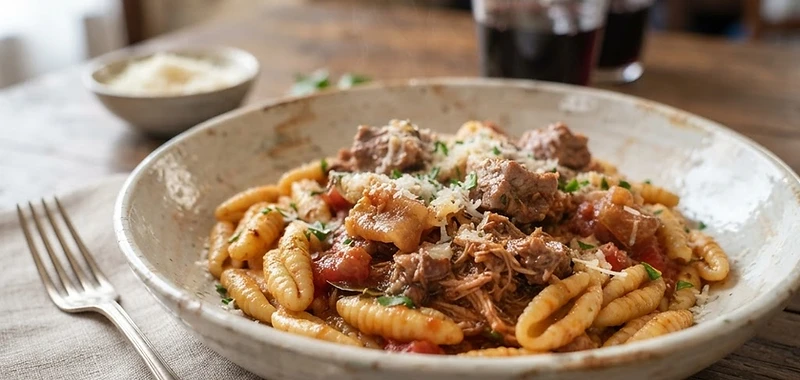
The pasta of Molise, and the dish that shows how small Italy's smallest region is — in scale, not in pride. Small, thumb-indented pasta shells (cavatelli), with a thick, slow-cooked ragù of pork, beef, and tomato. Simple, hearty, and the everyday pasta of the Molise table. Molise is the region most visitors skip; cavatelli with a local ragù is the reason not to. Eat it with a glass of Molise red (Biferno or Pentro).
Why go
To taste Italy's smallest region's everyday pasta — and a reason not to skip Molise.
The Field Guide take
Cavatelli define the Molisan table. While visitors often overlook Italy’s second-smallest region, those who travel inland toward the provincial centers of Campobasso and Isernia will find a culinary culture rooted in the rugged, mountainous landscape. Cavatelli—small, thumb-pressed shells of durum wheat—serve as the foundation for this local identity, representing a historical reliance on simple, accessible ingredients and the importance of communal labor.
What it is
Cavatelli is a short, hand-formed pasta made from only two ingredients: durum wheat semolina and warm water. Unlike the egg-rich pastas of the north, this is an agrarian staple, born from a history where eggs were a commodity to be sold rather than consumed by the household. In Molise, the pasta is almost exclusively served with a substantial ragù, typically built from pork ribs, pork skin (cotenna), and a tomato base. The goal is a dish that is dense and filling, designed to provide energy for life in the mountainous interior.
Origin and history
The history of cavatelli is tied to the 13th-century reign of Frederick II. While variations of similar pressed pasta shapes appear across Southern Italy, the cavatello is the definitive staple of the Molisan diet. Historically, this was the food of the peasantry. It required no expensive equipment or dairy fats, relying instead on the wheat produced in the surrounding hills. Over centuries, the preparation of the pasta moved from a necessity of survival to a ritual of social cohesion. This is most evident in the cavatellata, a communal gathering where neighbors and family members meet to hand-roll and press large batches of pasta, reinforcing the bonds of rural village life.
How it’s made
The process begins by working semolina flour and water into a firm, pliable dough. After the dough rests, it is rolled into thin, rope-like strands and cut into small segments. The shaping technique is what gives the pasta its name and its functionality; the cook presses their index and middle fingers into the center of each piece, dragging it across a wooden board to create a hollow cavity.
A well-made cavatello is consistent in thickness. If the center is left too thick, it remains gummy and undercooked; if it is too thin, it loses its ability to hold the ragù. The finished pasta is served with a sauce that often incorporates long-simmered pork ribs and cotenna (pork skin), which adds body and a specific savory depth to the tomato base. A dusting of sharp Pecorino Molisano is the standard finish.
Regional variations
While cavatelli are found throughout the south, the preparation changes significantly across regional borders. In Puglia, the pasta is often paired with broccoli rabe, garlic, and anchovies, favoring a vegetable-forward profile over the meat-heavy Molisan standard. In Basilicata, you will often find them prepared with peperoni cruschi—sun-dried, fried sweet peppers—and toasted breadcrumbs, which provides a crisp texture absent in the Molise version.
When and how to eat it
Cavatelli are prepared year-round in Molise, appearing frequently at communal Sunday lunches and regional festivals. However, the dish is at its most appropriate during the cooler autumn and winter months, when the heavy, meat-rich ragù provides a necessary counterpoint to the mountain climate. If you are traveling through the region, seek out local trattorias in inland towns where the menu remains tethered to the season. It is a slow meal, intended to be eaten deliberately.
What to drink with it
Given the robust, fat-heavy nature of the pork ragù, the wine must be structured enough to hold its own. The two regional denominations, Biferno Rosso and Pentro di Isernia, are the standard choices. Both rely on the Montepulciano and Aglianico grape varieties, which provide the tannins and acidity required to cut through the richness of the pork skin and tomato sauce. For a complete local meal, serve with a thick-crusted bread—such as those produced in the nearby Apulian tradition—to finish the remaining sauce in the bowl.
The Story
Where Cavatelli comes from
Cavatelli are an ancient form of pasta, with roots tracing back to the 13th century during the reign of Frederick II. While pasta shapes across Southern Italy share similar lineages, the cavatello is the definitive staple of Molise, particularly in the inland towns of Campobasso and Isernia. It was historically a 'poor' dish, constructed from simple durum wheat semolina and water, avoiding the use of eggs which were often reserved for trade or sale by agrarian families. Over centuries, the shape became embedded in the social fabric of the region, evolving from a simple subsistence food into a symbol of Molise's culinary identity.
Today, the dish remains a hallmark of domestic cooking. It is frequently associated with the 'cavatellata,' a social gathering where families congregate to hand-roll and press the dough. This ritualized preparation underscores its importance in the Molisan diet, acting as a bridge between the region's rural agricultural history and its contemporary culinary presence.
What Defines It
Signature ingredients
Durum wheat semolina
Provides the essential structural integrity and toothsome bite required for the pasta to hold its shape during boiling.
Pork ribs
Often used in the ragù to lend a deep, savory richness and fat that seasons the tomato base over a long simmer.
Pecorino Molisano
A firm sheep's milk cheese that adds a sharp, salty finish necessary to cut through the density of the meat sauce.
Pork skin (cotenna)
Often rolled and cooked within the ragù to contribute gelatinous body and silkiness to the sauce.
The Method
How it's made
The dough is made by mixing semolina flour with warm water until a firm, pliable consistency is reached. Once rested, the dough is rolled into long, thin ropes called 'cavatelli,' which are cut into small sections. The hallmark technique involves pressing two fingers—usually the index and middle—into the center of each dough piece, dragging it across a wooden board to create a hollow 'shell' shape. A well-made version must have a uniform thickness to ensure even cooking; a careless version often leaves the center too thick and gummy, failing to capture the ragù properly within the cavity.
Across Italy
Regional variants
Puglia
Known as 'cavatelli pugliesi,' they are often served with broccoli rabe, garlic, and anchovies rather than the meat-heavy ragù favored in Molise.
Basilicata
Here, they are frequently prepared with 'peperoni cruschi' (dried, fried sweet peppers) and breadcrumbs for textural contrast.
Timing
When to eat it
Cavatelli are prepared year-round, though the heartier ragù versions are most common during the cooler autumn and winter months. They are a constant presence at regional festivals and communal Sunday lunches.
Serve With
Classic pairings
Biferno Rosso
wineA DOC wine from Molise, typically based on Montepulciano and Aglianico grapes, providing the necessary acidity and tannin to balance the fatty pork ragù.
Pentro di Isernia
wineAnother regional red that offers a lighter, food-friendly profile that complements the rustic nature of the pasta.
Pane di Altamura
foodA dense, crusty bread used to mop up the remaining sauce, which is considered essential by local tradition.
What makes it worth going
Small, thumb-pressed pasta shells with a thick ragù — Molise's everyday pasta.
Things to do
- trattoria
A trattoria in Campobasso
The benchmark cavatelli, in the Molise capital. The pasta is hand-shaped, the ragù is the companion. Reserve; the trattorias are small.
2 hrs
- farm
A Molise agriturismo
The cavatelli are made on the farm; the flour is local, the ragù is the family's. The farm is the source.
half day
- festival
A Sagra dei Cavatelli
The village festivals in summer, where the cavatelli are made in the square. The 'little hollows' are the show.
full day
- experience
A cavatelli-making class
The cavatelli are shaped by hand, with three fingers, to make the hollow that holds the sauce. The technique is the gesture.
Eat
- pasta
Cavatelli al ragù
The classic: small, hand-shaped pasta (the 'little hollows'), with a meat ragù. The hollow holds the sauce; the ragù is the depth.
- pasta
Cavatelli con la mollica
The peasant version: cavatelli with garlic, oil, and toasted breadcrumbs (mollica). The 'poor man's cheese'.
- wine
A glass of Biferno or Trebbiano d'Abruzzo
The Molise or Abruzzo wine; the correct pairing for the pasta and the ragù.
Stay
- city
Campobasso or Termoli
The Molise bases, with good trattorias and easier access. A car is useful.
- farm-stay
A Molise agriturismo
In the interior, where the cavatelli are made. A car is required.
Experiences Worth Booking
Cavatelli-making class
3 hrsThe dough, the three-finger shape, the hollow. The gesture is the technique.
The cavatelli are shaped by hand; a class shows you the three-finger hollow that holds the sauce.
Suits: Pasta makers who want the Molise technique; the hollow is the secret.
Molise food day
full dayA cavatelli lunch, a scamorza tasting, a Biferno cellar. The full Molise arc.
Molise is overlooked; a day covers the cavatelli, the cheese, and the wine.
Suits: Food travelers with a day for the smallest Italian region.
What's nearby & pairs with
Ready to plan?
Ready to turn discovery into a trip?
Italy Field Guide helps you decide where to go. When you're ready to build the actual day-by-day itinerary, take your saved places to Travel Itinerary Co — your interests go with you.
Turn your saved Italy places into a trip