Cheese · Molise
Pecorino di Capracotta
The Verdict
Capracotta is a small cheese from a small town and worth seeking precisely because nobody else is. It is sharp and dry when aged, made from flocks that graze the high Molisan pastures, and sold in the town's alimentari rather than online.
Why go
A mountain town at nearly fifteen hundred meters, with transhumance traditions and cheese aged in stone.
The Field Guide take
Capracotta sits at 1,421 meters in the Isernia province, a town that experiences some of the lowest temperatures in the Apennine range. This isolation is the primary reason the local Pecorino di Capracotta remains largely unknown outside the regional border. It is a cheese defined by the vertical geography of Molise and the specific endurance required to produce food in such a climate.
What it is
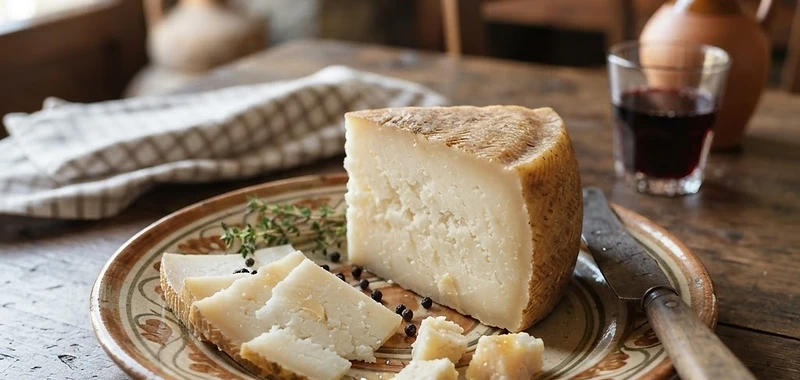
Pecorino di Capracotta is a raw ewe’s milk cheese. It is a product of high-altitude transhumance. The texture changes significantly with age. When young, it is semi-firm and yields slightly under pressure. When aged toward the one-year mark, it becomes hard, granular, and brittle. The flavor profile leans into sharp, saline notes, reflecting the wild grasses and mountain herbs the flocks consume during the summer months. It lacks the aggressive, soapy tang of some mass-produced sheep cheeses, possessing instead a deep, savory density.
Origin and history
The history of this cheese is tethered to the tratturi, the ancient, wide grassy tracks used for the seasonal migration of sheep. For centuries, flocks moved between the high Molisan pastures and the warmer Tavoliere plain in Puglia. Capracotta served as a crucial waypoint on these routes. The local economy was built on the movement of these animals, and the production of Pecorino was a means of preserving milk in an environment where refrigeration did not exist. The tradition relies on the specific cooling properties of stone cellars, which maintain the steady, low temperatures necessary for long-term aging.
Production methods
Production remains artisanal and small-scale. Raw ewe’s milk is the only starting point. It is curdled using lamb rennet, a process that preserves the specific enzyme balance of the local flocks. The curd is pressed into wheels to remove whey and then salted, either by hand-rubbing or in brine, depending on the specific producer’s lineage. The critical step is the aging process. The wheels are placed in local stone cellars for a minimum of three months, though the most distinct examples are aged up to a year. This environment fosters the development of the rind and allows the moisture to evaporate slowly, concentrating the milk sugars and fat into a potent, complex final product.
Where to find it
Do not look for this cheese in major urban supermarkets or online marketplaces. Its presence is strictly local. Seek it out in the alimentari and small dairy shops within the town of Capracotta itself. Because producers are small, availability fluctuates based on the current season's output. If a shop does not have it, ask the shopkeeper for a local producer contact; the community is small enough that direct links are common. The scarcity is part of the appeal; this is not a product manufactured for export.
When and how
The cheese is best consumed from late summer into autumn. This timing aligns with the return of the flocks from their summer grazing, providing the freshest milk for the production cycle. Serve it at room temperature to allow the fats to soften and the aromatics to emerge. It should be sliced thin when aged or cut into rough chunks when younger. Eat it as a stand-alone course or paired with local salumi—specifically those cured with the heavy, coarse-ground pepper common in the Molisan mountains.
What to drink with it
The logical pairing for Pecorino di Capracotta is Tintilia del Molise. This indigenous red wine is characterized by high tannins and a spiced, dark fruit profile that stands up to the salt and intensity of the sheep's milk. The wine’s natural structure matches the dry, sharp nature of an aged wheel. Avoid overly floral or light white wines, which will disappear against the savory weight of the cheese.
Travel considerations
Capracotta is a destination for those interested in the interior of the Apennines. The roads leading to the town are winding and frequently subject to slow transit. Confirm current road conditions before driving, particularly outside of the summer months, as snow and ice are common. This is a quiet, functional town rather than a tourism hub. Visit with the intent of observing the landscape of the high pastures and the remaining traditions of the tratturi. Opening hours for local shops are subject to local custom; plan to arrive mid-morning or late afternoon, and accept that small-town commerce often pauses for the midday break.
The Story
Where Pecorino di Capracotta comes from
The town sits on the Apennine ridge and has long been a center for sheep farming, with flocks moving between the mountains and the Tavoliere plain in Puglia along the old transhumance tracks.
The Method
How it's made
Raw ewe's milk is curdled with lamb rennet, pressed, salted, and aged in stone cellars for three months to a year.
Timing
When to eat it
The transhumance returns in autumn; cheese is best from late summer.
Serve With
Classic pairings
Tintilia del Molise
wineMolisan salumi
cured meatWhat makes it worth going
A high-altitude sheep's cheese from one of the coldest towns in Italy, aged in stone cellars.
What's nearby & pairs with
More food from Molise
Ready to plan?
Ready to turn discovery into a trip?
Italy Field Guide helps you decide where to go. When you're ready to build the actual day-by-day itinerary, take your saved places to Travel Itinerary Co — your interests go with you.
Turn your saved Italy places into a trip