The Verdict
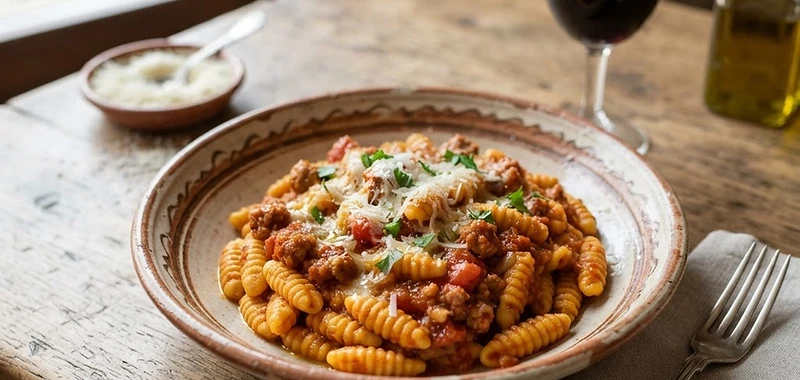
The pasta most Sardinians eat most often. Small, ridged, saffron-tinted gnocchetti (the Sardinian name for gnocchetti sardi), with a tomato and sausage ragù, finished with grated pecorino. Simple, hearty, and the dish that tells you what Sardinian home cooking tastes like — saffron, pork, pecorino, and not much fuss.
Why go
To taste the pasta Sardinians actually eat — saffron, sausage, pecorino, in one bowl.
The Field Guide take
Malloreddus is the definitive pasta of Sardinia. Unlike the egg-heavy, delicate pastas of the Italian mainland, this is a product of the island’s pastoral history: resilient, structured, and deeply tied to the land’s signature flavors of saffron, sheep’s milk, and pork. It is the dish that appears at family tables across the island, marking the baseline of Sardinian home cooking.
What it is
Malloreddus, often referred to as gnocchetti sardi, are small, ridged semolina shells. The name derives from the Campidanese dialect word malloru, meaning bull; the shape is meant to resemble a small calf. They are characterized by their firm texture and a thumb-pressed indentation that serves a precise culinary function: capturing the sauce. A bowl of malloreddus is typically served with ragù alla campidanese, a sauce made from crumbled sausage, tomato, and a generous finish of grated Pecorino Sardo. It is a hearty, functional meal, built to sustain shepherds and farmers, and it remains the primary pasta dish of the Sardinian household.
Origin and history
The pasta has its roots in the rural traditions of the Campidano region in southern and central Sardinia. Historically, malloreddus were a labor-intensive luxury reserved for significant life events—weddings, harvests, and village festivals honoring patron saints. Because the dough required specific preparation and the shaping of each piece by hand, it was not an everyday meal in the past. Over the last century, as agricultural practices shifted and kitchen technology evolved, the pasta moved from the village feast to the everyday table. While it remains a source of local pride, it has transitioned into the island’s most reliable, consistent culinary staple.
How it's made
The dough consists of high-quality semolina flour, water, and saffron. The inclusion of saffron is a defining regional characteristic, lending the pasta a golden hue and a subtle, earthy aroma that bridges the gap between the starch and the savory sauce.
Traditionally, the dough is rolled into long, thin ropes, cut into small segments, and pressed against a ciuliri—a fluted wooden board or a woven basket. This creates the characteristic deep ridges. These ridges are not decorative; they are essential for holding the ragù, which must be thick and meat-heavy. A successful ragù alla campidanese relies on the fat rendered from the crumbled pork sausage rather than a thin tomato broth. When plated, the pasta should hold its shape firmly—al dente—with the cheese melted into the meat sauce, creating a cohesive, rustic coating.
Regional variations
While the Campidanese style of tomato and sausage is the standard, the dish changes as you travel north. In the Logudoro region, where the terrain is more mountainous and the pastoral focus shifts, the ragù often moves away from pork. You may find variations that feature local goat or sheep meat, reflecting the traditions of the northern highlands. Regardless of the specific meat used, the fundamental construction of the dish—the semolina shell and the sharp, salty punch of pecorino—remains the constant.
Where to eat it
You will find malloreddus in virtually every trattoria and family-run kitchen on the island. Because it is a staple of everyday cooking, it is rarely found in establishments that focus on high-concept plating or modernized interpretations. Look for small, low-key trattorias in towns across the Campidano plain or the interior of the island. If a restaurant is tucked into a village square or acts as a local canteen, the chances of the malloreddus being handmade and authentic are high. Avoid establishments that emphasize tourist menus or "gourmet" variations; the best version is the one that prioritizes local pork and sharp, aged Pecorino Sardo.
When and how
Malloreddus is eaten year-round. It is not tied to a specific harvest or festival, though it remains a central component of any traditional celebratory lunch. When eating it, expect a heavy, satiating meal. It is commonly served alongside pane carasau, the thin, crisp parchment bread of the region.
What to drink with it
The salt and fat of the sausage and pecorino require a wine with enough tannin and acidity to cleanse the palate. Cannonau di Sardegna—the island’s ubiquitous Grenache-based red—is the standard pairing; its robustness stands up well to the saffron and pork. If you are near the southwestern coast, a glass of Carignano del Sulcis is a suitable alternative, offering a deep, earthy fruit profile that complements the rustic nature of the ragù.
The Story
Where Malloreddus comes from
Malloreddus, also known as gnocchetti sardi, are a small, shell-shaped semolina pasta that trace their origins to the pastoral traditions of Sardinia. Historically associated with festive occasions such as weddings, harvests, or patron saint festivals, the name is derived from the Sardinian word 'malloru', meaning bull, implying that the pasta shape resembles small calves. While they were once reserved for celebrations, they have become the standard everyday pasta across the island. The tradition of kneading semolina flour with water and sometimes saffron is deeply embedded in the rural culture of central and southern Sardinia, particularly in the Campidano region.
What Defines It
Signature ingredients
Semolina flour
Provides the structural integrity and signature toothsome bite required for the ridged shape.
Saffron
A quintessential Sardinian addition that lends a subtle, earthy aroma and distinct golden hue to the pasta dough.
Pecorino Sardo
A sheep's milk cheese, usually aged, which provides the salty, pungent finish necessary to balance the richness of the pork ragù.
Salsiccia sarda
Cured or fresh pork sausage seasoned with fennel seeds, providing the primary flavor foundation for the sauce.
The Method
How it's made
The dough is made from semolina flour, water, and saffron threads infused in warm water. Traditionally, the dough is rolled into thin ropes and cut into small pieces, then pressed against a 'ciuliri'—a fluted wooden board or basket—to create deep ridges. These ridges are functional, designed specifically to trap the ragù. A well-made version uses high-quality semolina and is cooked al dente; the sauce should be a rustic tomato-based ragù, often utilizing the fat from the crumbled sausage, rather than a thin, soupy tomato sauce. Overcooking the pasta or using a sauce that is too watery results in a loss of the necessary texture.
Across Italy
Regional variants
Campidano
The canonical version uses the ragù alla campidanese, characterized by sausage, tomato, and generous amounts of Pecorino Sardo.
Northern Sardinia (Logudoro)
Variations often include a focus on local sheep or goat meats instead of pork, reflecting the diverse pastoral practices of the northern highlands.
Timing
When to eat it
Malloreddus is a staple eaten year-round in Sardinia. While once a dish for feast days, it is now found in households and trattorias daily, regardless of the season.
Serve With
Classic pairings
Cannonau di Sardegna
wineA robust, high-tannin red wine that stands up well to the intensity of the pork sausage and the sharp salinity of the pecorino.
Carignano del Sulcis
wineA deep, fruity red that complements the earthy notes of the saffron within the pasta.
Pane Carasau
foodThe traditional thin, crispy flatbread used to clear the plate of residual sauce.
What makes it worth going
Saffron gnocchetti with pork and tomato ragù — the everyday pasta of Sardinia.
Things to do
- trattoria
Trattoria in Cagliari (e.g. La Pulcina)
The malloreddus with the sausage and tomato sauce is the benchmark; the saffron in the dough is the surprise. Reserve.
2 hrs
- farm
An agriturismo in the Campidano
The plains around Cagliari, where the malloreddus are shaped. The saffron is local; the tomato and sausage are the sauce.
half day
- festival
A Sagra dei Malloreddus
The village festivals in summer, where the malloreddus are made in the square. The 'gnochetti sardi' is the other name.
full day
- experience
A pasta-making demonstration
The malloreddus are shaped by hand, on a ribbed board (ciuliri), to make the texture that holds the sauce.
Eat
- pasta
Malloreddus al sugo di salsiccia
The classic: saffron-flavored semolina gnocchetti (little ribbed shells), with a tomato and sausage sauce, grated pecorino. The saffron is the surprise; the ribbed texture holds the sauce.
- pasta
With bottarga
The coastal variation, with bottarga (cured roe) instead of sausage. The sea-meets-pasta of Sardinia.
Stay
- city
Cagliari
The island capital, with the best trattorias for malloreddus. Walkable and central.
- farm-stay
An agriturismo in the Campidano
The plains, where the malloreddus are made. A car is required.
Experiences Worth Booking
Malloreddus-making class
3 hrsThe saffron dough, the shaping on a ciuliri (ribbed board), the sausage and tomato sauce.
The ribbed surface holds the sauce; a class shows you the board and the pressure.
Suits: Pasta makers who want the Sardinian technique; the ribbed texture is the secret.
Sardinian pasta day
full dayMalloreddus, culurgiones, pane carasau. The three Sardinian pastas and breads in a day.
Sardinia has its own pasta family; a day covers the three main ones.
Suits: Pasta obsessives with a day for the island's staples.
What's nearby & pairs with
More food from Sardegna
Dish
Porceddu
Whole roast suckling pig, cooked on a spit over a wood fire — Sardinia's great celebratory dish.
Dish
Culurgiones
Sardinian ravioli filled with potato, pecorino, and mint — pinched into a wheat-sheaf shape.
Dish
Pane Carasau
Thin, crisp, twice-baked flatbread — the bread of Sardinian shepherds, made to last for weeks.
Dish
Seadas
Fried semolina and pecorino pastry, doused in bitter honey — Sardinia's most singular dessert.
Dish
Bottarga di Cabras
Salt-cured mullet roe from the Cabras lagoon — Sardinia's 'gold', shaved over pasta.
Ready to plan?
Ready to turn discovery into a trip?
Italy Field Guide helps you decide where to go. When you're ready to build the actual day-by-day itinerary, take your saved places to Travel Itinerary Co — your interests go with you.
Turn your saved Italy places into a trip