
The Verdict
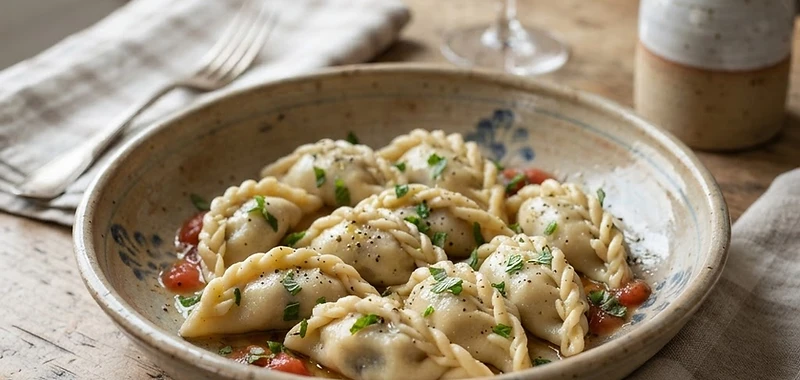
The filled pasta of the Sardinian interior: small, sealed ravioli, shaped like a sheaf of wheat, filled with potato, pecorino, and a hit of fresh mint. The mint is the surprise — it makes them brighter than any mainland ravioli. Served simply, with tomato and pecorino, or just butter and sage. From Ogliastra, in the east; a protected traditional product.
Why go
To taste Sardinian ravioli — wheat-sheaf pinched, with a mint surprise.
The Field Guide take
The culurgiones of Ogliastra offer a distinct departure from the stuffed pastas found on the Italian mainland. While the rest of the country might lean toward ricotta, spinach, or meat-heavy fillings, this eastern Sardinian specialty relies on the mountain pantry: potatoes, sheep’s milk cheese, and a deliberate, cooling note of fresh mint. They are a dish of the rugged interior, born from pastoral traditions and defined by a level of technical precision that turns a simple dumpling into a structural feat.
What it is
A culurgione is a handmade pasta parcel, roughly the size of a small hand-pressed cake. The dough is firm, made from durum wheat semolina, and the interior is a dense, creamy mash of yellow potatoes, aged Pecorino Sardo, and finely chopped fresh mint. The defining characteristic is the closure, known as sa spighitta. Unlike the crimped edges of a standard raviolo, culurgiones are sealed using a meticulous, repeating pinch-and-fold technique that mimics the appearance of a wheat sheaf. This is not merely aesthetic; the tight, braided seal keeps the filling intact during the boil and provides a distinct, chewy texture at the seam.
Origin and history
The dish is inseparable from the Ogliastra province, a mountainous and coastal region of eastern Sardinia. Historically, these were festive foods, reserved for harvest celebrations, All Saints' Day, or important communal milestones. The recipe is a snapshot of the shepherd’s life: a reliance on shelf-stable, mountain-grown produce. While pasta culture across the Mediterranean often shares similarities, the Ogliastra combination—specifically the use of mint—is a marker of this precise micro-region. Today, culurgiones d'Ogliastra hold Protected Geographical Indication (IGP) status, which codifies the ingredients and the specific techniques required to carry the name.
How it's made
The quality of the pasta is determined by the preparation of the filling and the dexterity of the dough’s closure. The potatoes must be mashed while hot to ensure a smooth, uniform consistency, then immediately combined with the pecorino and mint so the oils and fats emulsify before cooling. The dough is rolled thin enough to remain delicate, yet it must possess enough elasticity to hold the sa spighitta pattern without tearing. Purists in the interior mountain towns—such as Ulassai, Perdasdefogu, and Baunei—insist that the filling remains strictly limited to potatoes, cheese, mint, and olive oil. Coastal variations occasionally introduce garlic, though this remains a point of contention among traditionalists who believe it masks the essential, grassy profile of the mint.
Where to eat it
The most reliable place to find authentic culurgiones is in the towns of the Ogliastra province. Because of their status as an IGP product, you will see them prominently featured on restaurant menus throughout the region, from the mountain villages to the coastal hubs. Outside of Ogliastra, they are common in restaurants across the island, particularly in Cagliari and Nuoro. If the menu identifies the dish as Culurgiones d’Ogliastra (IGP), the establishment is bound by the quality standards of the regional consortium. Always check the seal: if the edge is simply pressed with a fork rather than braided in the wheat-sheaf pattern, it is not a traditional culurgione.
When and how
While historically a seasonal dish for autumn and harvest, culurgiones are now a year-round staple in Sardinia. They are typically served as a first course (primo piatto). The preparation is usually simple: they are boiled in salted water and tossed with a light tomato sauce made from fresh local tomatoes and a grating of pecorino, or served even more minimally with nothing but high-quality butter and fresh sage. Because the filling is heavy and rich, a single serving is generally substantial.
What to drink with it
Given the intensity of the pecorino and the cooling properties of the mint, the pairing should respect the bold, pastoral roots of the dish. A full-bodied Cannonau di Sardegna is the classic choice; its dark fruit and spice notes provide a sturdy backbone against the starchy potato and sharp cheese. If you prefer white wine, a Vermentino di Gallura offers enough salinity and crisp acidity to cut through the richness of the filling. If you are eating the dish in the context of a wider mountain feast, it is often preceded or followed by porceddu (roasted suckling pig), which pairs well with the same red wines.
The Story
Where Culurgiones comes from
Culurgiones represent the pastoral culinary heritage of the Ogliastra sub-region in eastern Sardinia. Born from the modest pantry of shepherds and farmers, they originated as a feast-day food, traditionally served on special occasions such as harvest celebrations or All Saints' Day. The dish reflects the landscape of the Sardinian interior, where reliance on mountain produce like potatoes and sheep-milk cheese defined the local diet for centuries. Historically, the elaborate hand-pinching technique, known as 'sa spighitta,' was a communal activity passed down through generations of women in mountain towns such as Ulassai, Perdasdefogu, and Baunei. While pasta stuffed with cheese and vegetables is found across Italy, the specific combination of potato, mint, and pecorino is distinct to Ogliastra. It remains a point of intense regional pride, with a recognized Protected Geographical Indication (IGP) status that defines the strict geographical boundaries for their production.
What Defines It
Signature ingredients
Semolina flour
Provides the structural integrity required to hold the soft potato filling during boiling.
Yellow potatoes
The starchy base of the filling; their texture provides the necessary creaminess and body.
Pecorino Sardo
A sharp, sheep-milk cheese that cuts through the starch of the potato with salt and depth.
Fresh mint
The defining aromatic; it elevates the earthy filling with a bright, herbal top note.
Extra virgin olive oil
Used in the filling to bind the ingredients and provide a smooth, velvety mouthfeel.
The Method
How it's made
A high-quality Culurgione is defined by the 'sa spighitta' closure—a complex, braided pattern created by pinching the edges of the dough with the thumb and forefinger to resemble a stalk of wheat. A careless version often skips this structural braid in favor of a standard fork-pressed edge, which fails to seal the filling adequately and lacks the specific texture that holds the sauce. The filling should be smooth, achieved by mashing the potatoes while hot and incorporating the cheese and mint immediately to allow the flavors to marry before cooling. The dough must be rolled thin enough to be delicate, yet durable enough to withstand the boiling process without tearing.
Across Italy
Regional variants
Ogliastra (Coastal)
May occasionally incorporate a small amount of garlic into the filling, though this is debated among purists.
Ogliastra (Mountainous)
The most traditional versions strictly limit ingredients to potato, pecorino, mint, and oil, emphasizing the purity of the pastoral ingredients.
Timing
When to eat it
Traditionally associated with harvest festivals and autumn holidays, they are now available year-round in local restaurants and markets throughout Sardinia.
Serve With
Classic pairings
Cannonau di Sardegna
wineThe local red wine's structure and fruit notes complement the saltiness of the pecorino.
Vermentino di Gallura
wineA crisp white wine that balances the density of the potato filling with high acidity.
Roasted suckling pig (Porceddu)
foodOften served as a substantial secondary course in traditional Sardinian multi-course meals.
What makes it worth going
Sardinian ravioli filled with potato, pecorino, and mint — pinched into a wheat-sheaf shape.
Things to do
- farm
Agriturismo in Ogliastra
The home of culurgiones, in the east. The potato-and-pecorino-and-mint filling is the test. Book a full meal; the culurgiones is the centerpiece.
half day
- trattoria
Trattoria in Cagliari (e.g. La Pulcina)
In the city, for culurgiones without the drive. The filling is correct, the saffron sauce is the companion.
2 hrs
- festival
A culurgiones festival (e.g. Ulassai, August)
The town's festival, with the women shaping the culurgiones in the square. The 'wheat-ear' closure is the show.
full day
- rural
A village in Ogliastra
The most remote Sardinia, where the culurgiones is shaped by hand. The closure is the 'spighetta' (wheat ear); the technique is local.
Eat
- pasta
Culurgiones
The classic: a sealed pasta pouch, filled with potato, pecorino, and mint, with a 'wheat-ear' closure. Served with tomato and basil, or with a simple oil and pecorino.
- dessert
With seadas
The Sardinian finish; the culurgiones and the seadas are the two pasta-pastry crossovers of the island.
Stay
- farm-stay
An agriturismo in Ogliastra
The only way to eat culurgiones at its source; sleep on the farm, eat at the farm.
- city
Cagliari
The island capital, with good trattorias for culurgiones without the interior drive.
Experiences Worth Booking
Culurgiones-making class with a Sardinian woman
3 hrsThe dough, the filling, the 'spighetta' closure. The shaping is the secret; only hands do it.
The closure is a local art; a class with a Sardinian woman is the only way to learn it.
Suits: Anyone who wants the technique; the closure is the test.
Ogliastra food day
full dayCulurgiones, pane carasau, seadas, Cannonau. The full Ogliastra arc.
The culurgiones is from Ogliastra; a day covers the pasta, the bread, and the dessert.
Suits: Food travelers with a day for east Sardinia.
What's nearby & pairs with
More food from Sardegna
Dish
Porceddu
Whole roast suckling pig, cooked on a spit over a wood fire — Sardinia's great celebratory dish.
Dish
Malloreddus
Saffron gnocchetti with pork and tomato ragù — the everyday pasta of Sardinia.
Dish
Pane Carasau
Thin, crisp, twice-baked flatbread — the bread of Sardinian shepherds, made to last for weeks.
Dish
Seadas
Fried semolina and pecorino pastry, doused in bitter honey — Sardinia's most singular dessert.
Dish
Bottarga di Cabras
Salt-cured mullet roe from the Cabras lagoon — Sardinia's 'gold', shaved over pasta.
Ready to plan?
Ready to turn discovery into a trip?
Italy Field Guide helps you decide where to go. When you're ready to build the actual day-by-day itinerary, take your saved places to Travel Itinerary Co — your interests go with you.
Turn your saved Italy places into a trip