The Verdict
The 'caviar of the Mediterranean': salt-cured, dried mullet roe, from the Cabras lagoon in western Sardinia. Hard, amber, and intensely savory-umami. Shaved thin over pasta (spaghetti alla bottarga), sliced over salad, or eaten with just olive oil and lemon. A little is a lot. The Cabras product is the benchmark; the flat grey mullet roe is the original. Buy it to take home.
Why go
To taste the Mediterranean's cured gold — mullet roe, shaved over pasta, in its home lagoon.
The Field Guide take
Bottarga di Cabras is the dried, salt-cured roe of the flathead grey mullet (Mugil cephalus). Harvested from the brackish waters of the Stagno di Cabras in western Sardinia, this amber-colored product represents the intersection of ancient preservation techniques and a specific coastal ecosystem. It is a defining element of Sardinian gastronomy, characterized by a concentrated, savory intensity that demands minimal preparation.
An ancient preservation method
The practice of curing mullet roe in the Oristano area predates the Roman era. Historical records link the development of these techniques to Phoenician and Carthaginian traders who utilized the lagoons of western Sardinia as a reliable source of seafood. At its core, bottarga was a survival strategy: it converted a highly perishable harvest into a stable, portable commodity that could survive long journeys across the Mediterranean. Today, the lagoons remain the primary source of the raw material, and the craft remains in the hands of artisanal producers who have kept the tradition of hand-processing alive.
The production process
The quality of bottarga depends entirely on the condition of the egg sac, or baffa, at the time of extraction. Producers must remove the sac from the fish without tearing the delicate membrane. Once extracted, the roe is massaged by hand with sea salt and placed under weights. This pressing process serves to drain moisture and force the roe into a flat, uniform shape.
The subsequent drying phase is critical. Traditionally, the roe was hung to dry in the Mediterranean wind; modern producers often use temperature-controlled rooms to ensure consistency. A well-cured bottarga should be firm to the touch, dense, and uniform in amber color. If the drying is rushed, the roe can develop a metallic or sour aftertaste; if the membrane is damaged during the pressing, the texture becomes gritty.
Where to find it
The province of Oristano is the epicenter of production. Visitors to the town of Cabras will find several small, long-standing fish processing businesses—often referred to as itticolture—where the product is sold directly. While you will find bottarga in gourmet shops throughout Italy, purchasing it in Cabras offers the most direct access to the product at its peak freshness.
It is important to distinguish this from bottarga di tonno (tuna roe). While tuna bottarga is common in the southern town of Carloforte and across parts of Sicily, it is darker and significantly more aggressive in its flavor profile. The Cabras product, derived from mullet, is the regional benchmark for balance and depth.
Consumption and pairings
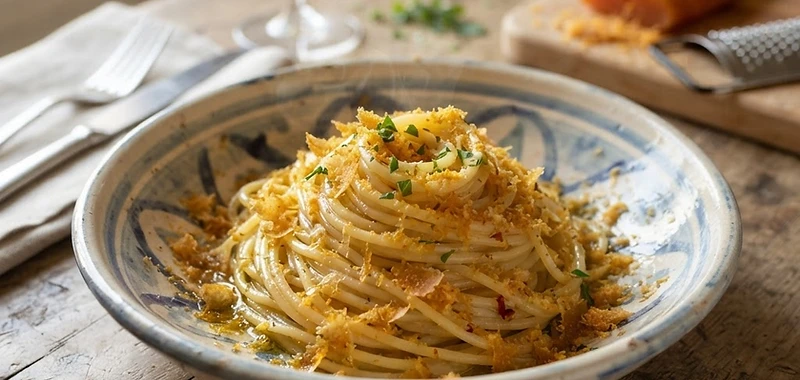
Bottarga is not a main course, but an ingredient used to introduce salinity and umami to a dish. The most common preparation is spaghetti alla bottarga. The roe is shaved or grated finely over al dente pasta that has been tossed in high-quality extra virgin olive oil and perhaps a small amount of garlic or parsley. It is also sliced thin and served as an antipasto, often alongside raw artichoke hearts or simply drizzled with lemon juice.
Because the flavor is assertive, a little goes a long way. When shopping, look for whole, firm pieces rather than pre-grated packets, as the latter lose their aromatic complexity quickly. It is shelf-stable and easy to transport, making it a reliable staple to bring home from a trip.
What to drink with it
The intensity of the cure requires a wine that can stand up to high salinity without being overwhelmed. The canonical pairing is Vernaccia di Oristano, a local wine with oxidative notes that complement the nuttiness of the cured roe. For a more conventional pairing, a chilled Vermentino di Gallura—a crisp, high-acid white wine from northern Sardinia—provides a necessary counterpoint to the oiliness of the bottarga, cleansing the palate between bites.
The Story
Where Bottarga di Cabras comes from
Bottarga di Cabras is rooted in the ancient fishing practices of the Stagno di Cabras, a large coastal lagoon in the province of Oristano, Sardinia. The process of salting and drying the roe of the flathead grey mullet (Mugil cephalus) was refined by the Phoenicians and later the Carthaginians, who established trade routes across the Mediterranean. The method was essentially a preservation strategy that allowed fishing communities to stabilize their harvest for long periods, transforming a perishable resource into a durable, tradeable commodity. Over centuries, it became central to the local economy and identity of the Oristano region. Its status as an artisanal product, rather than an industrial one, is guarded by the specific ecosystem of the Cabras lagoon, where the interaction between fresh water and the brackish sea creates the ideal environment for the mullet to develop high-quality roe. This labor-intensive craft has been passed down through generations of local families, maintaining a link between historical survival methods and modern Sardinian culinary identity.
What Defines It
Signature ingredients
Flathead grey mullet roe
The essential base; the species specifically provides the firm texture and deep, complex profile necessary for true Bottarga di Cabras.
Sea salt
Used to extract moisture and preserve the sac; the quality and grain size of the salt are critical to ensure even dehydration without over-salting the roe.
Spaghetti or Linguine
The neutral, starch-heavy vehicle that allows the intense, salt-forward flavor of the bottarga to shine without competing with the dish.
Extra virgin olive oil
Provides a necessary fat element to emulsify with the shavings and the pasta water, softening the concentrated salinity of the roe.
The Method
How it's made
The production process begins with the careful extraction of the whole egg sac from the mullet, ensuring the delicate membrane remains intact. The roe is massaged with sea salt and pressed under weights to remove moisture and achieve a flat, uniform shape. The sacs are then dried in controlled conditions—traditionally by the wind or in regulated drying rooms—for several weeks. A well-made version is firm to the touch, amber in color, and free of bitter off-flavors or excessive grit. Careless production often results from rushing the drying phase, leading to uneven textures or a sour, metallic aftertaste, or using mechanical pressing that tears the roe membrane, compromising the integrity of the final product.
Across Italy
Regional variants
Carloforte
Focuses on the roe of the bluefin tuna (bottarga di tonno), which has a darker color and a more aggressive, potent flavor compared to the mullet roe of Cabras.
Sicily
Commonly produces its own variation of bottarga di tonno, particularly in the Trapani and Egadi Islands area, reflecting a stronger influence of tuna fishing traditions.
Timing
When to eat it
While the product is shelf-stable and available year-round, the fishing season typically occurs in the late summer and early autumn when the mullet are most ripe. It is consumed throughout the year, often featured in celebratory meals or as a staple in high-end Sardinian home cooking.
Serve With
Classic pairings
Vernaccia di Oristano
wineThe canonical pairing; a dry, oxidized white wine from the same region that stands up to the intense salt and umami of the roe.
Artichokes
foodRaw or lightly cooked, the bitterness and vegetal notes of Sardinian artichokes provide an effective counterpoint to the saltiness of the bottarga.
Vermentino di Gallura
wineA crisp, mineral-forward white wine that offers a refreshing balance to the dense, oily texture of the shaved roe.
What makes it worth going
Salt-cured mullet roe from the Cabras lagoon — Sardinia's 'gold', shaved over pasta.
Things to do
- producer
A bottarga producer in Cabras
The home of bottarga, on the Cabras lagoon. Visit a producer; the mullet roe is salted, pressed, and dried in the sun. The amber color is the test.
1.5 hrs
- trattoria
Trattoria in Cabras or Oristano
The bottarga is grated over pasta, or sliced with oil and lemon. The benchmark is in Cabras, at the source.
1.5 hrs
- nature
The Cabras lagoon
The lagoon where the mullet (muggine) is caught. The fishing is traditional; the bottarga is the preserved roe, the way to keep the fish.
- festival
A Sagra della Bottarga (Cabras, August)
The town's festival, with the bottarga in every form. The producers are in the square; the mullet is the show.
full day
Eat
- pasta
Spaghetti alla bottarga
The classic: spaghetti, garlic, olive oil, and grated bottarga. Nothing else — the bottarga is the dish. The amber roe is the flavor.
- antipasto
Bottarga cruda
The sliced raw bottarga, with oil and lemon. The purest; the test of the cure.
- pasta
With malloreddus
The Sardinian alternative, with the ribbed gnocchetti instead of spaghetti. The texture holds the bottarga.
Stay
- town
Cabras
The home of bottarga; the producers and the lagoon are here. A small, authentic base.
- city
Oristano
The regional capital, 20 min from Cabras; with more accommodation and good trattorias.
Experiences Worth Booking
Bottarga production visit
2 hrsThe salting, the pressing, the drying in the sun. The amber color and the firmness are the test.
The bottarga is the preserved mullet roe; a producer visit shows you the salt, the press, the sun.
Suits: Anyone who wants to see the cure; the lagoon is the context.
Cabras lagoon and Tharros
full dayThe lagoon, the bottarga producer, and the Phoenician ruins of Tharros. The full Cabras arc.
The bottarga and the ruins are both in Cabras; a day covers both.
Suits: Travelers with a day for the west coast.
What's nearby & pairs with
More food from Sardegna
Dish
Porceddu
Whole roast suckling pig, cooked on a spit over a wood fire — Sardinia's great celebratory dish.
Dish
Culurgiones
Sardinian ravioli filled with potato, pecorino, and mint — pinched into a wheat-sheaf shape.
Dish
Malloreddus
Saffron gnocchetti with pork and tomato ragù — the everyday pasta of Sardinia.
Dish
Pane Carasau
Thin, crisp, twice-baked flatbread — the bread of Sardinian shepherds, made to last for weeks.
Dish
Seadas
Fried semolina and pecorino pastry, doused in bitter honey — Sardinia's most singular dessert.
Ready to plan?
Ready to turn discovery into a trip?
Italy Field Guide helps you decide where to go. When you're ready to build the actual day-by-day itinerary, take your saved places to Travel Itinerary Co — your interests go with you.
Turn your saved Italy places into a trip