The Verdict
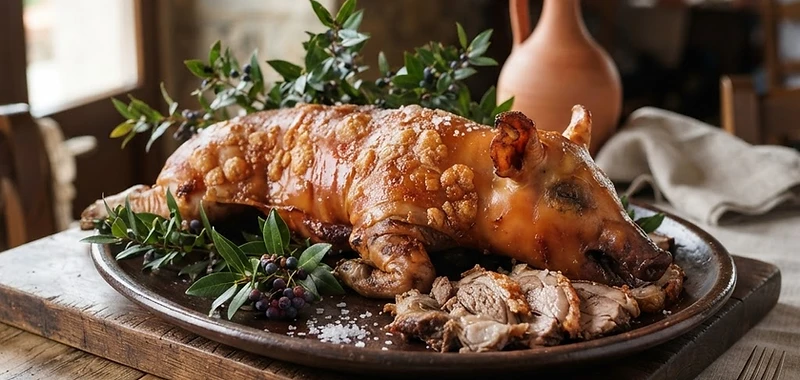
The dish of Sardinian festivals, shepherds, and weddings: a whole suckling pig (porceddu), spit-roasted over an aromatic-wood fire for hours, basted with myrtle and bay, until the skin is glass and the meat falls. Eaten with your hands, with carasau bread, and Cannonau red wine. It's not restaurant food — it's event food — but the best agriturismi on the island still do it right.
Why go
To eat a whole suckling pig, hand-roasted over myrtle wood, at a Sardinian farmhouse.
The Field Guide take
Sardinia is an island defined by its interior—a rugged, mountainous landscape where pastoral traditions have dictated the rhythm of life for centuries. Among these, porceddu (or porcheddu) stands as the definitive culinary marker of the region. It is not merely a dish but an event: a whole suckling pig, roasted slowly over a wood fire, traditionally served at communal gatherings, weddings, and festivals.
What it is
Porceddu is a whole roasted suckling pig, typically no more than a few weeks old. The goal of the preparation is to achieve a texture contrast: skin that is glass-like, thin, and shattered upon contact, shielding meat that has been rendered tender and aromatic by hours of slow exposure to indirect heat. It is a communal food, intended to be pulled apart by hand and shared among a large group.
Origin and history
The dish emerged from the transhumance lifestyle of the Barbagia shepherds. Moving through the island’s mountainous center with their flocks, these shepherds required cooking methods that did not rely on permanent stone hearths. Roasting a whole animal over an open fire was a practical, efficient way to feed groups during seasonal work or religious feast days.
While the technique began as a necessity of the interior, it eventually became the centerpiece of Sardinian public life. Today, it remains the standard fare for village sagre (festivals) and family milestones. Though it can be found in restaurants and agriturismi across the island, the dish retains its strongest ties to the provinces around Nuoro, where the tradition of open-fire roasting is maintained as a direct link to the island’s ancient agricultural history.
How it’s made
Authentic porceddu is defined by the management of heat. The pig is gutted, cleaned, and secured on a spit. The spit is placed near—but not directly over—the embers of a wood fire. This indirect heat is essential; if the meat is cooked too quickly or at too high a temperature, the fat will not properly render, and the skin will remain rubbery rather than crisp.
The process requires hours of constant monitoring. In the Barbagia region, the use of aromatic myrtle (mirto) branches in the fire is considered non-negotiable, as the smoke infuses the meat with a distinct, herbal scent. In areas like Logudoro, some cooks incorporate bay leaves to adjust the aromatic profile. A properly prepared pig shows a uniform, deep golden color and a complete rendering of the subcutaneous fat. If the skin is soggy or the meat is uneven, it is a sign that the pig was likely cooked in a gas or electric oven rather than over the wood fire that defines the dish.
Where to eat it
Because porceddu requires hours of labor and a large group to justify the roasting of a whole animal, it is rarely a dish found on a standard à la carte restaurant menu. Travelers are best served by seeking out agriturismi—working farmstays—in the mountainous interior of the island. These establishments are the most likely to maintain the traditional equipment and the patience required for proper spit-roasting. If you are traveling solo or in a very small group, you may struggle to find a venue that prepares a full pig on demand; it is an event food, meant for long, slow afternoons.
When and how
While porceddu can be found year-round, it is most tethered to the social calendar. It is at its peak during the late spring and summer, when village festivals and outdoor gatherings are most frequent.
The etiquette of eating porceddu is utilitarian. It is served on wooden boards or cork platters, traditionally accompanied by pane carasau, the thin, crisp, unleavened Sardinian flatbread that serves as both a plate and a side. Eat with your hands, and expect the meal to last several hours.
What to drink with it
The intensity of the roast pork demands a wine with enough structure to stand up to the fat and smoke. Cannonau di Sardegna, the island’s flagship red wine made from Grenache grapes, is the standard pairing. Its earthy, tannic profile cuts through the richness of the meat. To conclude the meal, a glass of mirto—the local liqueur made from macerated myrtle berries—is the traditional digestif, mirroring the aromatics used to roast the pig itself.
The Story
Where Porceddu comes from
Porceddu, also known as porcheddu, represents the pastoral history of Sardinia, an island defined by its rugged interior and centuries of transhumance. The dish originated among the shepherds of the Barbagia region, who developed this method of roasting suckling pig as a practical way to feed groups during communal outdoor work, harvest, or religious feast days. Because the shepherds were frequently away from permanent hearths, the technique relies on the availability of local hardwoods and the specific age of the animal, which was rarely more than a few weeks old to ensure tenderness.
Over time, porceddu moved from the shepherd’s open fire to the center of Sardinian public life. It is the defining centerpiece for weddings, village sagre, and major family gatherings. While it is now a mainstay in many Sardinian agriturismi, its roots remain tied to the rugged landscape of Nuoro and the surrounding mountainous provinces, where the tradition of cooking whole animals in the open air is maintained as a direct link to the island's Neolithic agricultural traditions.
What Defines It
Signature ingredients
Suckling pig
Specifically unweaned, usually 4 to 6 weeks old; the high fat-to-meat ratio ensures the pork remains succulent during the long roasting time.
Myrtle (Mirto) branches
Often used to flavor the fire or placed under the meat; the oils from the leaves provide a subtle, herbal resinous aroma that cuts the richness of the pork fat.
Sea salt
The only seasoning traditionally permitted; it is applied generously to dehydrate the skin, turning it into the signature 'glass' crackling.
Sardinian woods
Hardwoods such as holm oak (leccio) are essential for creating a long-lasting, steady heat that provides a deep, woody smoke without overpowering the delicate meat.
The Method
How it's made
The pig is gutted, cleaned, and skewered vertically or horizontally depending on the local technique. The secret lies in the distance from the fire: the heat must be indirect, allowing the pig to roast slowly for several hours until the skin is shattered, golden, and brittle. A well-made porceddu is characterized by its uniform color and the complete rendering of the subcutaneous fat. A careless version, often found in ovens rather than over wood fires, will result in soggy skin and unevenly cooked meat. Authentic preparation demands constant monitoring of the embers to ensure the skin blisters perfectly without burning.
Across Italy
Regional variants
Barbagia
The ancestral home of the dish, where the use of myrtle branches in the embers is considered non-negotiable for authentic aromatics.
Logudoro
Often features slightly different salting techniques and may occasionally include the use of bay leaves in addition to the traditional myrtle.
Timing
When to eat it
Porceddu is technically available year-round, but it is traditionally tied to village festivals and outdoor gatherings, which peak in the late spring and summer months. It is rarely a weekday lunch; it is a meal meant for long, slow afternoons or significant family celebrations.
Serve With
Classic pairings
Cannonau di Sardegna
wineA full-bodied, high-tannin red wine made from Grenache grapes; its structure stands up to the intense fat of the pork.
Pane Carasau
foodThe traditional thin, crisp Sardinian flatbread, which acts as a neutral vessel to soak up the rendered pork drippings.
Mirto Liqueur
digestifAn herbal liqueur made from myrtle berries, commonly served after the meal to aid digestion of the heavy roast.
What makes it worth going
Whole roast suckling pig, cooked on a spit over a wood fire — Sardinia's great celebratory dish.
Things to do
- farm
Agriturismo in Barbagia (e.g. Agriturismo Sa Marchesa)
The agriturismo in the Sardinian interior is where porceddu is done right. Book a full meal; the spit-roast is the centerpiece. Call ahead, days in advance.
half day
- farm
Agriturismo in Ogliastra
The east, with the shepherds' mountains. The porceddu is roasted over myrtle and bay. The full meal includes culurgiones, pane carasau, seadas.
half day
- festival
Festival of Saint Efisio (Cagliari, May 1)
The great Sardinian festival; the streets of Cagliari fill with food, including porceddu from the agriturismi.
full day
- rural
Oliena / Supramonte
The mountain interior, the most remote Sardinia. The shepherds here still do porceddu over an open fire. A 4x4 and a guide help.
Eat
- main
Porceddu arrosto
The whole suckling pig, spit-roasted over aromatic wood for hours. The skin is glass; the meat falls. Eaten with your hands, with carasau bread.
- bread
Pane carasau
The crisp, thin shepherd's bread, eaten with the porceddu. Soak it with the pork fat.
- dessert
Seadas
The Sardinian finish: fried cheese pastry with bitter honey. The sweet-savory contrast after the pork.
Stay
- farm-stay
An agriturismo in Barbagia or Ogliastra
The only way to do porceddu right; you sleep on the farm, eat at the farm, and the pig is roasted at dawn. Book ahead.
- town
Nuoro
The gateway to Barbagia; a base for the agriturismi of the interior.
Experiences Worth Booking
Full agriturismo feast
4 hrsAntipasti, culurgiones, porceddu, seadas, wine, myrtle liqueur. A 4-hour meal.
Porceddu is event food, not restaurant food; the agriturismo is the only real version.
Suits: Groups of 4+; the feast is communal and slow. Not for solo diners.
Shepherd's day in the Supramonte
full dayA drive into the mountains, a shepherd's lunch, porceddu or lamb, seadas, wine. With a guide.
The Supramonte is inaccessible without a local; a guide makes it safe and real.
Suits: Adventurous eaters who want the most remote Sardinia.
What's nearby & pairs with
More food from Sardegna
Dish
Culurgiones
Sardinian ravioli filled with potato, pecorino, and mint — pinched into a wheat-sheaf shape.
Dish
Malloreddus
Saffron gnocchetti with pork and tomato ragù — the everyday pasta of Sardinia.
Dish
Pane Carasau
Thin, crisp, twice-baked flatbread — the bread of Sardinian shepherds, made to last for weeks.
Dish
Seadas
Fried semolina and pecorino pastry, doused in bitter honey — Sardinia's most singular dessert.
Dish
Bottarga di Cabras
Salt-cured mullet roe from the Cabras lagoon — Sardinia's 'gold', shaved over pasta.
Ready to plan?
Ready to turn discovery into a trip?
Italy Field Guide helps you decide where to go. When you're ready to build the actual day-by-day itinerary, take your saved places to Travel Itinerary Co — your interests go with you.
Turn your saved Italy places into a trip