The Verdict
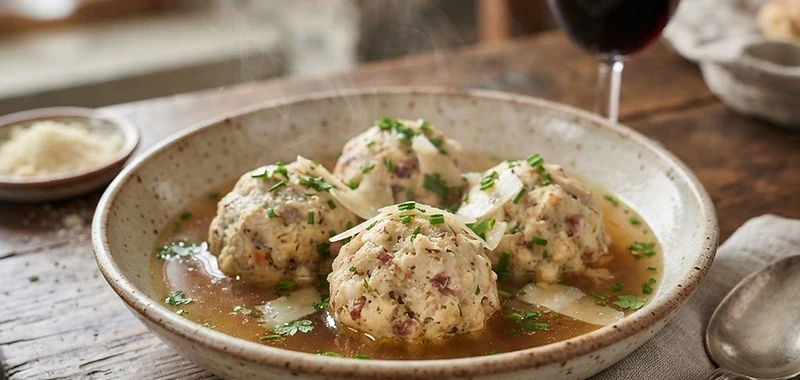
The dumpling that feeds the Dolomites. Balls of stale bread, milk, egg, speck, and cheese, boiled in broth (in brodo) or tossed in butter, with grated cheese. The dish of Alto Adige's mountain huts — heavy, cheap, and exactly what you want after a hike. Made with what's left; meant to be eaten with what's on hand. The Tyrolean knödel, Italian.
Why go
To eat the Alpine dumpling — bread and speck, after a hike in the Dolomites.
The Field Guide take
In the mountain valleys of Trentino-Alto Adige, where the rugged peaks of the Dolomites define the horizon, the canederlo—or knödel, as it is known in the German-speaking pockets of South Tyrol—serves as the foundational unit of the regional diet. It is a dense, circular dumpling crafted from the necessities of alpine life: stale bread, milk, eggs, and cured meat. More a functional fuel than a delicate culinary creation, the canederlo is the definitive dish of this borderland, bridging the gap between Austrian tradition and Italian agricultural practice.
What it is
A canederlo is a rustic dumpling, typically the size of a tennis ball. The composition is utilitarian, relying on bread that has hardened to the point of being inedible on its own. By reviving this bread with milk, eggs, and local flavorings like Speck Alto Adige IGP and alpine cheeses, the dish provides a high-calorie, warming meal. It is served in two primary ways: in brodo, submerged in a clear beef consommé, or asciutti, tossed in browned butter and topped with grated cheese. These are not light, ethereal appetizers; they are substantial, filling portions designed to sustain labor or long days spent in the mountains.
Origin and history
The history of the canederlo is inseparable from the history of the region itself. As a border territory that shifted from Austro-Hungarian influence to Italian administration following the First World War, the culinary traditions of Trentino-Alto Adige are a synthesis of two worlds. The dish arose from the scarcity of high-altitude farming. When wheat was difficult to grow and winters were punishingly long, throwing away bread was not an option. The canederlo became a way to maximize the caloric utility of every ingredient. Today, the dish is a cultural marker of the South Tyrol, found in the kitchens of Bolzano, Merano, and Bressanone, representing a historical pragmatism that has persisted into the modern era.
How it’s made
A proper canederlo requires precision in hydration. Stale white bread is cut into uniform cubes and soaked in milk. The balance is narrow: too much milk results in a gummy, leaden texture, while too little leads to a dry, crumbling ball. Once the bread is hydrated, it is mixed with eggs, flour, finely diced speck, and locally sourced mountain cheese. A crucial, often overlooked step is allowing the mixture to rest for at least 30 minutes, which stabilizes the starches. The dumplings are dropped into simmering, salted water or broth; they are cooked once they rise to the surface. A skilled cook maintains a light, airy center, whereas a rushed or careless preparation results in a heavy, indigestible mass.
Regional variations
While the classic version features speck, the recipe shifts based on geography and available pantry staples. In the Trentino province, you will often find luganega sausage used in place of speck, reflecting the local pork production traditions. In the Val Pusteria, cooks frequently incorporate local produce into the dough, such as spinach (canederli agli spinaci) or beetroot (canederli di barbabietola), which provide a different texture and color. Further afield, as the influence extends into the Cadore region of the Veneto, the dumplings are often served smaller, as a component of mixed meat platters or vegetable soups.
When and how
Canederli are consumed throughout the year, but they are most aligned with the cooler, outdoor-focused months. In the rifugio circuit of the Dolomites, they are the standard mid-day meal for hikers and skiers. They are not intended to be eaten in fine-dining settings, but rather in the wood-paneled, communal environments of alpine huts and mountain taverns. If you are seeking light, refined Italian cuisine, this dish will not meet that criteria; it is a dense, earthy, and satisfying relic of the mountains.
What to drink with it
Because the dish is heavy and rich with cured meat, the drink pairing should provide a sharp or structured contrast. A dry, local white wine such as a Gewürztraminer is frequently served, as its aromatic profile stands up to the fat of the butter and cheese. Alternatively, a red wine with firm acidity and tannins, such as a Lagrein, is the standard regional choice. For those eating the dish in brodo, a simple, chilled glass of either of these wines—or a light local beer—is appropriate. Serve with a side of cabbage salad to cut the density of the dumplings.
The Story
Where Canederli comes from
Canederli, or Knödel in the local German dialect, represent the culinary synthesis of the Alpine borderland between Italy and Austria. The dish emerged as a quintessential peasant solution to the problem of food waste in the mountainous Trentino-Alto Adige region, where the harsh climate made the preservation of bread critical. By soaking stale, hardened bread in milk and binding it with eggs, mountain families could create a filling, high-calorie meal from ingredients that would otherwise be discarded, extending the utility of their limited wheat supply.
The dish serves as a culinary marker of the South Tyrol's unique identity, which shifted from Austro-Hungarian rule to Italian administration after World War I. While its roots are firmly rooted in the Germanic bread-dumpling tradition, it has been fully absorbed into the regional Italian lexicon. It is a dish born of scarcity and physical labor, designed specifically to provide the necessary fuel for life at high altitudes in towns such as Bolzano, Merano, and Bressanone.
What Defines It
Signature ingredients
Stale white bread
Provides the essential texture; it must be dry enough to absorb liquid without turning into a mushy paste.
Speck Alto Adige IGP
A lightly smoked, cured ham that contributes a distinctively woody, salty depth to the mild bread base.
Whole milk
Hydrates the bread and provides the necessary richness to bind the dumpling together.
Local alpine cheeses
Often Emmental, Fontina, or Puzzone di Moena; these add structural cohesion and a fatty, savory punch.
Fresh parsley
Adds a necessary herbal brightness to cut through the density of the bread and fat.
The Method
How it's made
A well-made canederlo starts with cutting bread into uniform, small cubes, which are soaked in milk just until hydrated. Too much milk creates a heavy, gummy dumpling, while too little results in a dry, crumbling ball. The speck and cheese are folded into the mixture with eggs and a small amount of flour to bind. A skilled cook knows that the dough must rest for at least 30 minutes to allow the starches to stabilize. The hallmark of a careless version is a dense, leaden texture—the goal is a light, airy center that remains intact while boiling. Authentic technique dictates the dumplings be dropped into simmering, salted water or broth; they are ready when they rise to the surface.
Across Italy
Regional variants
Trentino
Canederli here often incorporate local luganega sausage instead of speck, reflecting the province's slightly different agricultural outputs.
Val Pusteria
Frequently features variations using beetroot (canederli di barbabietola) or spinach (canederli agli spinaci), which offer a lighter alternative to the traditional meat-heavy recipe.
Cadore (Veneto)
The dish crosses the border into the Dolomites, often served in smaller sizes as a component in mixed meat platters or vegetable soups.
Timing
When to eat it
Traditionally consumed year-round, but most associated with the autumn and winter months. In the mountains, it is the standard dish for the 'rifugio' circuit, served as a restorative lunch during hiking or skiing excursions.
Serve With
Classic pairings
Lagrein
wineA structured, tannic red native to Bolzano that stands up well to the richness of the speck and butter.
Gewürztraminer
wineThe aromatic acidity provides a necessary contrast to the dense, starchy nature of the dumplings.
Clear beef broth
other foodThe most traditional serving method, which highlights the flavor of the dumpling components.
Cabbage salad
other foodServed on the side to provide a crisp, acidic crunch against the soft, warm dumplings.
What makes it worth going
Bread dumplings with speck and cheese, boiled in broth or butter — the Alpine peasant dish.
Things to do
- trattoria
A trattoria in Bolzano or Merano
The canederli are the benchmark; the bread, the speck, the cheese, the boil. The dumpling is the alpine staple. Reserve.
2 hrs
- rifugio
A rifugio on the high pastures
The canederli at altitude, after a hike. The dumpling is the refuel; the speck is the local cure. The view is the bonus.
half day
- farm
A South Tyrolean agriturismo
The canederli are made on the farm; the bread is the day-old, the speck is the farm's. The dumpling is the cucina povera of the Alps.
half day
- experience
A canederli-making class
The canederli are the lesson; the stale bread, the speck, the cheese, the boil. The technique is the dumpling.
Eat
- dumpling
Canederli allo speck
The classic: bread dumplings, with speck, cheese, and onion, boiled in broth or water. The speck is the flavor; the bread is the base.
- variation
Canederli in brodo or asciutti
The two versions: in brodo (in broth, the winter dish) or asciutti (dry, with butter and cheese, the richer dish).
- companion
With speck and gorgonzola
The alpine pairing; the speck and the blue cheese, with the dumpling.
Stay
- city
Bolzano or Merano
The urban bases, with good trattorias and easy access. Walkable.
- rifugio
A rifugio on the high pastures
The alpine hut, for canederli at altitude and a night in the mountains. A hike is required.
Experiences Worth Booking
Canederli-making class
3 hrsThe stale bread, the speck, the cheese, the boil. The dumpling is the alpine cucina povera.
The canederli are a bread dumpling; a class shows you the soak, the mix, the shape, and the boil.
Suits: Home cooks who want the alpine dumpling; the bread is the secret.
Alpine food and hike day
full dayA hike to a rifugio, a canederli lunch, a speck tasting. The full South Tyrolean arc.
The canederli are the hiker's refuel; a day covers the hike, the dumpling, and the cure.
Suits: Hikers and food travelers with a day for the Alps.
What's nearby & pairs with
More food from Trentino-Alto Adige
Ready to plan?
Ready to turn discovery into a trip?
Italy Field Guide helps you decide where to go. When you're ready to build the actual day-by-day itinerary, take your saved places to Travel Itinerary Co — your interests go with you.
Turn your saved Italy places into a trip