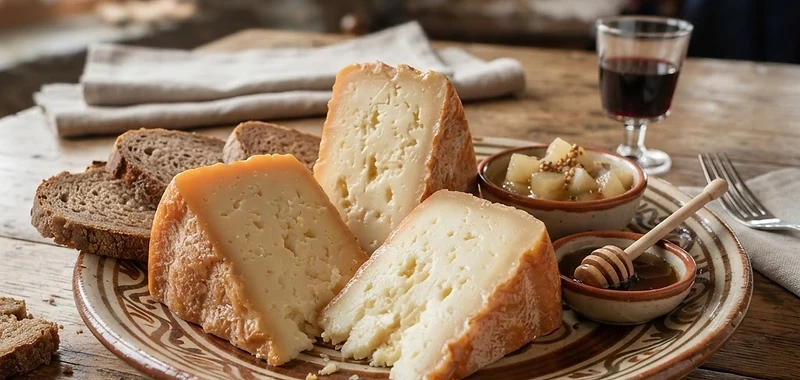
Cheese · Trentino-Alto Adige
Puzzone di Moena
The Verdict
Puzzone is the cheese to order on a mountain lunch in the Dolomites: soft, pungent on the rind, and mild underneath. It is also the most fun cheese name in Italy. Eat it with polenta in a malga above Moena.
Why go
A valley cheese served in the mountain huts of the Fassa valley, in the middle of the Dolomites.
The Field Guide take
Travelers crossing the Fassa Valley in the Trentino province should set aside their caution regarding pungent aromas. Puzzone di Moena is the defining cheese of the Dolomites, specifically the high-altitude pastures above the town of Moena. It is a washed-rind cheese that relies on a brief, intense aging process to develop a profile that is far more approachable than its name suggests.
What it is
Puzzone di Moena is a semi-hard cow's milk cheese defined by its sharp, earthy fragrance and a surprisingly mild, buttery interior. The name is a literal reference to its scent—in local dialect, a "puzzone" is a stinker. This odor is concentrated entirely on the exterior, characterized by a tacky, reddish-brown rind. Once sliced, the paste is pale yellow, supple, and consistent. It lacks the aggressive funk that its olfactory profile might lead one to expect, making it a reliable choice for those interested in alpine tradition rather than shock value.
Origin and history
The history of this cheese is rooted in the transhumance of the Fassa and Fiemme valleys. For generations, farmers drove herds to mountain malghe—high-altitude huts—to graze on summer pastures. Because these huts were often isolated, cheesemaking was a practical necessity to preserve surplus milk. Originally, Puzzone had no official name; it was simply the local mountain cheese. As the specific method of washing the rind became standardized, the local inhabitants began calling it by the nickname for its stubborn, penetrating aroma. It eventually became an official designation, signaling a move from a subsistence product to a recognized regional staple.
How it's made
Production begins with raw cow's milk, which is curdled and pressed into round forms. The defining step occurs during the aging process, which typically lasts between two and four months. During this time, the wheels are regularly bathed in brine. This ritualized washing prevents the growth of unwanted molds and encourages the development of specific bacteria on the rind. These bacteria are responsible for the deep, rusted color of the exterior and the pungent, ammonia-forward scent. The interior, shielded by the rind, remains protected and retains a sweet, milky quality that balances the exterior strength.
Where to eat it
The most effective way to experience Puzzone di Moena is in the environment where it was developed. Seek it out at the malghe scattered above Moena. These mountain huts, often reachable via trail or chairlift, serve the cheese as part of a classic mountain board. While it is available in retail shops throughout Trento, the context of a high-elevation hut serves the cheese better. Ensure the establishment explicitly sources it from the Val di Fassa producers, as Puzzone is a localized specialty and not an ubiquitous product of the entire Dolomite range. Opening hours for these huts are strictly seasonal; confirm they are operational before committing to a trek.
When and how
The prime season for Puzzone is late summer and autumn. This corresponds with the end of the grazing season, when the cows have consumed the diverse flora of the high pastures, yielding a more complex, fatty milk. When serving, allow the cheese to sit at room temperature for at least 30 minutes. Cold Puzzone is muted and loses its textural appeal. It is traditionally served alongside warm, freshly prepared polenta. The heat of the polenta helps release the aromas of the rind, while the neutral cornmeal acts as a foundation for the salty, creamy paste.
What to drink with it
Because Puzzone di Moena possesses a distinct saltiness and a creamy fat content, it requires a wine with enough structure to cut through the coating on the palate. A Teroldego Rotaliano DOC is the local preference. This red wine from the nearby Rotaliano plain provides enough tannins and acidity to stand up to the cheese without being overwhelmed by its smell. If a white wine is preferred, look for a crisp Kerner or a Sylvaner from the Alto Adige region; their sharp acidity acts as a foil to the dense, buttery mouthfeel of the cheese. Avoid light, floral wines, which will vanish against the intensity of the rind.
The Story
Where Puzzone di Moena comes from
The name means stinker and was originally a nickname; the cheese was made in the malghe of the Fassa and Fiemme valleys from the milk of summer pasture herds.
The Method
How it's made
Cow's milk is curdled and pressed, then the forms are washed in brine regularly during aging, which encourages the reddish rind and the strong smell. Aging is short, two to four months.
Timing
When to eat it
Best in late summer and autumn.
Serve With
Classic pairings
Teroldego Rotaliano DOC
wineSpeck
cured meatWhat makes it worth going
A washed-rind cheese from the Fassa valley that smells considerably stronger than it tastes.
What's nearby & pairs with
More food from Trentino-Alto Adige
Dish
Canederli
Bread dumplings with speck and cheese, boiled in broth or butter — the Alpine peasant dish.
Dish
Strudel di Mele
Apple strudel from Alto Adige — the Italian version of the Austrian classic, with a paper-thin pastry.
Cured Meat
Speck
Smoked, dry-cured ham from Alto Adige — the Alpine answer to prosciutto, lightly smoked over juniper.
Ready to plan?
Ready to turn discovery into a trip?
Italy Field Guide helps you decide where to go. When you're ready to build the actual day-by-day itinerary, take your saved places to Travel Itinerary Co — your interests go with you.
Turn your saved Italy places into a trip