
The Verdict
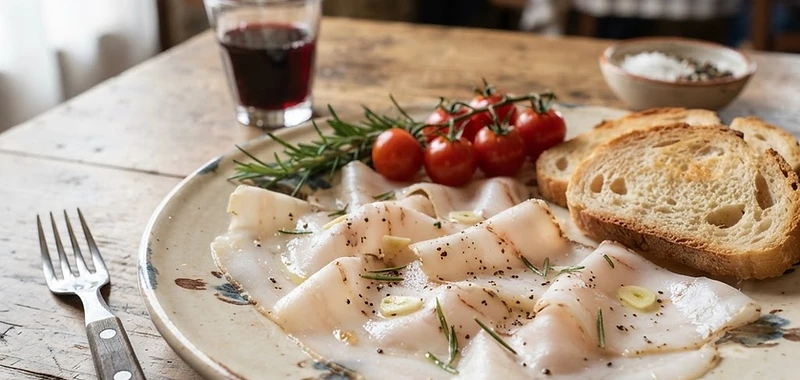
The cured meat that sounds worst and is most surprising: pure pork fatback, aged in white marble basins (conche) from the Carrara quarries, layered with salt, garlic, rosemary, and spices. After 6 months, it's silky, translucent, and aromatic — sliced thin, it melts on warm bread. From Colonnata, a quarry village above Carrara. IGP-protected, and a genuine one-of-a-kind.
Why go
To eat cured pork fat that melts on bread — the most singular cured meat in Italy.
The Field Guide take
Lardo di Colonnata is a specialty born from necessity. In the rugged mountains above Carrara, where the landscape is defined by the extraction of white marble, laborers required high-calorie, shelf-stable food to sustain them through long shifts in the quarries. What began as a practical solution for workers has evolved into an IGP-protected product that remains one of the most distinctive cured meats in Italy. It is not a ham or a sausage; it is seasoned pork fat, transformed by time and stone.
The character of the product
Lardo di Colonnata is composed of the fatty layer taken from the back of the pig. When properly cured, this slab becomes translucent, pale white or slightly pink, and firm to the touch. It is not chewy or gristly. Its defining characteristic is its texture: at room temperature, it achieves a buttery, silky consistency that dissipates almost immediately upon contact with the warmth of the palate. Its flavor is subtle, characterized by the sweetness of high-quality pork fat seasoned with a specific mixture of aromatics.
Origin and history
The history of this product is inseparable from the marble quarries of Massa-Carrara. For centuries, the men who worked the stone relied on the conche—the deep, rectangular basins carved from Carrara marble—to cure their lard. The stone serves as a natural container, but it also dictates the environment of the aging process. The porous nature of the marble allows for a slow, consistent maturation that a plastic or metal vessel cannot replicate. Because the production was originally a byproduct of quarry life, the tradition was localized entirely to the village of Colonnata, perched high above the town of Carrara.
Production and curing
To receive the IGP (Indicazione Geografica Protetta) status, the lard must be processed within the specific geographical boundaries of Colonnata. The process begins with the selection of fresh pork back fat, which is trimmed and layered into the marble basins. Between each layer, the producer adds a precise mixture of sea salt, black pepper, cinnamon, cloves, coriander, star anise, and fresh rosemary and garlic.
The basins are then covered with a marble lid and left in cool, ventilated rooms. The curing time is a minimum of six months, though many producers opt for longer. During this period, the salts draw moisture out of the fat, while the herbs and spices infuse the lard with an aromatic profile that balances the richness of the pork. The marble does not flavor the meat directly, but it maintains a stable temperature and moisture level that prevents the fat from turning rancid.
Where to find it
The only place to experience the full context of this product is in the village of Colonnata itself. The village is physically integrated into the marble extraction industry, and the local shops (locally known as larderie) serve as the primary source for the genuine article. While Lardo di Colonnata is available in specialized butcher shops across Tuscany and beyond, eating it in the village offers an understanding of why this specific micro-climate is essential to the curing process. Expect simple, direct service; this is a product meant to be tasted in the same environment where it is cured.
How to eat it
Lardo di Colonnata should be sliced thin, preferably by hand or using a sharp knife rather than a high-speed deli slicer, which can alter the temperature and texture of the fat. The classic delivery method is a slice of crusty, unsalted Tuscan bread, toasted or warmed just enough to soften the lard upon contact. Some consume it alone as an antipasto, while others serve it draped over warm polenta or as a finish for hearty legume soups. It is a dense food; serve it in small portions.
Pairing and tradition
Because the product is essentially pure fat, it requires a beverage that can cut through its richness. A crisp, high-acid white wine is the standard recommendation. Vermentino, which is widely cultivated in the coastal regions of Tuscany and the neighboring Liguria, is the canonical pairing. The acidity and mineral notes of a cold Vermentino cleanse the palate, providing a necessary counterpoint to the velvet texture of the lard. Avoid heavy, tannic red wines, which can clash with the delicate aromatics of the curing spices.
The Story
Where Lardo di Colonnata comes from
Lardo di Colonnata is a hyper-local product from the Carrara marble quarries in Tuscany. Quarrymen used to bury slabs of pork fat in the very marble troughs used to extract the stone, covering them with herbs and salt. Today, it remains a rare, highly valued delicacy that defines the ingenuity of the region's working-class heritage.
What Defines It
Signature ingredients
Pork fatback
The high-quality back fat is what makes the product buttery and rich.
Local herbs and spices
Including garlic, rosemary, and cinnamon, which infuse the fat with a fragrant, earthy character.
The Method
How it's made
The fat is cured in marble troughs for months. The natural stone breathes, creating a unique environment for the curing process that produces a silky, almost sweet lard that literally melts in the mouth.
Timing
When to eat it
Year-round.
Serve With
Classic pairings
Vermentino
wineA mineral, crisp white that cuts the intensity of the fat perfectly.
Hot bread
foodThe heat of the bread causes the fat to melt into the crumb for an intense, luxurious bite.
What makes it worth going
Cured pork fatback, aged in marble troughs with herbs — the marble-quarry town's most singular product.
Things to do
- producer
A larderia in Colonnata
The home of the lardo, in the marble village above Carrara. The lardo is cured in marble basins (conche), with garlic, herbs, and salt. Visit a larderia; book ahead.
1.5 hrs
- experience
A Carrara marble quarry
The village is in the marble quarries; the marble is the cure. The lardo is cured in the same stone Michelangelo used. The quarry is the context.
2 hrs
- trattoria
A Tuscan trattoria for a tagliere
The lardo is the centerpiece of the Tuscan tagliere; the trattoria is the context. The thin slice, the melt, the herb.
1.5 hrs
- experience
A salumi-tasting with bread and wine
The Tuscan tagliere: lardo, finocchiona, prosciutto toscano, with bread and a Chianti. The board is the tasting.
Eat
- cured_meat
Lardo di Colonnata IGP
The classic: cured pork fatback, aged in marble basins with garlic, rosemary, sage, and salt. The fat is soft, the herbs are the flavor, the slice melts. The marble is the cure.
- bread
With pane toscano or bruschetta
The traditional companion; the lardo melts on the warm bread. The toast is the base.
- wine
A glass of Chianti or Vermentino
The Tuscan red or white; the correct pairing for the fat and the herb.
Stay
- village
Colonnata village
At the source, in the marble quarries. A car is required; the village is small.
- city
Carrara or Lucca
The urban bases, with easier access and good restaurants. A car is still useful.
Experiences Worth Booking
Lardo di Colonnata larderia visit
2 hrsThe marble basins, the cure, the herbs, the tasting. The marble is the context.
The lardo is cured in marble; a larderia visit shows you the conche, the herbs, and the age.
Suits: Cured-meat obsessives who want the lardo at its source.
Marble quarry and lardo day
full dayA Carrara marble quarry, a lardo tasting in Colonnata, a Tuscan lunch. The full Carrara arc.
The lardo and the marble are the same stone; a day covers the quarry and the cure.
Suits: Food and culture travelers with a day for the area.
What's nearby & pairs with
More food from Toscana
Cured Meat
Finocchiona
Tuscan fennel-seed salami — the everyday salume of Florence, coarsely ground and fragrant with wild fennel.
Dish
Bistecca alla Fiorentina
T-bone steak from Chianina beef, grilled over wood, served rare with nothing but salt and olive oil.
Dish
Pappardelle al Cinghiale
Wide egg pasta ribbons with wild boar ragù — the dish of the Tuscan hunting season.
Dish
Ribollita
Bread and bean soup with cavolo nero, reboiled (ribollita) until thick — the peasant dish of Tuscany.
Cheese
Pecorino di Pienza
Sheep's milk cheese from the Val d'Orcia — pecorino at its most varied, from fresh to aged and ash-rubbed.
Ready to plan?
Ready to turn discovery into a trip?
Italy Field Guide helps you decide where to go. When you're ready to build the actual day-by-day itinerary, take your saved places to Travel Itinerary Co — your interests go with you.
Turn your saved Italy places into a trip