
The Verdict
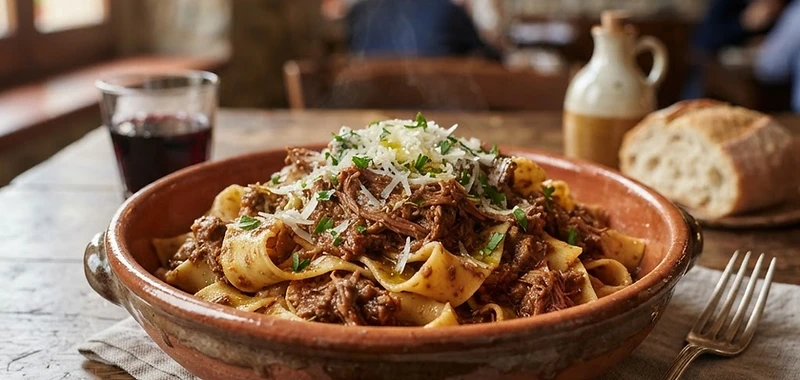
The pasta of the Tuscan autumn and winter. Wide, flat pappardelle with a slow-cooked ragù of wild boar (cinghiale) — tomato, red wine, rosemary, juniper, and the game itself. It's the dish that makes the case for Tuscany as a meat region, not just a wine one. Order it in a country trattoria in the Siena province, with a Brunello or a Chianti.
Why go
To taste the Tuscan wild-boar ragù at its source, in hunting season.
The Field Guide take
Pappardelle al cinghiale is the definitive dish of the Tuscan interior. It relies on a straightforward logic: the region’s dense, wooded hills support a large population of wild boar, and the autumn hunting season provides the primary protein for a sauce that requires both time and patience to prepare. It is a hearty, foundational meal that reflects the rural traditions of central Italy, where the kitchen follows the rhythm of the local landscape.
What it is
The dish consists of two distinct components: the pasta and the ragù. The pappardelle are broad, flat egg-pasta ribbons, typically about an inch wide. Their substantial surface area is functional, designed specifically to carry a heavy, chunky sauce that would slide right off thinner strands like spaghetti or linguine. The cinghiale (wild boar) is a game meat—leaner, darker, and more muscular than domestic pork, with a distinct, earthy flavor. When slow-cooked into a ragù, it becomes the centerpiece of the Tuscan winter table.
Origin and history
Wild boar hunting is a cornerstone of Tuscan agricultural and culinary history. For centuries, managing the boar population has been a necessity for farmers protecting their crops, and the culinary result was the integration of this game into the regional diet. Unlike the refined sauces of aristocratic cuisine, pappardelle al cinghiale belongs to the tradition of the cacciatore (hunter). The dish evolved as a way to utilize the tougher cuts of the animal, using long braising times to transform gamey, fibrous meat into a tender, concentrated sauce.
How it’s made
A proper ragù begins with the marinade. The boar is typically soaked in red wine and aromatics to soften its flavor and texture before cooking. The meat is then browned and slow-simmered with a soffritto of onion, carrot, and celery. The defining aromatics are rosemary and juniper berries; the latter are essential to cut through the richness of the meat and provide the characteristic resinous, wild note that distinguishes boar from a standard beef or pork ragù.
A high-quality preparation is dark, thick, and clings to the pasta. There should be no watery runoff on the plate. The sauce requires a slow braise—often several hours—until the meat pulls apart easily. Because wild boar is naturally lean, the addition of a small amount of fat during the braise is common to ensure the sauce remains succulent.
Where to eat it
To experience this dish as it is intended, head into the hills of the Siena province or the Maremma. While you will find it on menus in Florence, the best versions are served in small, family-run trattorias located in the villages surrounding the forests. Look for establishments that focus on local game; in these settings, the kitchen is more likely to have a direct relationship with local hunters. If you are traveling between November and January, the dish is ubiquitous. Outside of the hunting season, many kitchens use frozen boar, which is acceptable, but the freshness of the meat in mid-winter is superior.
When and how
This is not a lunch dish to be followed by a long day of sightseeing. It is an autumn and winter staple, designed to provide warmth and sustenance. It is typically served as a primo, or first course. Given the density of the dish, it is best enjoyed with a simple vegetable side, such as sautéed chicory or, in the height of autumn, a side of roasted chestnuts.
What to drink with it
The intensity of wild boar demands a wine with significant structure, acidity, and tannin. The most logical pairing is a Chianti Classico Riserva, which possesses the herbal notes and bright acidity necessary to cut through the richness of the fat and the earthiness of the juniper. If you prefer something with more weight, a Brunello di Montalcino is the classic choice; its complex profile of dark fruit and leather mirrors the gamey qualities of the boar perfectly. Avoid light, unoaked white wines, which will be completely overpowered by the sauce.
The Story
Where Pappardelle al Cinghiale comes from
Wild boar hunting is a central part of Tuscan autumn and winter culture. The ragù made from the catch is a deep, gamey, and intensely flavorful sauce that defines the season. It is meant to be served with broad pasta noodles that can hold the dense, meaty sauce.
What Defines It
Signature ingredients
Wild boar
Leaner and more gamey than domesticated pork, providing a robust base.
Juniper berries
A must-have to balance the gamey meat with earthy, piney notes.
Red wine
Used in significant amounts to marinate and braise the meat.
The Method
How it's made
The boar is marinated, then braised with vegetables and herbs until falling apart. A good sauce is dark, rich, and clings to the pasta, with no watery runoff.
Timing
When to eat it
Autumn and winter
Serve With
Classic pairings
Chianti Classico Riserva
wineThe tannins and earthiness pair perfectly with the wild boar.
Roasted chestnuts
foodAdds an autumnal flavor depth that complements the forest-like sauce.
What makes it worth going
Wide egg pasta ribbons with wild boar ragù — the dish of the Tuscan hunting season.
Things to do
- trattoria
Trattoria Sostanza (Florence)
The benchmark pappardelle al cinghiale, since 1869. The wide pasta, the wild boar ragù, the slow cook. Reserve.
2 hrs
- trattoria
Trattoria Le Logge (Siena / Gaiole)
In Chianti, the home of the wild boar. The pappardelle is the specialty; the ragù is the season. Reserve.
2 hrs
- farm
A Tuscan agriturismo in the hunting season
The cinghiale (wild boar) is hunted in autumn and winter; the pappardelle is the dish of the season. The farm is the source.
half day
- experience
A Tuscan cooking class
The pappardelle is the lesson; the wide pasta, the wild boar ragù, the slow cook. The technique is the ragù.
Eat
- pasta
Pappardelle al cinghiale
The classic: wide, flat egg pasta, with a slow-cooked wild boar ragù. The pasta is the widest of the egg pastas; the boar is the depth.
- cheese
With pecorino toscano
The finish; a grating of pecorino. The traditional companion.
- wine
A glass of Chianti Classico
The Tuscan red; the correct pairing for the boar and the wide pasta.
Stay
- neighborhood
Florence or Siena center
Near the best trattorias. Walkable and central.
- farm-stay
A Chianti agriturismo
In the hills, where the boar is hunted and the pappardelle is made. A car is required.
Experiences Worth Booking
Wild boar ragù class
4 hrsThe pappardelle, the wild boar, the slow ragù. The wide pasta is rolled by hand.
The pappardelle is the widest pasta; a class shows you the roll and the slow boar ragù.
Suits: Pasta makers who want the Tuscan ragù; the boar is the season.
Chianti food and wine day
full dayA pappardelle lunch, a Chianti cellar, a pecorino tasting. The full Chianti arc.
The pappardelle and the Chianti are the Tuscan table; a day covers both.
Suits: Food and wine travelers with a day for Chianti.
What's nearby & pairs with
More food from Toscana
Cured Meat
Finocchiona
Tuscan fennel-seed salami — the everyday salume of Florence, coarsely ground and fragrant with wild fennel.
Dish
Bistecca alla Fiorentina
T-bone steak from Chianina beef, grilled over wood, served rare with nothing but salt and olive oil.
Dish
Ribollita
Bread and bean soup with cavolo nero, reboiled (ribollita) until thick — the peasant dish of Tuscany.
Cheese
Pecorino di Pienza
Sheep's milk cheese from the Val d'Orcia — pecorino at its most varied, from fresh to aged and ash-rubbed.
Cured Meat
Lardo di Colonnata
Cured pork fatback, aged in marble troughs with herbs — the marble-quarry town's most singular product.
Ready to plan?
Ready to turn discovery into a trip?
Italy Field Guide helps you decide where to go. When you're ready to build the actual day-by-day itinerary, take your saved places to Travel Itinerary Co — your interests go with you.
Turn your saved Italy places into a trip