The Verdict
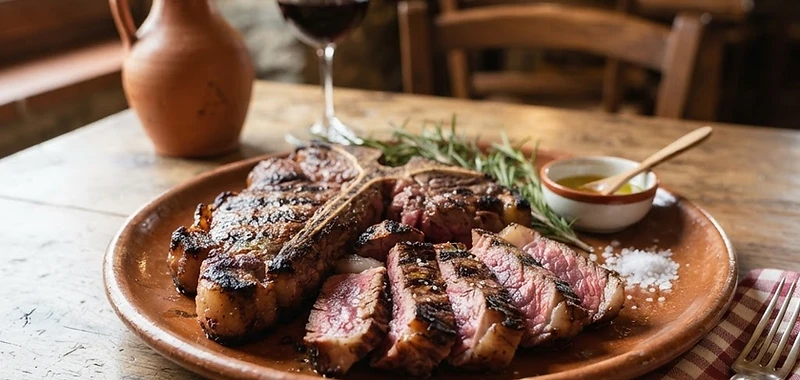
The dish of Tuscany, and the one that divides people. A thick T-bone from Chianina cattle, grilled over wood embers, served rare — very rare — with only salt, olive oil, and sometimes rosemary. You order it by the kilo for a group. It's expensive, it's theatrical, and when it's good it's one of the best meat experiences in Europe. When it's bad it's an expensive chew.
Why go
To eat Tuscany's most theatrical dish, at its source, grilled over wood.
The Field Guide take
The Bistecca alla Fiorentina is the defining dish of Tuscan meat cookery. It is an exercise in restraint: a thick, bone-in cut of beef, seared over wood embers, and served simply with salt and oil. While its reputation suggests a standardized experience, the quality depends entirely on the caliber of the animal and the precision of the grill master. It is a dish that demands a group and a willingness to eat meat served rare.
What it is
The Bistecca alla Fiorentina is a porterhouse or T-bone steak cut from the loin of a Chianina steer. The Chianina is a white-coated, long-horned cattle breed native to the Chiana Valley in Tuscany. By tradition, the steak must be at least three or four fingers thick, weighing between 1 and 1.5 kilograms. Because of its size, it is always ordered by weight and intended for two or more people. It is served al sangue (rare), with the exterior charred and the interior warm but ruby red.
Origin and history
The dish is rooted in the history of the Medici family and the Florence aristocracy. During the feast of San Lorenzo, the Medici would distribute meat to the populace, and the bistecca—the name is an anglicized derivation of "beef steak"—became a symbol of Florentine abundance. It was a feast food, designed to showcase the prestige of local Chianina cattle. While the cattle were historically used as draft animals for plowing the Tuscan fields, the bistecca tradition solidified their status as the premier source of beef in the region.
How it’s made
The preparation is aggressively simple. The steak is removed from the refrigerator well in advance to reach room temperature. It is placed directly onto a grill over glowing wood embers, usually oak or holm oak, which provide a consistent, high-intensity heat. The meat is seared for a few minutes on each side to create a dark, flavorful crust without overcooking the center.
In a traditional Tuscan kitchen, the steak is never seasoned before hitting the fire. Salt is applied only after the meat has been sliced. Once pulled from the grill, the steak is rested, then carved into thick slices, often against the bone. It is finished with a drizzle of robust, local extra virgin olive oil and a sprinkling of coarse sea salt. Some grill masters will brush the meat with a rosemary sprig dipped in oil, but additions beyond salt and oil are widely viewed as distractions from the quality of the raw ingredient.
Where to eat it
The most reliable bisteccas are found in Florence and the surrounding countryside of the Chianti region. Look for trattorie or osterie that explicitly display the Chianina certification. The best results often come from establishments that maintain an open grill or a visible wood-fired hearth. Because the dish is theatrical, many restaurants will bring the raw, massive cut to your table for inspection before it is cooked. If an establishment refuses to cook the steak rare, or pushes for "medium-well," it is a sign that the kitchen may be hiding the quality of the beef behind extended cooking times.
When and how
Bistecca alla Fiorentina is available year-round. It is not a quick meal; the thick cut requires time to temper and time to rest. It is a heavy, expensive, and communal dish. If you are dining alone, you will likely struggle to find a kitchen willing to grill a steak of the appropriate thickness. When ordering, confirm the weight with the server before the kitchen begins the preparation. Once served, eat it as the Tuscans do: slowly, with the meat as the clear focal point of the meal.
What to drink with it
The tannins in bold, structured red wines are necessary to stand up to the fat and proteins of the Chianina. A classic pairing is a Brunello di Montalcino, which provides the acidity and depth to cut through the richness of the beef. Chianti Classico Riserva is the regional standby, offering earthy, herbal notes that complement the charred exterior of the steak. On the side, serve fagioli all’uccelletto—cannellini beans stewed with tomato and sage. The texture of the beans provides a necessary contrast to the density of the meat.
The Story
Where Bistecca alla Fiorentina comes from
This is the king of Tuscan beef dishes, tied directly to the Chianina breed and the traditions of the Florence aristocracy. It was historically a feast food, designed to show off the quality of the local cattle. The preparation is aggressively simple, focusing entirely on the quality of the raw ingredient.
What Defines It
Signature ingredients
Chianina beef
A massive, ancient breed known for lean, deeply flavorful muscle.
Extra virgin olive oil
A pungent Tuscan oil is drizzled over to add a peppery finish.
Coarse sea salt
Applied after cooking to enhance the crust and meat juice.
The Method
How it's made
The massive T-bone is seared over glowing wood embers for only a few minutes per side. It must be served rare to medium-rare; cooking it further is considered a culinary error in Tuscany.
Timing
When to eat it
Year-round
Serve With
Classic pairings
Brunello di Montalcino
wineA powerful, structured red to match the intensity of the beef.
Cannellini beans
foodA simple, earthy side dish that absorbs the meat juices.
What makes it worth going
T-bone steak from Chianina beef, grilled over wood, served rare with nothing but salt and olive oil.
Things to do
- trattoria
Trattoria Sostanza
The most honest bistecca in Florence, since 1869. Order the 'bistecca' and the butter chicken ('pollo alla cacciatora') too. Reserve.
1.5 hrs
- trattoria
Il Latini
Touristy but good; the bistecca is hung and grilled correctly. Go at lunch; expect a line.
1.5 hrs
- trattoria
Buca Lapi
Old-school, near San Frediano. The bistecca is by weight, asked at the table. Pricey, correct.
1.5 hrs
- butcher
Macelleria Cecchini
In Panzano in Chianti. Dario Cecchini's butcher shop, with the 'Sunday bistecca' and the Dante quote. Book far ahead.
half day
Eat
- main
Bistecca al sangue
Ordered by the kilo, shared by 2-4. Rare — 'al sangue' is the only correct doneness. The bone is returned for marrow.
- side
Cannellini beans
Tuscan white beans, with oil. The traditional bistecca side.
- dessert
Cantucci e Vin Santo
Almond biscuits dunked in sweet vin santo wine. The Tuscan finish.
Stay
- neighborhood
Oltrarno
Across the river, near Sostanza and Buca Lapi. Walkable to the best bistecca. Quieter than the center.
- neighborhood
San Frediano
The western Oltrarno; the most Florentine of the central neighborhoods. Near Buca Lapi.
Experiences Worth Booking
Chianti Classico cellar tour with bistecca
full dayA winery visit, a tasting, and a bistecca lunch.
Bistecca and Chianti Classico are the pairing; doing them together in the hills is the point.
Suits: Wine and meat lovers who want the full Tuscan arc.
Dario Cecchini butcher experience
half dayA visit to the Panzano butcher, with the cured meats and the bistecca tasting.
Cecchini is a character and a master; the experience is theatre and craft.
Suits: Meat obsessives who want the theatrical Tuscan butcher.
What's nearby & pairs with
More food from Toscana
Cured Meat
Finocchiona
Tuscan fennel-seed salami — the everyday salume of Florence, coarsely ground and fragrant with wild fennel.
Dish
Pappardelle al Cinghiale
Wide egg pasta ribbons with wild boar ragù — the dish of the Tuscan hunting season.
Dish
Ribollita
Bread and bean soup with cavolo nero, reboiled (ribollita) until thick — the peasant dish of Tuscany.
Cheese
Pecorino di Pienza
Sheep's milk cheese from the Val d'Orcia — pecorino at its most varied, from fresh to aged and ash-rubbed.
Cured Meat
Lardo di Colonnata
Cured pork fatback, aged in marble troughs with herbs — the marble-quarry town's most singular product.
Ready to plan?
Ready to turn discovery into a trip?
Italy Field Guide helps you decide where to go. When you're ready to build the actual day-by-day itinerary, take your saved places to Travel Itinerary Co — your interests go with you.
Turn your saved Italy places into a trip