The Verdict
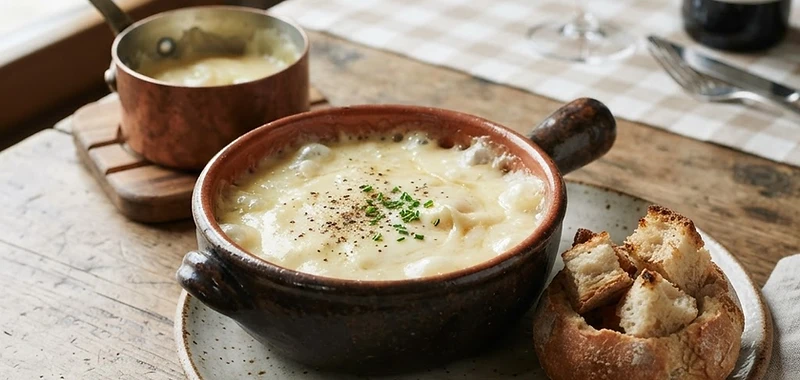
The cheese of the Alps, from the Valle d'Aosta. Cow's milk, aged 3 months, semi-soft, with a dense, earthy flavor. The melting cheese for fonduta valdostana (the Italian fondue) and for fontina polenta. Eat it young and firm, or melted. The DOP version is only from the Valle d'Aosta; the imitations are from everywhere.
Why go
To taste the Alpine cheese that melts better than any other, in the Valle d'Aosta.
The Field Guide take
In the high valleys of the Aosta region, squeezed between the borders of France and Switzerland, the defining food is Fontina. It is a cow’s milk cheese tethered to the landscape of the Italian Alps. Unlike the aged hard cheeses of the Italian plains, Fontina is built for the mountains: it is pliable, resilient, and possesses a unique structural ability to liquefy into a silk-like consistency when heated. For those visiting the Valle d’Aosta, it serves as the essential component of the regional diet, providing the caloric density required for life in a high-altitude climate.
The definition of Fontina
Fontina is a semi-soft, raw cow’s milk cheese that carries a Protected Designation of Origin (DOP) status. This status is critical; authentic Fontina can only be produced in the Valle d’Aosta. Imitations—often sold under the same name in supermarkets worldwide—are frequently mass-produced and lack the specific chemical properties that allow for a perfect melt. A wheel of true Fontina is recognizable by its natural, brownish-orange rind and its pale, straw-colored paste. The flavor profile is savory and grounded, carrying notes of roasted nuts and damp earth, with a slightly acidic finish that prevents it from feeling overly heavy on the palate.
Historical context
Records of Fontina production in the Valle d’Aosta date back to the 13th century. For centuries, the cheese was not a luxury export but a fundamental survival tool. In a geography defined by extreme verticality and harsh winters, the ability to preserve the summer milk yield through cheesemaking was a necessity. Because the cattle graze on high-altitude pastures filled with a diverse array of wild grasses and flowers, the milk captures the specific terroir of the mountains. This cheese has remained the economic and nutritional backbone of the region for nearly a millennium.
Production methods
The production of Fontina is governed by the rules of the Cooperativa Produttori Latte e Fontina. The process begins immediately after milking to retain the volatile aromatics of the raw milk. The curds are heated, pressed into wheels, and then salted. Crucially, the aging process occurs in cold, damp mountain caves or purpose-built stone cellars. These environments are naturally humid, which allows the rind to develop its signature texture and helps the paste maintain its characteristic semi-soft consistency. A wheel is generally aged for a minimum of three months before it is released for sale.
Where and how to find it
If you are traveling through the Valle d’Aosta, look for Fontina in the caseifici (cheese dairies) scattered throughout the valleys, particularly near Aosta, Cogne, and Courmayeur. While the cheese is available year-round, there is a discernable difference in wheels produced during the summer months. When cattle graze on the high alpine meadows—a practice known as alpeggio—the milk is richer and more floral. Ask your cheesemonger specifically for "Fontina d'alpeggio" if you are visiting in the autumn.
Serving and consumption
While Fontina can be eaten as a table cheese in thin, firm slices, it is primarily a functional ingredient. It is at its best when heat is applied. The most famous local preparation is fonduta valdostana. Unlike Swiss fondue, which often relies on a mix of cheeses and white wine, the Valdostan version is a direct, elemental preparation of Fontina, milk, and egg yolks, often finished with shavings of fresh white truffle if in season. It is also the standard topping for polenta concia, where the cheese is stirred into a hot, buttery cornmeal porridge until it creates a cohesive, elastic texture. If you choose to eat it cold, pair it with dense rye bread or local walnuts to contrast the softness of the cheese.
The beverage pairing
Given the savory, earthy nature of Fontina, it requires a wine with enough structural backbone to cut through the richness of the fat. The Valle d’Aosta produces wines that are designed for this specific purpose. A local Nebbiolo—often labeled as Picotendro—is the standard pairing. These mountain-grown red wines are typically lean, high in acidity, and possess the necessary tannins to act as a palate cleanser after each bite of melted, buttery cheese. Avoid heavy, high-alcohol reds, which will overpower the delicate, grassy aromatics of the raw milk.
The Story
Where Fontina comes from
Fontina is the heart of the Valle d'Aosta, a cheese defined by the high alpine meadows where cattle graze. It has been made here since the 13th century, serving as a primary protein source for mountain populations. It is a true meltable cheese, prized for its ability to transform into a smooth, silky liquid for fonduta.
What Defines It
Signature ingredients
Alpine raw milk
Rich in floral notes, resulting from the diverse mountain grasses the cows consume.
Salt
Used during the curing phase to help build the firm, compact texture.
The Method
How it's made
The milk is processed immediately after milking, with a focus on capturing the volatile aromatics of the mountain environment. The wheels are aged in cold, damp mountain caves, which gives them a distinctive nutty, earthy flavor.
Timing
When to eat it
Year-round, though summer milk makes for the most floral wheels.
Serve With
Classic pairings
Nebbiolo
wineThe high tannins and acid of a mountain Nebbiolo cut through the density of the melted fat.
Polenta
foodThe classic alpine pairing; the cheese is melted into the cornmeal for a luxurious staple.
What makes it worth going
Cow's milk cheese from the Alps — the base of fonduta and one of the great melting cheeses.
Things to do
- producer
A fontina producer in the Val d'Aosta
The home of fontina, in the alpine pastures. The cows are Valdostana; the milk is raw; the age is the cave. Visit a producer; book ahead.
1.5 hrs
- trattoria
A Valdostan restaurant for fonduta
The fontina is the cheese of the fonduta; the melted cheese is the dish. The Valdostan table is the context.
2 hrs
- malga
A high-pasture malga in summer
The cows are on the high pastures in summer; the milk is the fontina. Visit a malga (alpine dairy); the view is the bonus.
half day
- experience
A cheese and polenta tasting
The alpine pairing: fontina, polenta, and a red wine. The cheese and the corn are the table.
Eat
- cheese
Fontina DOP
The classic: a semi-soft cow's milk cheese from the Val d'Aosta, aged in caves. The paste is smooth and melting; the flavor is nutty and alpine. The fonduta cheese.
- dish
Fonduta valdostana
The melted fontina, with egg yolks, milk, and a little truffle. The alpine fondue; the cheese is the dish.
- pairing
With polenta
The alpine companion; the fontina melted over the polenta, or in the fonduta.
Stay
- city
Aosta or Courmayeur
The urban bases, with good producers and restaurants. A car is useful.
- malga
A high-pasture malga
The alpine dairy, in summer, for fontina at its source. A hike or a drive is required.
Experiences Worth Booking
Fontina producer and pasture visit
half dayThe high pasture, the cows, the cave, the tasting. The alpine milk is the context.
The fontina is the alpine pastures; a visit shows you the cows, the milk, and the cave.
Suits: Cheese lovers who want the alpine cheese at its source.
Valdostan food day
full dayA fontina producer, a fonduta lunch, a mountain-view hike. The full Val d'Aosta arc.
The fontina, the fonduta, and the mountains are the Valdostan trinity; a day covers all.
Suits: Food and mountain travelers with a day for the Alps.
What's nearby & pairs with
More food from Valle d'Aosta
Ready to plan?
Ready to turn discovery into a trip?
Italy Field Guide helps you decide where to go. When you're ready to build the actual day-by-day itinerary, take your saved places to Travel Itinerary Co — your interests go with you.
Turn your saved Italy places into a trip