The Verdict
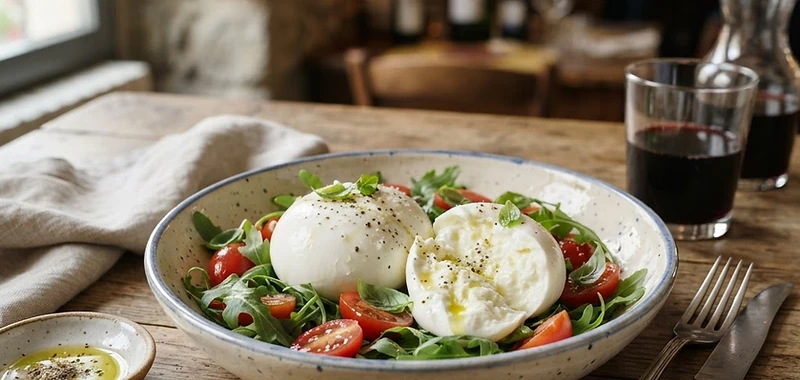
The mozzarella that changes minds about mozzarella. Made from water buffalo milk in a DOP zone south of Naples (Caserta, Salerno, and parts of Lazio and Molise). Softer, wetter, and more lactic than the cow's-milk version (fior di latte), with a grassy, almost tangy flavor. Eat it the day it's made, at room temperature, with nothing. The stuff on supermarket pizzas is not this.
Why go
To eat mozzarella made that morning from buffalo milk — the freshest dairy experience in Italy.
The Field Guide take
To eat Mozzarella di Bufala Campana is to experience a product that bears almost no resemblance to the rubbery, mass-produced blocks found in international supermarkets. This is a fresh, highly perishable cheese defined by its geography and the specific requirements of the Bubalus bubalis, or Italian Mediterranean water buffalo. In the provinces of Caserta and Salerno, the production of this cheese is a matter of agricultural heritage, protected by a strict Denominazione di Origine Protetta (DOP) designation.
What it is
Mozzarella di Bufala Campana is a pasta filata (stretched-curd) cheese made exclusively from the whole milk of water buffalo. Unlike fior di latte, which is derived from cow’s milk, buffalo mozzarella is significantly richer and higher in fat content. It has a distinctive porcelain-white exterior and a soft, elastic interior. When sliced, a high-quality, fresh mozzarella should release a small amount of milky whey—a sign of its moisture content and recent production. The flavor is bright, slightly acidic, and lactic, often carrying subtle notes of the grasses and hay consumed by the herds.
Origin and history
The presence of water buffalo in the marshy plains of Campania dates back centuries, with historical evidence of their use for milk production emerging as early as the 12th century. The animals were well-suited to the damp, low-lying regions surrounding the Volturno river and the Piana del Sele. Over time, the local practice of stretching curdled milk became a formalized method of preservation. Today, the DOP regulation mandates that the cheese must be produced within specific zones in Campania, along with small, defined border areas in Lazio and Molise, using traditional techniques that have remained largely unchanged by modern industrial scale.
The production process
The process begins with the addition of a whey starter to raw buffalo milk, which is then heated and coagulated with rennet. Once the curd sets, it is broken down and left to ripen. The defining stage is the stretching: the curd is submerged in near-boiling water and kneaded by hand—a technique requiring significant physical skill—until it becomes elastic and smooth. The cheesemaker then shapes the mass into balls or braids (treccia) of varying sizes. The final product is cooled in water and then briefly brined before being packaged in its own liquid, which is essential for maintaining its texture until it reaches the consumer.
Where to eat it
The best way to consume this cheese is to source it directly from the dairy (caseificio) where it was produced. The province of Caserta, particularly near the town of Capua, and the Piana del Sele in the province of Salerno, are the epicenters of production. Visitors should look for producers who work on a small, artisanal scale. Because the cheese begins to lose its specific structural integrity within 24 to 48 hours of being made, eating it within the region of origin is the only way to experience its true profile. If the cheese is refrigerated, the fat molecules harden and the delicate flavor is muted; it is best served at ambient temperature.
Seasonal considerations
While production occurs year-round, many local consumers believe the flavor is most nuanced during the spring and autumn months, when the buffalo diet is richest. However, the true variable is time, not the calendar. Because this cheese is a fresh, unripened dairy product, it is not meant for aging or transport. It should never be purchased with the intent of taking it home in a suitcase.
How to serve and pair it
At its best, Mozzarella di Bufala Campana is served on its own, perhaps accompanied by nothing more than fresh, seasonal tomatoes and a piece of crusty bread to soak up the residual milky whey. It does not require olive oil or balsamic vinegar, both of which often overwhelm the subtle lactic notes of the cheese.
For a beverage pairing, look for local, high-acid white wines that can cut through the richness of the buffalo fat. Asprinio di Aversa, a crisp, dry white wine from the Campania region, is the canonical pairing; its sharp acidity provides the necessary balance to the creamy, dense profile of the mozzarella.
The Story
Where Mozzarella di Bufala Campana comes from
Mozzarella di Bufala Campana is a product of the water buffalo introduced to southern Italy centuries ago. Its status as a DOP product ensures that it is made exclusively from the milk of the Italian Mediterranean buffalo. It is not a cheese to be cooked or stored; it is a fresh product meant to be eaten within hours of its production.
What Defines It
Signature ingredients
Buffalo milk
Contains significantly more fat and protein than cow's milk, yielding a richer, more lactic flavor.
Whey starter
Traditional, natural cultures that create the complex, tangy depth not found in industrial versions.
The Method
How it's made
The curds are stretched in boiling water and shaped into balls by hand, a process known as pasta filata. A good version should weep a little white milk when sliced.
Timing
When to eat it
Year-round.
Serve With
Classic pairings
Asprinio di Aversa
wineA sharp, high-acid white wine that cuts through the intense creaminess of the buffalo milk.
Heirloom tomatoes
foodThe acidity of sun-ripened tomatoes acts as the perfect foil to the rich fat of the cheese.
What makes it worth going
Mozzarella from water buffalo milk — softer, richer, and more lactic than cow's-milk mozzarella. DOP.
Things to do
- dairy
Caseificio in Paestum
The best mozzarella zone, south of Salerno. Book a morning visit; the mozzarella is made at 5-7am, and the zizzona (the large braided one) is the showpiece.
2 hrs
- dairy
Caseificio in Caserta (Aversa zone)
The northern DOP zone, the historic home of bufala mozzarella. The caseifici around Aversa and Capua are the origin.
2 hrs
- meal
Eat mozzarella at the caseificio
The point of the visit. Eat it within an hour of make, at room temperature, with bread and a tomato. Nothing else.
- day trip
Paestum temples + mozzarella
The temples are the reason to go; the mozzarella is the reason to stay. Combine the two in a day from Naples.
Eat
- cheese
Mozzarella di bufala, plain
The only correct way to eat it: at room temperature, within hours of make, with bread and a tomato. No cooking.
- cheese
Zizzona di Battipaglia
The giant braided mozzarella, from Battipaglia. The showpiece of the caseificio; order it and share.
- cheese
Ricotta di bufala
The by-product, sweeter and softer than the mozzarella. Eat with honey or with pasta.
Stay
- rural
Paestum / Capaccio
The best base for mozzarella; near the caseifici and the temples. Agrotourism and small hotels.
- city
Caserta (near the Reggia)
The northern DOP base; near Aversa and the Royal Palace. A car is required for the caseifici.
Experiences Worth Booking
Caseificio visit with mozzarella-making demo
2 hrsThe morning make, the stretching (filatura), the shaping by hand. Tasting at the end.
The filatura (the stretching of the curd in hot water) is the technique; you see it only at the caseificio.
Suits: Anyone who wants to see why fresh mozzarella is a different food.
Mozzarella + temple day from Naples
full dayA driver to Paestum, a caseificio, the temples, and lunch. The classic Campania day.
Paestmozzarella and Paestum are the two reasons to go south; a driver makes the day work.
Suits: Visitors with one day south of Naples.
What's nearby & pairs with
More food from Campania
Ready to plan?
Ready to turn discovery into a trip?
Italy Field Guide helps you decide where to go. When you're ready to build the actual day-by-day itinerary, take your saved places to Travel Itinerary Co — your interests go with you.
Turn your saved Italy places into a trip