The Verdict
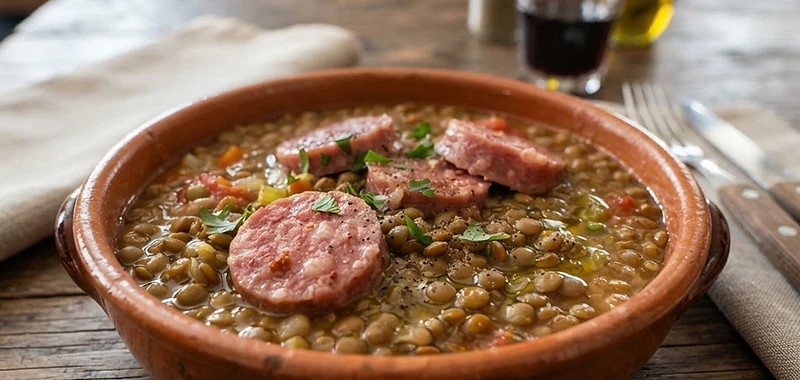
The lentil that's the Italian New Year's food, at its source. Tiny, mineral, and tender, from the high plain of Castelluccio, near Norcia, grown at 1,400 meters. Cooked simply, with onion, celery, a little tomato, and often with cotechino or zampone. Eaten on New Year's for prosperity — the small lentils look like coins. The Castelluccio ones are the best in Italy; the 2016 earthquake damaged the town and the crop, but both are back.
Why go
To taste the lentil Italians eat for luck — tiny, mineral, from the Castelluccio plain.
The Field Guide take
The Lenticchie di Castelluccio are defined by their environment. Grown at 1,400 meters on the Piano Grande, a high-altitude glacial plain within the Sibillini Mountains of Umbria, these legumes thrive in a landscape so harsh that few other crops can survive. Their reputation as the gold standard of Italian pulses is tied to this extreme geography, where the limestone-rich soil and cool, short growing season produce a lentil that is exceptionally small, thin-skinned, and mineral-dense.
What they are
These are PGI-protected legumes, distinct from the larger, thicker-skinned varieties found in mass-market aisles. Because they grow at such high altitudes, the cold mountain climate naturally deters pests, removing the need for chemical pesticides. When cooked, the Lenticchie di Castelluccio do not disintegrate; they hold their shape while softening into a buttery, creamy texture. Their flavor is earthy and distinct, reflecting the high, isolated plain where they originate.
Origin and history
The history of this crop is a narrative of peasant resourcefulness. For centuries, the high plains near Norcia were utilized for subsistence farming, as the nutrient-poor soil could not support more demanding grains. The lentil became the foundation of the local economy. In 1997, the product earned Protected Geographical Indication (PGI) status to preserve its provenance.
In 2016, the earthquake that devastated the town of Castelluccio and the surrounding Sibillini region paralyzed production, limiting access to the fields and destroying local infrastructure. The subsequent recovery was a multi-year effort of clearing rubble and restoring the agricultural landscape. Today, the lentil stands as a symbol of regional persistence; the fields have been replanted, and the town is slowly finding its footing, though the scars of the disaster remain visible in the local topography.
How they are cooked
The goal of preparing these lentils is to preserve their integrity. A well-made dish begins with a soffritto of onion, celery, and carrot sautéed in high-quality extra virgin olive oil. Some cooks toast the raw lentils briefly in the fat before adding hot water or light vegetable broth.
The process requires attention to timing. Salt is never added at the beginning, as it toughens the thin skins; it is strictly added toward the end of the simmering process. The heat must remain low and consistent. A common mistake is boiling them until they turn into a puree; the objective is a dish that is creamy but where each lentil remains distinct. In the simplest and most traditional Umbrian preparations, the lentils are served as a side, allowing the mineral quality of the legume to remain the primary focus.
When and how to eat them
While these lentils are available dried throughout the year, their cultural gravity is concentrated on New Year’s Eve (Capodanno). Across Italy, eating lentils on this night is a tradition meant to bring wealth in the coming year, as their small, rounded shape resembles coins.
In Umbria and neighboring regions, they are almost invariably paired with cotechino or zampone—rich, gelatinous cuts of pork sausage. The fattiness of the pork provides a necessary counterpoint to the dense, earthy profile of the lentils. In northern regions, the dish is often served as a thicker, stew-like preparation, but in Norcia, the preference leans toward a lighter execution that respects the specific texture of the Castelluccio variety.
Where to find them
To understand these lentils at their source, one must travel to the province of Norcia, in the southeast of Umbria. Travelers visit the Piano Grande primarily to see the landscape, which is stark, windswept, and striking. While the town of Castelluccio continues to rebuild, restaurants throughout the Norcia area prioritize these lentils on their menus, particularly during the winter months. Look for labels in local shops confirming the PGI status, which ensures the product was cultivated on the Piano Grande rather than imported from elsewhere.
What to drink with them
The earthiness of the lentils requires a wine with sufficient structure to match the richness of the accompanying pork, yet enough acidity to cut through the fats. A Sagrantino di Montefalco is the classic local choice; it is a tannic, powerful red that stands up to the weight of the cotechino. For a more versatile pairing, a Montefalco Rosso offers a fruit-forward profile that complements the mineral notes of the lentils without overwhelming them. A piece of rustic, unsalted bread—common throughout the region—is the only other necessary accompaniment.
The Story
Where Lenticchie di Castelluccio comes from
The Lenticchie di Castelluccio di Norcia are grown on the Piano Grande, a high-altitude glacial plain in the Apennine Mountains of Umbria, sitting at approximately 1,400 meters above sea level. This rugged, isolated environment—part of the Monti Sibillini National Park—is unique for its harsh winters and short, cool growing season, which prevents the proliferation of pests and eliminates the need for chemical pesticides. The cultivation of these lentils dates back centuries, documented as a staple of the local peasant economy where the crop thrived in the nutrient-poor, limestone-rich soil that many other plants could not tolerate. In 1997, the product was granted the PGI (Protected Geographical Indication) status to protect its identity and strict area of production. The region and the industry suffered a catastrophic blow during the 2016 earthquakes, which decimated the village of Castelluccio and disrupted access to the fields. However, the agricultural community has since restored the landscape and production remains a symbol of rural endurance and regional pride. The lentils are culturally inseparable from New Year's Eve, where their consumption is a ubiquitous tradition across Italy, symbolizing prosperity and wealth due to their coin-like appearance.
What Defines It
Signature ingredients
Lenticchie di Castelluccio
These are distinct for their thin, delicate skin and small size, which allows them to be cooked without pre-soaking and prevents them from falling apart.
Cotechino or Zampone
Fatty, spiced pork sausage or stuffed pig's trotter that provides the necessary richness and animal fat to complement the earthy, mineral profile of the lentils.
Extra Virgin Olive Oil
A high-quality, cold-pressed Umbrian olive oil is essential to finish the dish, adding a grassy, peppery brightness that cuts through the starch.
Soffritto
A base of finely diced celery, carrot, and onion that provides the aromatic foundation, essential for building depth in a dish with few ingredients.
Tomato Paste or Fresh Tomato
A small amount of tomato is often added for acidity and color, balancing the density of the legumes.
The Method
How it's made
The hallmark of a well-made version of this dish is the preservation of the lentil's texture; they should be tender but never mushy. The cooking process starts by sweating the aromatic base (onion, celery, carrot) in high-quality olive oil before adding the lentils. Many traditionalists toast the lentils lightly in the fat before adding hot water or a mild vegetable broth. The dish is simmered at a low, consistent heat, and the addition of salt is strictly reserved for the end of the cooking process to prevent the skins from toughening. A careless version often involves boiling the lentils until they disintegrate into a paste, whereas the authentic method maintains the integrity of the individual bean, creating a creamy yet defined consistency.
Across Italy
Regional variants
Umbria (Norcia)
The most traditional preparation involves serving them simply as a side to pork, focusing on the quality of the lentil's natural mineral taste.
Lazio
Often prepared with more focus on the pork fats, frequently incorporating guanciale into the soffritto for a sharper, saltier profile.
Northern Italy
Commonly served in greater volume alongside cotechino as a stew-like dish to provide warmth during the coldest parts of winter.
Timing
When to eat it
While available as a dried staple year-round, the lentil is most significantly associated with the winter season, specifically the New Year's Eve feast (Capodanno).
Serve With
Classic pairings
Sagrantino di Montefalco
wineAn assertive, tannic Umbrian red that provides the structure needed to stand up to the fatty, rich nature of cotechino.
Montefalco Rosso
wineA slightly more approachable Sangiovese-based blend that balances the earthiness of the lentils without overpowering them.
Crusty Altamura Bread
other foodDense, sourdough-style bread is necessary to scoop up the remaining liquid and olive oil from the bottom of the bowl.
What makes it worth going
Tiny, tender lentils from the Castelluccio plain — the lentil of the New Year's table.
Things to do
- nature
The Castelluccio plateau
The home of the lentils, in the high plain above Norcia. The lentils are tiny, the soil is the mountain, the bloom (the lentil flower, late May-June) is the show. Drive up; the view is the bonus.
half day
- salumeria
A Norcia norcineria
The lentils are sold with the salsiccia and the prosciutto; the norcineria is the shop. Buy both; the pairing is the table.
1 hr
- trattoria
A Norcia trattoria
The lentils with the salsiccia, on the same plate. The Norcia table is the context; the lentils are the base.
2 hrs
- experience
A Castelluccio lentil field visit (summer)
The lentils are harvested in July-August; the field is the source. Visit a producer; the small size is the test.
Eat
- dish
Lenticchie di Castelluccio IGP
The classic: small, tender, dark-green lentils from the Castelluccio plateau, cooked simply with onion, garlic, and oil. The small size and the thin skin mean no soaking; the taste is the mountain.
- pairing
With salsiccia di Norcia
The classic companion; the lentils and the sausage, on the same plate. The Norcia pairing.
- pairing
With cotechino (New Year)
The Italian New Year's dish; the lentils and the cotechino, for luck and money. The national tradition.
Stay
- town
Norcia center
The base, with good restaurants and easier access. A car is required to Castelluccio.
- rural
The Sibillini mountains
For hikers; the Castelluccio plateau is high and remote. A car is required.
Experiences Worth Booking
Castelluccio plateau and lentil visit
half dayThe plateau, the lentil fields, a producer, the bloom (if in May-June). The mountain is the context.
The lentils are the mountain; a visit shows you the soil, the bloom, and the small size.
Suits: Food and nature travelers; the plateau is beautiful.
Norcia food day
full dayA lentil lunch, a salsiccia tasting, a Sagrantino cellar. The full Norcia arc.
The lentils, the salsiccia, and the Sagrantino are the Norcia trinity; a day covers all.
Suits: Food and wine travelers with a day for the Umbrian mountains.
What's nearby & pairs with
More food from Umbria
Ready to plan?
Ready to turn discovery into a trip?
Italy Field Guide helps you decide where to go. When you're ready to build the actual day-by-day itinerary, take your saved places to Travel Itinerary Co — your interests go with you.
Turn your saved Italy places into a trip