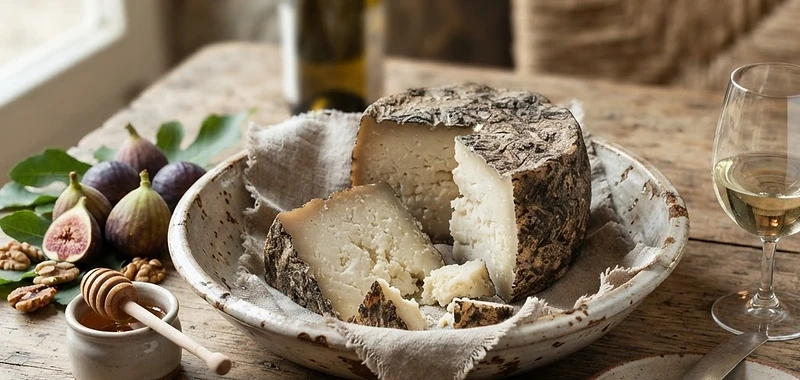
Cheese · Marche
Pecorino di Fossa
The Verdict
The most interesting cheese in Italy and the one most worth planning a trip around. The pits are opened in early November, and the towns between Urbino and the Apennines hold festivals for it. The cheese is sharp, crumbly, and faintly fermented in a way that is either revelatory or too much.
Why go
A cheese aged in underground pits of chaff, in hill country with no other tourists and very good salumi.
The Field Guide take
Pecorino di Fossa is the most challenging and rewarding cheese in Italy. It is a sheep’s milk cheese that undergoes a subterranean transformation, buried for months in limestone pits lined with wheat straw. The resulting product is pungent, crumbly, and deeply fermented. It is not a cheese for the timid; the flavor is sharp and carries an earthy, fungal edge that lingers. For those who prioritize regional distinctiveness over mass appeal, a trip to the province of Pesaro e Urbino in the Marche region to witness its annual unveiling is essential.
The nature of the pit
Pecorino di Fossa—literally "pit cheese"—is defined by its aging environment. Rather than a temperature-controlled cellar or a cave, the cheese is lowered into pits dug directly into the sandstone or limestone earth. These pits are lined with wheat straw and chaff. The sealing process, which uses wooden boards and gypsum plaster, creates an anaerobic environment. As the cheese ages, it loses significant moisture, causing it to shrink and harden. The interaction between the cheese, the straw, and the natural microbes in the pit walls creates the distinct, sharp profile that separates this from standard pecorino.
Origin and the communal harvest
The technique began as a survival strategy. Farmers in the mountainous regions of Marche needed a way to preserve their cheese through the winter months and prevent it from being stolen by marauding armies or wandering bandits. They utilized the wheat storage pits they already possessed. By burying the cheese, they kept it hidden and effectively protected from temperature fluctuations. Over generations, the process shifted from a necessity to a refined craft. In towns like Sogliano al Rubicone and Talamello, the pits are often shared property, and the excavation—known as the sfossatura—remains a communal event that defines the local calendar.
From pasture to pit
The process begins with fresh, young pecorino. The wheels are salted lightly, wrapped in linen cloths, and stacked into the pits during the late summer months. Once the pit is filled, it is sealed with airtight materials. The cheese remains underground for a minimum of 90 days. During this time, the pressure and the low-oxygen environment induce a secondary fermentation. When the pits are unsealed in November, the cheese has lost its initial elasticity. It emerges with an irregular, craggy shape and a rind that is often dusty and dark, smelling intensely of the soil and the fermented grain straw.
Where to find it
The center of the Fossa cheese culture lies in the Montefeltro area, stretching between Urbino and the Apennine Mountains. Planning a trip in November is critical. This is when the towns open their pits to the public, and local festivals celebrate the harvest. Beyond the festivals, visit small-scale caseifici (cheese producers) in the villages surrounding Urbino. Because the cheese is a protected cultural product, producers often maintain their own traditional pits. Outside of these hills, the quality and character of the cheese diminish rapidly; prioritize buying directly from the producers in the Pesaro e Urbino province.
Serving and consumption
There is no mild version of this cheese. It is intentionally intense. Do not attempt to mask its flavor with heavy condiments. Serve it in thin shavings or broken into irregular, rustic chunks. It works best at room temperature, which allows the volatile compounds developed in the pit to fully express themselves. Because the cheese is crumbly and dry, it pairs well with honey or a drop of saba (cooked grape must), which provides a necessary sugar counterpoint to the salt and funk of the cheese.
The proper pour
The acidity and structure of Pecorino di Fossa require a wine that can stand up to its strength without being overwhelmed. A crisp, high-acid white wine is the most logical choice. Look for a Verdicchio dei Castelli di Jesi DOCG. The bright minerality and citrus notes of the Verdicchio cut through the fatty, fermented density of the cheese, cleaning the palate between bites. To build a traditional regional board, accompany the cheese with paper-thin slices of Prosciutto di Carpegna, a cured meat from the same province that matches the salt intensity of the pecorino. Confirm seasonal festival dates in Urbino before finalizing travel arrangements, as the opening of the pits is subject to the specific rhythm of the harvest.
The Story
Where Pecorino di Fossa comes from
The technique came from storing cheese in the wheat pits farmers already had, where the absence of air and the fermenting chaff preserved it. Families still own pits, sometimes shared between households, and the opening in November is a communal event.
The Method
How it's made
Fresh pecorino is salted lightly, wrapped in linen, and lowered into a pit lined with straw and wheat chaff, then sealed. It stays for at least three months, during which it loses moisture, develops a rind, and takes on the fermented character.
Timing
When to eat it
Pits are opened in November; the cheese is eaten through the winter.
Serve With
Classic pairings
Verdicchio dei Castelli di Jesi DOCG
wineProsciutto di Carpegna
cured meatWhat makes it worth going
Sheep's cheese buried in pits of wheat chaff for months, then dug out in November — Marche's strangest and best food.
What's nearby & pairs with
More food from Marche
Dish
Brodetto di Pesaro
The Adriatic fish stew of Pesaro — at least 13 fish, vinegar, and tomato, in one pot.
Dish
Olive Ascolane
Stuffed, breaded, and fried green olives — Marche's most addictive snack.
Dish
Vincisgrassi
Marche's baked pasta — richer than lasagna, with chicken giblets and truffle, from Ancona.
Ready to plan?
Ready to turn discovery into a trip?
Italy Field Guide helps you decide where to go. When you're ready to build the actual day-by-day itinerary, take your saved places to Travel Itinerary Co — your interests go with you.
Turn your saved Italy places into a trip