The Verdict
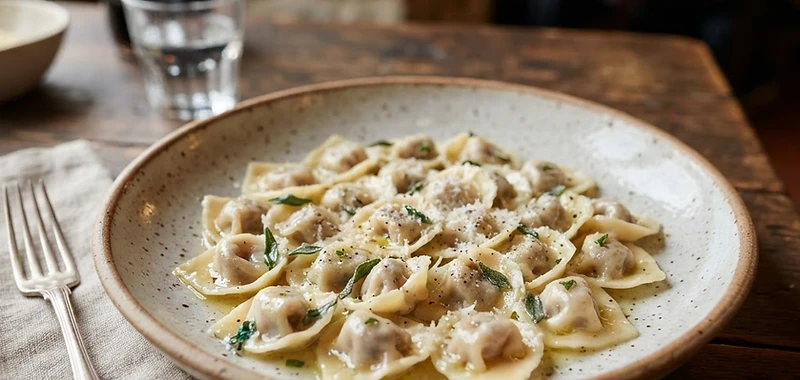
The filled pasta that defines Piedmontese home cooking. Small squares of egg pasta, pinched shut (plin means 'pinch'), filled with a mix of roasted meats — beef, rabbit, pork, and sometimes cabbage. Served either in broth or with butter and sage, or 'al tovagliolo' (on a napkin, dry). Traditionally made with the leftovers of a Sunday roast. The skill is the pinch and the smallness.
Why go
To taste Piedmont's answer to tortellini — smaller, richer, and made from Sunday leftovers.
The Field Guide take
Agnolotti del Plin is the defining filled pasta of Piedmont. Small, square, and meticulously pinched, these parcels represent the intersection of resourceful farmhouse cooking and refined technique. While other regions of Italy are known for large, elaborate pastas, the Piedmontese approach prioritizes a thin, delicate dough and an intense, savory filling. They are a staple of the Langhe and Monferrato hills, serving as a functional link between the agricultural history of the region and its modern culinary identity.
What defines them
The name plin comes from the Piedmontese dialect word for "pinch." This refers to the technique used to seal the pasta by hand, catching a small pocket of air inside the parcel before the edges are closed. An authentic agnolotto is small—usually no more than an inch wide—and the dough should be rolled until it is nearly translucent. When prepared correctly, the pasta is not doughy or heavy; it serves only as a gossamer vessel for the meat inside. Because of this, the quality of the filling is paramount. It is a savory, concentrated mixture that relies on the depth of slow-roasted proteins rather than aggressive seasoning.
Origins and evolution
The dish emerged from the pragmatic necessity of the Piedmontese countryside. Historically, agnolotti were a way to maximize the utility of a Sunday roast. When beef, rabbit, or pork remained after the main meal, the leftovers were minced, combined with sautéed greens or aromatics, and encased in an egg-rich dough to provide a second, substantial meal. While the exact geographical birthplace is a subject of debate between the provinces of Asti and Alessandria, the dish belongs to the rural labor cycle of the hills. Over time, what began as a way to stretch expensive ingredients transitioned from domestic kitchens into the regional repertoire of local trattorias.
Preparation and technique
Creating agnolotti del plin is a labor-intensive process that leaves little room for error. The meat—a combination of beef, rabbit, and pork—is roasted until tender, finely minced, and then integrated with braised cabbage or escarole and a hint of nutmeg. The dough, which must be high in egg content to provide the necessary elasticity, is rolled out into thin sheets. The cook places small mounds of filling at regular intervals, folds the dough over, and uses the thumb and index finger to "pinch" and seal the gaps between the filling. A thick or uneven edge is considered a technical failure, as it ruins the delicate ratio of pasta to meat.
Where to experience them
In the Langhe and Monferrato, you will find two primary ways to consume the dish. In the Langhe, it is traditional to serve them al tovagliolo—meaning "on a napkin." The pasta is drained and placed dry on a cloth, sometimes finished with nothing more than a splash of local Barbera or a drizzle of meat jus. This method highlights the texture of the pasta itself. Conversely, in Monferrato, it is common to serve them in brodo, submerged in a light, clear beef consommé. This preparation tempers the richness of the roast meat filling and is particularly common during the cooler months.
When and how to eat
Though they are a year-round presence on menus, agnolotti del plin are most deeply associated with the autumn and winter. The meat-forward profile aligns with the colder seasons, when the hearths in the farmhouses of Asti and Alessandria would have been active with roasting meats. When dining in the region, expect these to be served as a primary course. They are not intended to be a side dish; they are substantial, savory, and meant to be eaten with focus.
What to drink
Because the filling is rich and savory, the wine pairing should be chosen for its acidity and structure. The most logical companion is a Barbera d’Asti. Its natural acidity cuts through the meat and butter, cleansing the palate between bites. For a more structured pairing, a younger Nebbiolo from the Langhe works well, provided its tannins are not overly aggressive, which would overpower the delicate nature of the pasta. If the agnolotti are served with sage butter, the wine should remain bright and clean to ensure the herbal notes of the sage are not lost.
The Story
Where Agnolotti del Plin comes from
Agnolotti del Plin originates from the Langhe and Monferrato hills of Piedmont, specifically emerging from the peasant tradition of recycling Sunday roast leftovers. The name derives from the Piedmontese dialect word 'plin,' meaning 'pinch,' referring to the technique of pinching the pasta dough with the thumb and index finger to seal the filling. Historically, these were considered a pragmatic way to stretch expensive meat by combining it with vegetables and aromatics, ensuring nothing from the family meal went to waste. While these originated in rural homes, they evolved into a staple of the region's diverse culinary identity, bridging the gap between modest farmhouse fare and the refined kitchen of the local nobility. The precise birthplace remains a point of local pride between the provinces of Asti and Alessandria, but the dish is fundamentally tied to the agricultural cycle of the Piedmontese countryside.
What Defines It
Signature ingredients
Egg-rich pasta dough
Requires a high ratio of egg yolks to flour to provide the necessary elasticity and rich golden color that distinguishes fresh Piedmontese pasta.
Roasted beef, rabbit, and pork
A mixture of these meats provides a complex depth of flavor; the rabbit adds a lean, gamey sweetness, while the beef and pork supply fat and savory body.
Braised cabbage or escarole
Often incorporated into the filling to provide texture and a slight vegetal bitterness that cuts through the richness of the meat.
Nutmeg
A traditional aromatic spice that elevates the savory meat mixture and adds a subtle warmth characteristic of northern Italian pasta fillings.
The Method
How it's made
A good agnolotto is defined by the thinness of the pasta shell and the precision of the pinch. The meat is roasted until tender, finely minced, and then mixed with sautéed greens and seasonings before being encased in a sheet of dough that has been rolled to near-translucency. A careless version often has thick, doughy edges that overwhelm the filling. Authentic preparation involves careful folding and pinching to trap a small amount of air within the parcel, which ensures the pasta remains delicate rather than dense. The best examples are boiled briefly and served simply, allowing the quality of the handmade pasta and the savory intensity of the filling to remain the focus.
Across Italy
Regional variants
Langhe
Often served 'al tovagliolo,' placed dry on a napkin to be eaten by hand, sometimes finished with a splash of local Barbera wine.
Monferrato
Frequently served in a light, clear beef broth (in brodo) which highlights the richness of the meat filling.
Timing
When to eat it
Traditionally a Sunday or festive meal, agnolotti del plin are available year-round, though they are most frequently associated with the cooler months when roasted meats are more central to the Piedmontese diet.
Serve With
Classic pairings
Barbera d'Asti
wineThe high acidity of this wine cuts through the savory, fatty meat filling and the richness of the egg pasta.
Nebbiolo
wineThe tannins and structure of a young Nebbiolo complement the roasted meat profile of the filling.
Sage butter
foodA traditional dressing that provides an earthy aroma without masking the delicate flavor of the pasta.
What makes it worth going
Tiny pinched pasta parcels filled with roast meat, from the Langhe and Monferrato — Piedmont's most refined pasta.
Things to do
- trattoria
Trattoria della Posta (Monforte d'Alba)
The benchmark agnolotti del plin, in the Langhe. The 'pinch' (plin) is the closure; the filling is meat from three roasts. Reserve far ahead.
2 hrs
- ristorante
Guido da Costigliole (Borgo San Donato)
The refined version; the agnolotti is the test, the truffle is the luxury. Reserve.
2 hrs
- trattoria
A Langhe trattoria in Alba
In the city, for agnolotti without the drive. The filling is correct; the plin is the technique.
2 hrs
- experience
A pasta-making class in the Langhe
The agnolotti del plin is shaped by the 'pinch' — the plin that closes each parcel. The technique is local; the class is the way to learn.
Eat
- pasta
Agnolotti del plin
The classic: tiny stuffed pasta, filled with roasted meat (usually three roasts: beef, pork, rabbit), closed by a 'pinch' (plin). Served with the meat sauce or with butter and sage.
- pasta
Agnolotti dal plin 'al tovagliolo'
The 'in the napkin' version — without sauce, just the pasta, in a napkin, with the flavor of the filling alone. The purist's version.
- wine
A Barolo or Barbera
The Langhe red; the correct pairing, or a Barbaresco.
Stay
- city
Alba center
The truffle and pasta capital; near the best trattorias. Walkable.
- rural
A Langhe village (Monforte, La Morra, Barolo)
In the hills, among the vineyards. The most beautiful base; a car is required.
Experiences Worth Booking
Agnolotti del plin class
3 hrsThe dough, the three-roast filling, the 'pinch' closure. The plin is the technique.
The plin is a gesture; a class shows you the finger and the pressure that closes each parcel.
Suits: Pasta makers who want the Piedmontese technique; the pinch is the secret.
Langhe food day
full dayAgnolotti lunch, a Barolo cellar, a truffle hunt (in season). The full Langhe arc.
The agnolotti and the Barolo are the Langhe's two gifts; a day covers both.
Suits: Food and wine travelers with a day for Piedmont.
What's nearby & pairs with
More food from Piemonte
Dish
Tajarin al Tartufo
Egg-yolk-rich ribbon pasta with butter and white truffle — the signature dish of the Alba truffle season.
Dish
Bagna Càuda
A warm dip of garlic, anchovy, and butter for raw vegetables — the communal dish of Piedmont's cold months.
Dish
Vitello Tonnato
Cold sliced veal with a tuna-caper sauce — the dish of the Piedmontese summer that everyone copies.
Dish
Grissini di Torino
Long, thin, crisp breadsticks from Turin — the breadstick the world copied, at its source.
Dish
Gianduiotto
A hazelnut-and-chocolate confection from Turin — the original hazelnut chocolate, the forefather of Nutella.
Ready to plan?
Ready to turn discovery into a trip?
Italy Field Guide helps you decide where to go. When you're ready to build the actual day-by-day itinerary, take your saved places to Travel Itinerary Co — your interests go with you.
Turn your saved Italy places into a trip