
food
Italy's Great Cheeses
From Parmigiano to Burrata — the cheeses that define the Italian table, north to south.
Curatorial note
Italian cheese is more than Parmigiano. This is the atlas of the essential ten — the hard, the soft, the blue, the fresh — and where to eat each at its best.

Cheese · Puglia
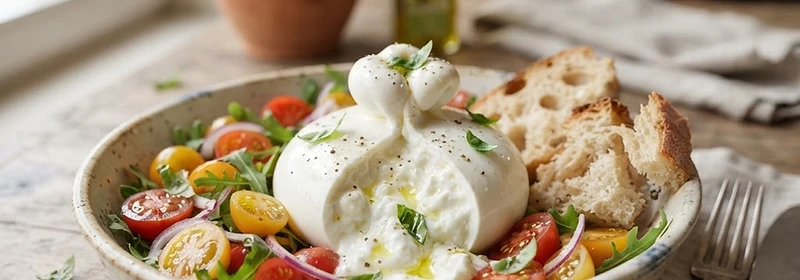
Source VerifiedBurrata
The cheese that became a restaurant trend everywhere, and is still best in Puglia. A pouch of mozzarella filled with stracciatella (shredded mozzarella and cream). Eat it the day it's made, at room temperature, with good bread and a tomato. In Puglia, it's breakfast food, not a dinner-party starter. The version that travels is never the same.

Cheese · Lombardia
Source VerifiedGorgonzola
The blue cheese that divides people, and that's the point. Two versions: Gorgonzola Dolce (sweet, soft, creamy, young) and Gorgonzola Piccante (sharp, crumbly, aged). Made in the zone between Milan and Novara. The Dolce is for spreading on bread or polenta; the Piccante is for eating with a spoon and a glass of Barolo. Both are better than the pre-crumbled version in the supermarket.
Cheese · Toscana
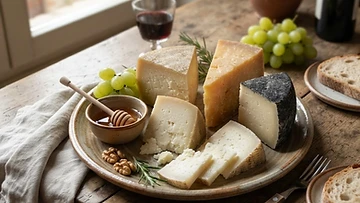
Source VerifiedPecorino di Pienza
The pecorino that proves Tuscany does sheep's milk as well as Lazio. From the hills around Pienza, in the Val d'Orcia, made in styles from fresh (pecorino fresco, soft and mild) to aged (stagionato, hard and nutty) to ash-rubbed (infossato, buried in walnut leaves). The aged version is a great pecorino for eating, not just grating. Buy it in Pienza and eat it with honey.

Cheese · Lombardia
Source VerifiedTaleggio
The stinky cheese that Italy does best. A washed-rind cow's milk cheese from the Val Taleggio in the Bergamo Alps, soft and square, with a pink-orange rind and a pungent, beefy smell. The inside is gooey and mild — the smell is scarier than the taste. Eat it with polenta, or melt it over radicchio. One of the great winter cheeses.
Cheese · Emilia-Romagna
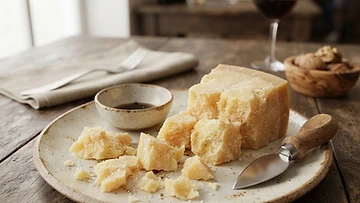
Source VerifiedParmigiano Reggiano
The most important cheese in Italy, and possibly in the world. Made from skimmed evening milk and whole morning milk, aged a minimum of 12 months (usually 24-36, sometimes 48+). Only from the zone between Parma and Reggio Emilia, from cows fed on local forage. Crystalline, granular, and umami-rich. The 36-month version is the everyday luxury; the 48-month is the revelation. No 'parmesan' is the same.

Cheese · Lazio
Source VerifiedPecorino Romano
The cheese that makes Roman pasta work. Sheep's milk, aged 5-8 months for table use, longer for grating. Salty, sharp, and dry — it's the pecorino in cacio e pepe, carbonara, and amatriciana. Most is now made in Sardinia (the milk is the same; the zone was extended), but the Roman tradition is the reason it exists. Try it young and soft, not just grated and dry.


Cheese · Campania
Source VerifiedMozzarella di Bufala Campana
The mozzarella that changes minds about mozzarella. Made from water buffalo milk in a DOP zone south of Naples (Caserta, Salerno, and parts of Lazio and Molise). Softer, wetter, and more lactic than the cow's-milk version (fior di latte), with a grassy, almost tangy flavor. Eat it the day it's made, at room temperature, with nothing. The stuff on supermarket pizzas is not this.

Cheese · Basilicata
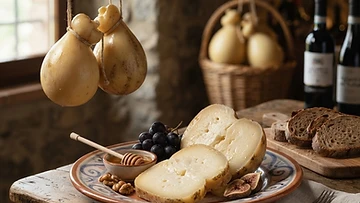
Source VerifiedCaciocavallo
The cheese of the south, shaped like a teardrop and hung in pairs (cacio a cavallo — cheese on horseback) over a beam. Made from cow's milk, aged from soft and mild (young) to hard and sharp (stagionato). The Ragusano version from Sicilia is a DOP cousin. Eat the young version with bread, or grill the aged one. Underknown outside Italy, and worth seeking out.

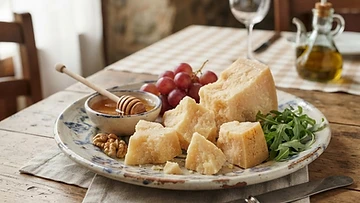
Cheese · Lombardia
Source VerifiedGrana Padano
Parmigiano's less famous, less expensive, slightly less complex sibling. Made similarly (skimmed milk, aged) but across a wider zone (Lombardy, Veneto, Emilia, Piedmont, Trentino) and with fewer restrictions. The 16-month version is the workhorse of Italian cooking; the 24-month is a genuinely fine cheese. If you can't get Parmigiano, Grana is the answer — and it's cheaper because the zone is bigger, not because it's bad.
Ready to plan?
Ready to turn discovery into a trip?
Italy Field Guide helps you decide where to go. When you're ready to build the actual day-by-day itinerary, take your saved places to Travel Itinerary Co — your interests go with you.
Turn your saved Italy places into a trip