The Verdict
Essential. Go early, climb the dome if your knees allow, and accept that it is a pilgrimage site as much as an artwork. Bernini's baldacchino and the Pietà define it.
Why go
To stand under Michelangelo's dome and see Bernini's baldacchino — the two works that set the scale of Catholic art.
The Field Guide take
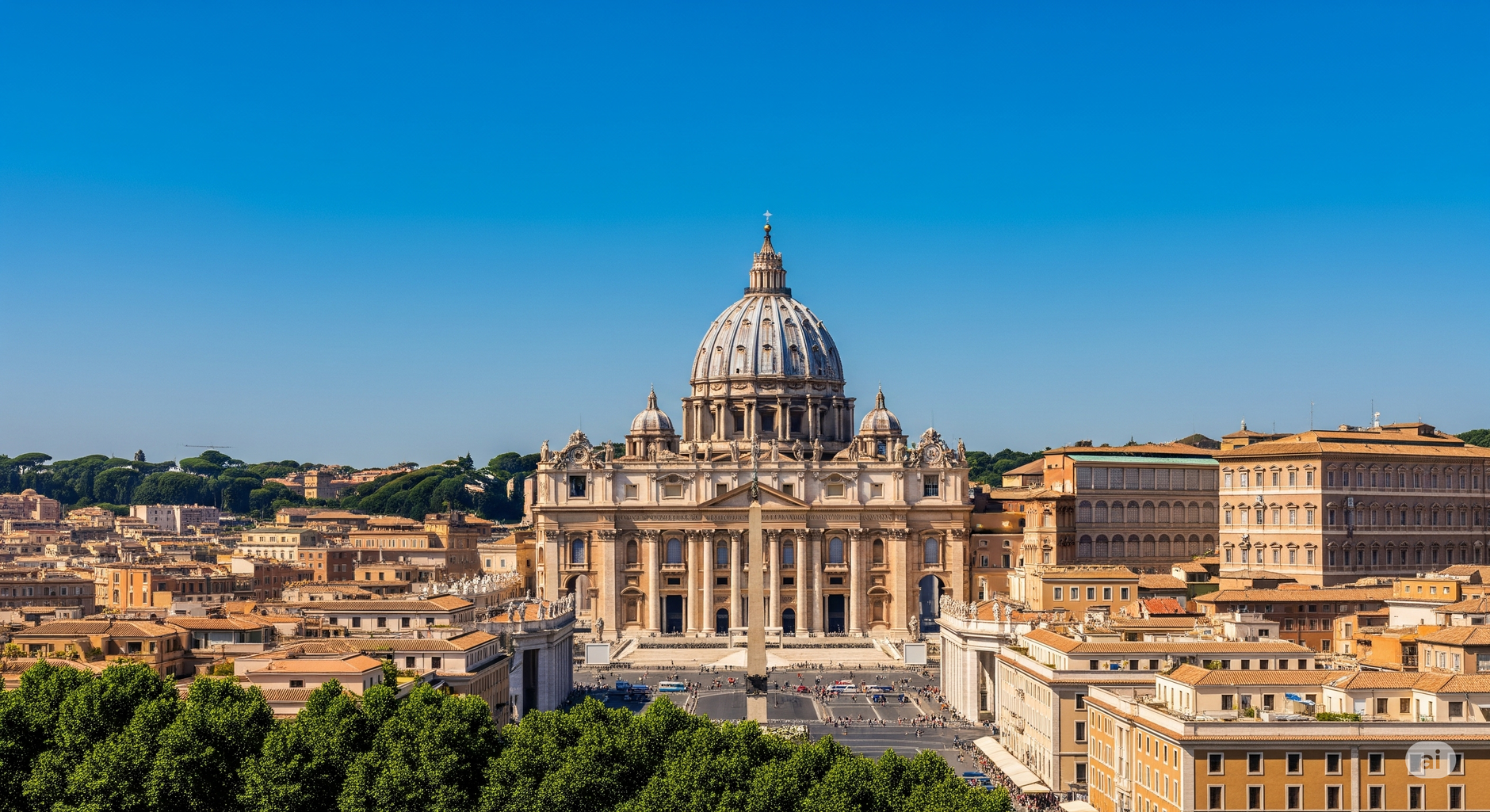
St. Peter’s Basilica sits at the heart of Vatican City, a monument of such immense proportions that it can feel impersonal at first. It is the spiritual and administrative center of the Roman Catholic Church, built over the burial site of the Apostle Peter. The structure you see today is a composite of designs by Bramante, Michelangelo, and Bernini, spanning over a century of architectural ambition. ## Navigating the Scale The sheer volume of the interior is the primary sensory experience. When you stand in the nave, the architecture is designed to make you feel small. The marble floors are inlaid with complex patterns, and the massive piers support a dome that remains an engineering marvel of the late Renaissance. You will find Michelangelo’s Pietà immediately upon entering. It is behind glass and often surrounded by a crowd, but it remains one of the few sculptures that rewards close, prolonged inspection. ## Bernini’s Intervention If Michelangelo provided the bones of the basilica, Gian Lorenzo Bernini provided the soul of the baroque interior. His bronze baldacchino, positioned directly over the high altar, anchors the space under the dome. It is a deliberate, dramatic interruption of the geometry, using twisted columns to draw the eye toward the center of the church. The bronze, which was famously repurposed from the Pantheon’s portico, serves as a focal point that keeps the massive space from feeling vacant. ## Practical Realities Accessing the basilica requires passing through security, which can lead to long wait times. If you arrive early—before 8:00 AM—you can enter the main floor with relative ease. The climb to the top of the dome is a separate ticket and involves a long, tight spiral staircase. Only undertake the climb if you are physically capable of navigating narrow, slanted walls. The view of St. Peter’s Square from the summit provides the best perspective of Bernini’s colonnade and the city beyond. Dress codes are strictly enforced; shoulders and knees must be covered, regardless of the heat. Treat the space as a functioning place of worship, not just a museum.
What makes it worth going
The largest church in the world and the seat of the papacy — Bramante, Michelangelo, Bernini across three centuries.
Things to do
- Museum
Vatican Museums
Enormous collection; use the early entrance tickets if possible.
Half day
- Castle
Castel Sant'Angelo
A fortified papal residence; the ramp walks offer stunning views.
2 hours
- Piazza
Piazza Navona
Baroque Roman square built atop an ancient athletics stadium.
1 hour
Eat
- Dish
Rigatoni con la Pajata
A traditional, rustic Roman dish highlighting old-world cooking styles.
- Street food
Gelato
Essential to find an artisanal shop; look for natural, muted colors.
Stay
- Neighborhood
Prati
Wide sidewalks and good shops; a convenient walk to the Vatican.
- Neighborhood
Borgo
The oldest district near the Basilica, full of historical charm.
What's nearby & pairs with
What to eat here
The regional specialties — not tonight's restaurant, the food worth understanding before you go.
Cured Meat
Porchetta
Porchetta is the quintessential Italian street food, with its roots deep in the Roman countryside. It was a celebratory meal for laborers and farmers, utilizing the whole pig to feed a crowd. The slow-roasting method is ancient, designed to transform tough cuts into tender meat while rendering the skin to a glass-like crisp.
Dish
Carbonara
Carbonara's history is debated, but it rose to prominence in Rome in the mid-20th century. It is a dish born of the simple, high-impact ingredients found in every Roman kitchen: eggs, cheese, and cured pork. It requires no cream, as the silkiness comes solely from the emulsification of egg yolk and pasta water.
Dish
Cacio e Pepe
This is the ultimate test of a Roman cook, relying on only three ingredients that must be handled with perfect precision. It originates from the needs of shepherds, who carried pecorino and pepper during transhumance. It is the purest expression of the Roman culinary philosophy: minimal, bold, and high-impact.
Dish
Amatriciana
The Amatriciana finds its roots in the town of Amatrice, though it has become a central pillar of Roman cooking. It is a descendant of the simpler 'gricia,' updated with the addition of tomatoes when they became available in the region. It is the defining tomato-based pasta of the Italian capital.
Dish
Gricia
Often called the ancestor of all Roman pasta, 'Gricia' is the original, rustic dish of the Apennine shepherds. It relies on the bounty of the mountain: cured pork and sheep's cheese. It has survived for centuries because it requires no fancy ingredients, just patience and heat control.
Cheese
Pecorino Romano
Pecorino Romano has roots dating back to the Roman Empire, when it was a staple ration for legionnaires because of its ability to travel and store well. Historically produced in the countryside around Rome, today the vast majority is made in Sardinia. It is an intensely salty and sharp cheese, explicitly designed for grating over bold, spicy pasta dishes.
Getting there & around
Train
Well-connected by rail.
Car
A car is not necessary.
We don't publish real-time schedules. Confirm train times on Trenitalia or Italo, and check current ZTL boundaries locally.
Ready to plan?
Ready to turn discovery into a trip?
Italy Field Guide helps you decide where to go. When you're ready to build the actual day-by-day itinerary, take your saved places to Travel Itinerary Co — your interests go with you.
Turn your saved Italy places into a trip