The Verdict
Bologna is worth two nights and is the best food city in Italy for travelers who want to eat seriously without the Florence prices or the Venice crowds. It is also the best rail hub in the country.
Why go
The food. Tagliatelle al ragù, tortellini in brodo, mortadella — this is where Italian cooking is most itself.
The Field Guide take
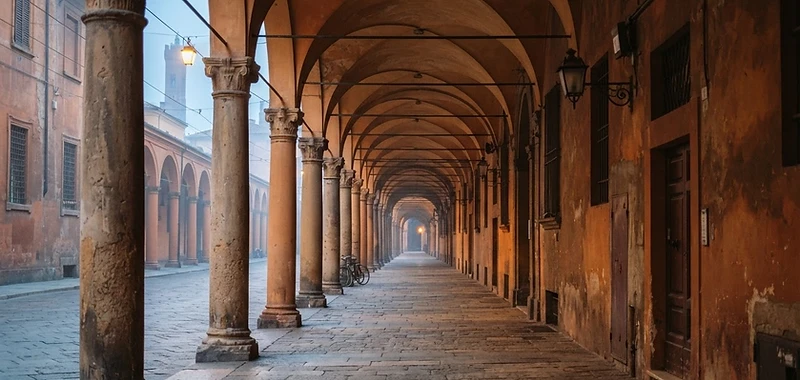
Bologna is the regional capital of Emilia-Romagna and arguably the most significant food destination in Italy. Unlike the art-heavy hubs of Tuscany or the watery landscape of Venice, Bologna is a city of red brick, endless porticoes, and a scholarly atmosphere derived from being the home of the oldest university in the Western world. It manages to feel lived-in and industrious without being purely a tourist center. ## The Food Capital The local cuisine is the reason most people visit, and the local markets, particularly around the Quadrilatero, are the center of the culinary world here. This is the birthplace of tortellini, mortadella, and tagliatelle al ragù. The food is rich, butter-heavy, and deeply regional. If you want to understand Italian food, you go to Bologna. The restaurants here don't need to shout; the quality of the raw ingredients—cured meats, aged cheeses, and fresh egg pasta—speaks for itself. ## The Architecture of Porticoes The city is famous for its miles of porticoes, which protect pedestrians from both the sun and the rain. These covered walkways are a architectural marvel that define the urban experience, allowing you to traverse almost the entire historic center without stepping into the open. The medieval towers that still lean over the city center serve as a reminder of the city's power during the Middle Ages. ## Why It Stays Underrated Bologna is worth two nights and is the best food city in Italy for travelers who want to eat seriously without the inflated prices found in the major tourist corridors. Furthermore, its position in the center of the rail network makes it an excellent base. You can reach Florence, Milan, or Venice within an hour or two on high-speed lines, yet Bologna remains fundamentally a local city. It has a student population that keeps the nightlife vibrant and a lack of pretension that makes it accessible. If you want to see a city that functions well, eats better, and hasn't been completely hollowed out by the souvenir trade, this is the destination.
What makes it worth going
Italy's food capital and the most underrated major city — medieval porticoes, the oldest university, and the deepest regional cuisine in the country.
Things to do
- Piazza
Piazza Maggiore & Basilica di San Petronio
The heart of Bologna. The basilica has a meridian line in the floor.
1 hour
- Viewpoint
Two Towers (Torre degli Asinelli)
Climb the 498 steps for the view over the red rooftops.
1 hour
- Historic site
Archiginnasio & Anatomical Theatre
The old university. Carved anatomical lecture hall. Striking.
1 hour
- Market
Quadrilatero market
The food streets behind Piazza Maggiore. Shop, snack, eat.
Half day
- Museum
MAMbo (Modern Art Museum)
For when you need a break from medieval.
1.5 hours
Eat
- Dish
Tagliatelle al ragù
The real Bolognese. Flat ribbon pasta, meat sauce, no tomato dominance. Not spaghetti.
- Dish
Tortellini in brodo
Stuffed pasta in capon broth. The Bolognese Sunday dish.
- Cured meat
Mortadella
From Bologna. Eat it thin-sliced on fresh bread. Not baloney.
Stay
- Neighborhood
Centro storico
Compact, walkable, everything within the porticoes.
- Neighborhood
University quarter
Younger, livelier, slightly cheaper.
What's nearby & pairs with
What to eat here
The regional specialties — not tonight's restaurant, the food worth understanding before you go.
Dish
Tagliatelle al Ragù
In Bologna, the ragù is not a quick tomato sauce; it is a long-simmered technique born from the city's wealth and access to high-quality meat. It was designed to enrich fresh egg pasta, turning a simple meal into a luxury. The authentic version is famously light on tomato, relying instead on dairy and meat essence.
Dish
Tortellini in Brodo
Tortellini are the pride of Bologna, with historical records of the pasta dating back to the Middle Ages. They are traditionally served during high holidays, specifically Christmas, when the labor-intensive work of shaping each tiny piece by hand is a family ritual. The dish is considered a masterclass in regional balance, pairing rich meat with a clear, elegant broth.
Cheese
Parmigiano Reggiano
Known as the king of cheeses, Parmigiano Reggiano has been produced in the Emilia-Romagna region for centuries, with origins tracing back to medieval Benedictine and Cistercian monks. The production process is strictly controlled by a consortium to ensure specific cattle breeds and traditional methods are upheld. It remains one of the most recognizable food products in Italy, defined by its strict geographical limitations.
Cured Meat
Prosciutto di Parma
Prosciutto di Parma is the standard-bearer for Italian cured ham, produced in the hills surrounding Parma. Its fame is built on a specific microclimate, where the sea breezes from the Mediterranean are filtered through the Apennine Mountains, creating the perfect conditions for natural drying. It is a product of simplicity, requiring only pork, salt, and time.
Cured Meat
Culatello di Zibello
Culatello is the most prestigious cured meat in Italy, originating from the humid, fog-shrouded lowlands of the Po River near Zibello. It is made from the 'heart' of the pig's rear leg, which is removed from the bone and cured in a bladder. It is a product of patience and environmental necessity, as the river fog plays an essential role in its maturation.
Cured Meat
Mortadella di Bologna
Mortadella di Bologna is an ancient recipe, with the first evidence of it found in a 1661 decree in Bologna that protected its production. Unlike American 'baloney', real Mortadella is a highly refined emulsion of pork cuts, seasoned with aromatics and studded with lard cubes and pistachios. It is a masterpiece of balance and texture.
Getting there & around
Train
Well-connected by rail.
Car
A car is not necessary.ZTL across the center. Arrive by train — Bologna is Italy's rail hub.
We don't publish real-time schedules. Confirm train times on Trenitalia or Italo, and check current ZTL boundaries locally.
Ready to plan?
Ready to turn discovery into a trip?
Italy Field Guide helps you decide where to go. When you're ready to build the actual day-by-day itinerary, take your saved places to Travel Itinerary Co — your interests go with you.
Turn your saved Italy places into a trip