The Verdict
Ferrara is worth a half-day from Bologna. It is flat, cyclable, and uncrowded. The Este castle and the Palazzo dei Diamanti are the essentials. Pair with Ravenna.
Why go
A Renaissance city built for the Este dukes — a moated castle in the center, and a city you explore by bicycle.
The Field Guide take
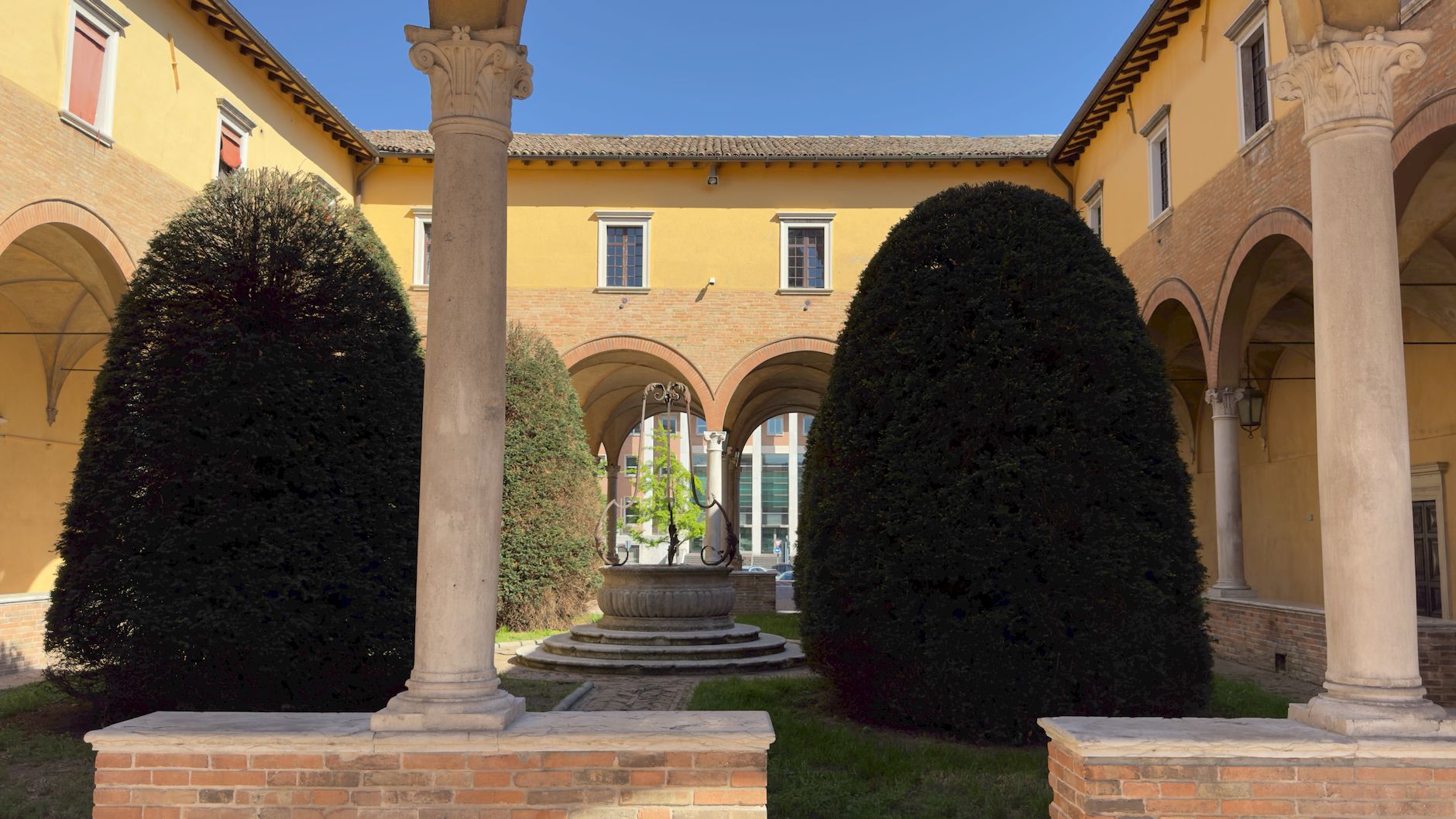
Ferrara is a city of bricks and flat horizon lines, a Renaissance enclave in the middle of the Emilia-Romagna plain. While its neighbors, Bologna and Modena, are known for bustling noise and intense urban energy, Ferrara is defined by its silence and a unique reliance on the bicycle. It was built under the patronage of the Este family, who turned what was a minor settlement into a major center of humanism and political intrigue. The result is a city that feels carefully preserved, perhaps even a bit stagnant, in the best possible way. ## The Moat and the Wall The Castello Estense is the city’s central landmark, complete with a moat and four corner towers that look exactly as a medieval fortification should. It dominates the city center, acting as a gravitational point that keeps the surrounding streets orderly and structured. Beyond the castle, the city is defined by the Mura di Ferrara—a remarkably intact set of defensive walls and earthen ramparts that circle the town, providing a long, green perimeter that acts as a park and a cycling route for residents. ## Renaissance Order The layout of Ferrara reflects the Renaissance ideal of a balanced, rational city. The streets in the historic center are wide and airy, specifically designed to show off the wealth of the ducal family. The Palazzo dei Diamanti, with its distinct facade of diamond-shaped stone blocks, is the most famous example of this stylistic ambition. Exploring Ferrara is best done at a slow, pedaling pace; the city is entirely flat, and the ubiquity of bicycles replaces the typical Italian traffic chaos with a quiet, efficient flow of commuters. This is a city for those interested in the history of dynastic politics and architectural planning. It lacks the rugged character of the southern hills or the sheer density of Roman ruins, opting instead for a consistent, measured, and academic aesthetic. It is a perfect half-day trip from the heavier urban centers of the region, offering a clean, intellectual environment that is rarely overcrowded.
What makes it worth going
A Renaissance ducal city — a castle moat in the center, a Jewish ghetto, and a cycling culture unique in Italy.
Things to do
- Castle
Castello Estense
Complete with a working moat; it dominates the city center and is beautifully preserved.
2 hours
- Museum
Palazzo dei Diamanti
Famed for its unique diamond-cut stone facade and excellent temporary art exhibits.
1 hour
- Historic center
City Walls Cycling
Ferrara is famously flat; rent a bike and ride the full circuit of the Renaissance walls.
2 hours
Eat
- Dish
Cappellacci di Zucca
Butternut squash-filled pasta in butter and sage; the defining flavor of Ferrara.
- Dish
Salama da Sugo
A complex, intense spiced pork sausage that is a local culinary legend.
Stay
- Neighborhood
Centro Storico
Stay here to be near the main squares and the best bike rental shops.
- Neighborhood
Jewish Quarter
Atmospheric, narrow streets rich in history; excellent for an authentic feel.
What's nearby & pairs with
What to eat here
The regional specialties — not tonight's restaurant, the food worth understanding before you go.
Dish
Tagliatelle al Ragù
In Bologna, the ragù is not a quick tomato sauce; it is a long-simmered technique born from the city's wealth and access to high-quality meat. It was designed to enrich fresh egg pasta, turning a simple meal into a luxury. The authentic version is famously light on tomato, relying instead on dairy and meat essence.
Dish
Tortellini in Brodo
Tortellini are the pride of Bologna, with historical records of the pasta dating back to the Middle Ages. They are traditionally served during high holidays, specifically Christmas, when the labor-intensive work of shaping each tiny piece by hand is a family ritual. The dish is considered a masterclass in regional balance, pairing rich meat with a clear, elegant broth.
Cheese
Parmigiano Reggiano
Known as the king of cheeses, Parmigiano Reggiano has been produced in the Emilia-Romagna region for centuries, with origins tracing back to medieval Benedictine and Cistercian monks. The production process is strictly controlled by a consortium to ensure specific cattle breeds and traditional methods are upheld. It remains one of the most recognizable food products in Italy, defined by its strict geographical limitations.
Cured Meat
Prosciutto di Parma
Prosciutto di Parma is the standard-bearer for Italian cured ham, produced in the hills surrounding Parma. Its fame is built on a specific microclimate, where the sea breezes from the Mediterranean are filtered through the Apennine Mountains, creating the perfect conditions for natural drying. It is a product of simplicity, requiring only pork, salt, and time.
Cured Meat
Culatello di Zibello
Culatello is the most prestigious cured meat in Italy, originating from the humid, fog-shrouded lowlands of the Po River near Zibello. It is made from the 'heart' of the pig's rear leg, which is removed from the bone and cured in a bladder. It is a product of patience and environmental necessity, as the river fog plays an essential role in its maturation.
Cured Meat
Mortadella di Bologna
Mortadella di Bologna is an ancient recipe, with the first evidence of it found in a 1661 decree in Bologna that protected its production. Unlike American 'baloney', real Mortadella is a highly refined emulsion of pork cuts, seasoned with aromatics and studded with lard cubes and pistachios. It is a masterpiece of balance and texture.
Getting there & around
Train
Well-connected by rail.
Car
A car is not necessary.ZTL in the center. Train from Bologna is 30 minutes.
We don't publish real-time schedules. Confirm train times on Trenitalia or Italo, and check current ZTL boundaries locally.
Ready to plan?
Ready to turn discovery into a trip?
Italy Field Guide helps you decide where to go. When you're ready to build the actual day-by-day itinerary, take your saved places to Travel Itinerary Co — your interests go with you.
Turn your saved Italy places into a trip