The Verdict
Siena is worth a night, or a long day trip from Florence. It is the best Tuscan base if you want a real city rather than a village. The Piazza del Campo alone justifies the visit.
Why go
The Piazza del Campo — the finest public space in Italy — and a Gothic center that feels frozen in the 1300s.
The Field Guide take
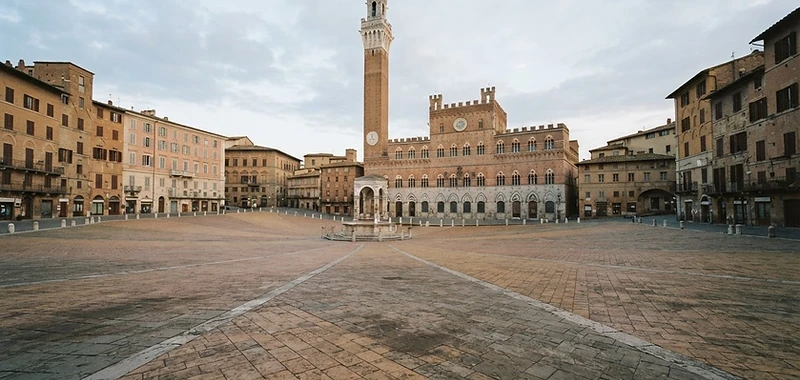
Siena is the physical embodiment of the Tuscan medieval ideal. Built across three steep hills, the city exists in a deliberate state of Gothic preservation that makes it feel distinct from the Renaissance-heavy streets of Florence. It is a city of dark brick, narrow alleys, and a fierce, insular pride that reveals itself in the intense pageantry of the local contrade districts. If you want to understand the spirit of medieval Italy, this is where it remains. ## The Piazza del Campo The Piazza del Campo is the gravitational center of the city. As one of the most logically designed public spaces in the country, its shell-shaped incline creates a natural gathering point that has functioned as the city’s heart since the Middle Ages. It is a rare example of urban design that successfully organizes a city around the community rather than the church or state. Sitting at a cafe on the perimeter provides an ideal view of the tower and the daily life of the city. ## Gothic Grandeur and Art The Duomo di Siena is an aggressive, stunning contrast to the city’s brick-and-mortar exterior. Its marble facade and interior floors display a level of artistic ambition that challenged Florence during the height of the city’s power. Inside, the Piccolomini Library and the surrounding galleries hold works that justify the trip even for those who are typically fatigued by religious art. The city’s history is effectively frozen in stone, remarkably devoid of the suburban sprawl found elsewhere. ## The Ideal Tuscan Base While many visitors attempt to see Siena as a brief stop during a transit through Tuscany, the city deserves at least one full night. Staying here allows you to experience the center after the day-trippers depart and the narrow streets quiet down. It serves as an excellent base for exploring the surrounding Chianti wine country and the Val d’Orcia. It is the best choice for travelers who prefer a real, fortified city experience over the rural village aesthetic.
What makes it worth going
The great medieval rival to Florence — a Gothic city built on three hills, with the most beautiful piazza in Italy and a food culture that rewards a stop.
Things to do
- Piazza
Piazza del Campo
Sit on the slope of the shell-shaped piazza. The Palazzo Pubblico and Torre del Mangia define it.
1 hour
- Cathedral
Duomo & Piccolomini Library
The interior is striking; the Piccolomini Library frescoes are the highlight.
1.5 hours
- Palace
Palazzo Pubblico & frescoes
Ambrogio Lorenzetti's Allegory of Good and Bad Government. One of the great secular fresco cycles.
1 hour
- Experience
Contrada museums
Siena's neighborhoods. If you're curious about the Palio, visit one.
1 hour
Eat
- Pasta
Pici
Thick hand-rolled pasta. Usually with cacio e pepe or wild boar ragù.
- Dessert
Panforte
Dense spiced fruit and nut cake. A Siena specialty since the 13th century.
Stay
- Neighborhood
Centro storico
Everything walkable. Stay inside the walls if you can.
What's nearby & pairs with
What to eat here
The regional specialties — not tonight's restaurant, the food worth understanding before you go.
Cured Meat
Finocchiona
Finocchiona evolved in the Middle Ages as a way for clever Tuscan butchers to stretch expensive pepper, which was imported and costly. They used wild fennel seeds—abundant in the Tuscan countryside—to provide a similar aromatic intensity at no cost. Over time, it became the signature salume of Florence.
Dish
Bistecca alla Fiorentina
This is the king of Tuscan beef dishes, tied directly to the Chianina breed and the traditions of the Florence aristocracy. It was historically a feast food, designed to show off the quality of the local cattle. The preparation is aggressively simple, focusing entirely on the quality of the raw ingredient.
Dish
Pappardelle al Cinghiale
Wild boar hunting is a central part of Tuscan autumn and winter culture. The ragù made from the catch is a deep, gamey, and intensely flavorful sauce that defines the season. It is meant to be served with broad pasta noodles that can hold the dense, meaty sauce.
Dish
Ribollita
Ribollita originated as a classic cucina povera dish designed to waste nothing. Tuscan peasants would gather leftover minestrone and day-old bread, simmering them together with beans to create a hearty, restorative meal. It was often made in large batches and reboiled the next day, which is how it earned its name.
Cheese
Pecorino di Pienza
Born in the rolling hills of the Val d'Orcia, Pecorino di Pienza is a product of the Etruscan tradition of sheep herding. Unlike harder, sharper pecorinos, this cheese is celebrated for its versatility and the impact of the local flora on the final taste. It is deeply connected to the landscape of Tuscany, often reflecting the herbs found in the grazing fields.
Cured Meat
Lardo di Colonnata
Lardo di Colonnata is a hyper-local product from the Carrara marble quarries in Tuscany. Quarrymen used to bury slabs of pork fat in the very marble troughs used to extract the stone, covering them with herbs and salt. Today, it remains a rare, highly valued delicacy that defines the ingenuity of the region's working-class heritage.
Local wine
Wine Appellation
Brunello di Montalcino DOCG
100% Sangiovese from the hill town of Montalcino — Tuscany's most structured, age-worthy, and expensive red, from a small, strictly defined zone.
Wine Appellation
Chianti Classico DOCG
Sangiovese-based red from the original historic Chianti zone between Florence and Siena — the most famous wine landscape in Italy.
Wine Appellation
Bolgheri DOC
Coastal Tuscan appellation on the Bibbona plain — where Super Tuscans were born, with Bordeaux varieties that broke Italian wine rules and won.
Wine Appellation
Vino Nobile di Montepulciano DOCG
Sangiovese-based red from Montepulciano — the third of Tuscany's noble reds, often the best value.
Getting there & around
Train
Well-connected by rail.
Car
A car adds value here.ZTL across the center. Train is easy from Florence; a car helps for the surrounding countryside.
We don't publish real-time schedules. Confirm train times on Trenitalia or Italo, and check current ZTL boundaries locally.
Ready to plan?
Ready to turn discovery into a trip?
Italy Field Guide helps you decide where to go. When you're ready to build the actual day-by-day itinerary, take your saved places to Travel Itinerary Co — your interests go with you.
Turn your saved Italy places into a trip