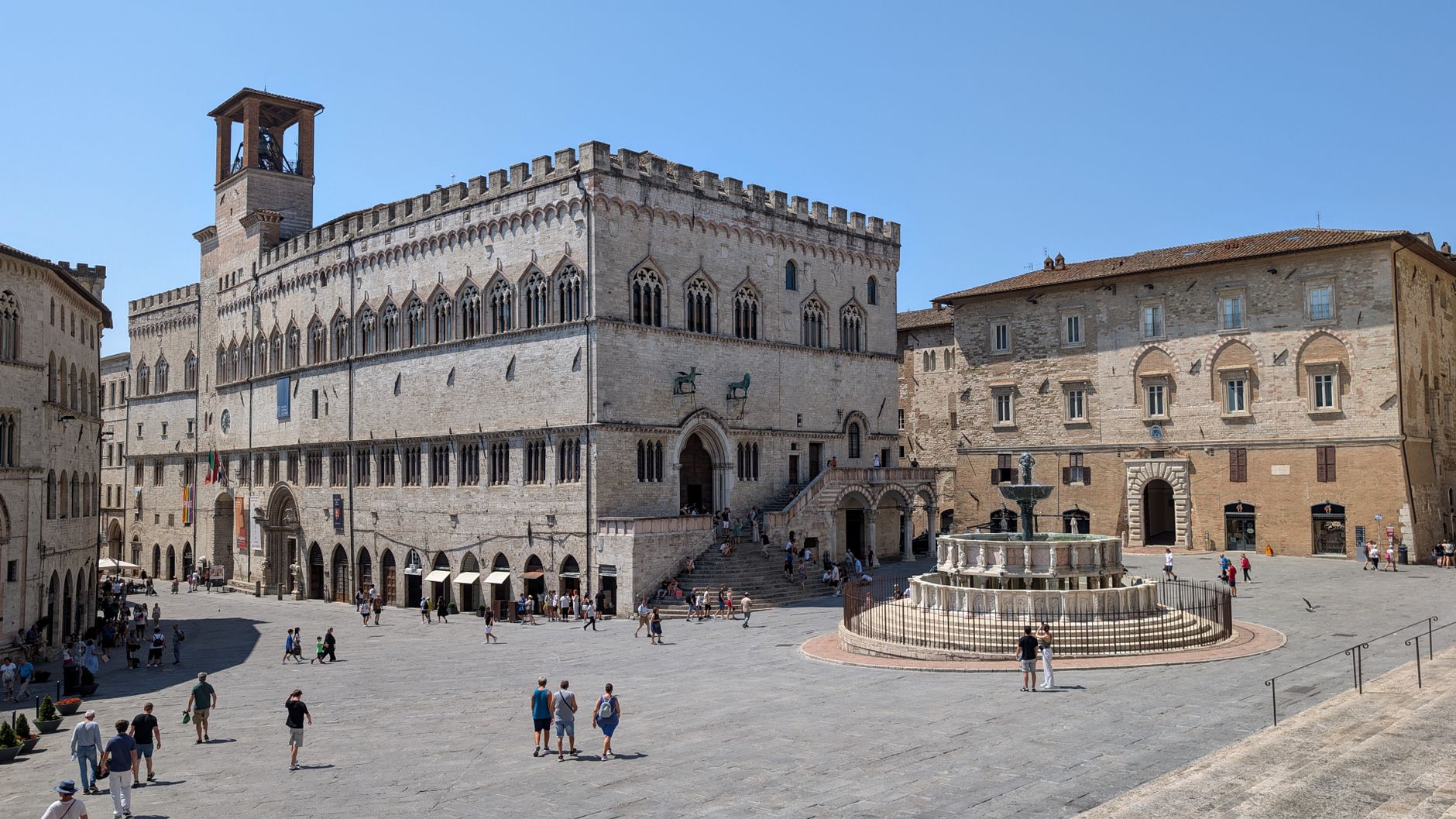
The Verdict
Perugia is worth a night as a base for Umbria, or a day trip paired with Assisi. It is livelier than Assisi and a real city. The historic center on top of the hill is the part that matters.
Why go
A real Umbrian city — Etruscan, medieval, and university-lived — with the best chocolate in central Italy.
The Field Guide take
Perugia occupies the high ground of Umbria. While many towns in the region sit on hills, Perugia is a substantial, multi-layered city with a history that predates the Roman era. It retains a jagged, vertical character that makes for exhausting walks but rewarding views over the surrounding valley. It is a university town that manages to balance its academic population with a traditional, austere Italian city structure. ## The Vertical City The historic center is perched atop a steep hill, necessitating a series of escalators that run through the foundations of the ancient Rocca Paolina fortress. This massive 16th-century fortification was partially demolished, and today you walk through its vaulted, subterranean remains to reach the central Corso Vannucci. The city is a dense collection of stone buildings, narrow alleys, and small squares that feel largely medieval in their layout. Unlike the polished tourist tracks of Tuscany, Perugia feels lived-in and occasionally unbothered by the needs of visitors. ## A University Identity With thousands of students arriving annually, the city maintains an atmosphere that is notably younger than its neighbors. This demographic supports a high density of cafes and bars, and it is a major factor in the city's lively evening culture. Perugia is also the seat of the Perugina chocolate company, which has shaped the city's economy and its public identity for decades. You will find their Baci chocolates in every shop, a persistent reminder of the city's industrial success. ## Strategic Base for Umbria Perugia serves as the transport hub for the region, making it a logical choice if you intend to explore other Umbrian towns by bus or rail. While Assisi is often chosen for its religious importance, Perugia provides a broader, more authentic sense of what it means to live in the Umbrian interior. It lacks the curated, museum-like quality of smaller villages, which makes it a refreshing alternative. Spend your time navigating the steep streets and finding the small squares that overlook the valley; the architecture here is functional, ancient, and undeniably solid.
What makes it worth going
The capital of Umbria — a hilltop university city with Etruscan walls, a central piazza, and a chocolate industry.
Things to do
- Historic Center
Piazza IV Novembre
The beating heart of the city, surrounded by medieval buildings.
1 hour
- Museum
Galleria Nazionale dell'Umbria
Housed in the Palazzo dei Priori, it holds the best Umbrian art.
2 hours
- Landmark
Etruscan Arch
A massive, well-preserved gateway built by the ancient Etruscans.
30 minutes
Eat
- Snack
Baci Perugina
Chocolate hazelnut kisses that define the city's industry.
- Street food
Torta al testo
Flatbread cooked on a hot stone disk, stuffed with sausage and greens.
Stay
- Neighborhood
Centro Storico
The only place to stay for the true hilltop experience.
- Neighborhood
Borgo Bello
Slightly quieter area just outside the dense historic core.
What's nearby & pairs with
What to eat here
The regional specialties — not tonight's restaurant, the food worth understanding before you go.
Dish
Pasta al Tartufo
Pasta al Tartufo is deeply rooted in the agricultural traditions of the Valnerina valley in Umbria, particularly around the towns of Norcia and Spoleto. Unlike the commercially driven truffle markets of Piedmont, the Umbrian truffle tradition is born from the local landscape where the black winter truffle (Tuber melanosporum) grows wild in the beech and oak forests surrounding the Sibillini Mountains. Historically, the dish emerged as a way to feature the harvest of the season without the need for complex sauces that would mask the ingredient's aromatic profile. The dish serves as a culinary pillar for Norcia, a town historically known for its mastery of pork butchery and wild foraging. While black truffles are now cultivated, the practice of gathering them with trained dogs remains a cultural identity for local families. The simplicity of the pasta—pairing high-fat, high-egg content noodles with the earthy aroma of the truffle—reflects a peasant-influenced culinary philosophy that prioritizes ingredient quality over technical elaboration.
Cured Meat
Salsiccia di Norcia
Norcia has been synonymous with professional butchery for centuries, with the word 'norcino' becoming a term for a skilled pork butcher across Italy. This sausage reflects the simple, rugged diet of the Umbrian mountains. It is a product of necessity, designed to preserve the meat through the long, cold winters.
Dish
Lenticchie di Castelluccio
The Lenticchie di Castelluccio di Norcia are grown on the Piano Grande, a high-altitude glacial plain in the Apennine Mountains of Umbria, sitting at approximately 1,400 meters above sea level. This rugged, isolated environment—part of the Monti Sibillini National Park—is unique for its harsh winters and short, cool growing season, which prevents the proliferation of pests and eliminates the need for chemical pesticides. The cultivation of these lentils dates back centuries, documented as a staple of the local peasant economy where the crop thrived in the nutrient-poor, limestone-rich soil that many other plants could not tolerate. In 1997, the product was granted the PGI (Protected Geographical Indication) status to protect its identity and strict area of production. The region and the industry suffered a catastrophic blow during the 2016 earthquakes, which decimated the village of Castelluccio and disrupted access to the fields. However, the agricultural community has since restored the landscape and production remains a symbol of rural endurance and regional pride. The lentils are culturally inseparable from New Year's Eve, where their consumption is a ubiquitous tradition across Italy, symbolizing prosperity and wealth due to their coin-like appearance.
Local wine
All wine in Umbria →Getting there & around
Train
Well-connected by rail.
Car
A car adds value here.ZTL in the center. Minimetrò (escalators) from the station to the center.
We don't publish real-time schedules. Confirm train times on Trenitalia or Italo, and check current ZTL boundaries locally.
Ready to plan?
Ready to turn discovery into a trip?
Italy Field Guide helps you decide where to go. When you're ready to build the actual day-by-day itinerary, take your saved places to Travel Itinerary Co — your interests go with you.
Turn your saved Italy places into a trip