The Verdict
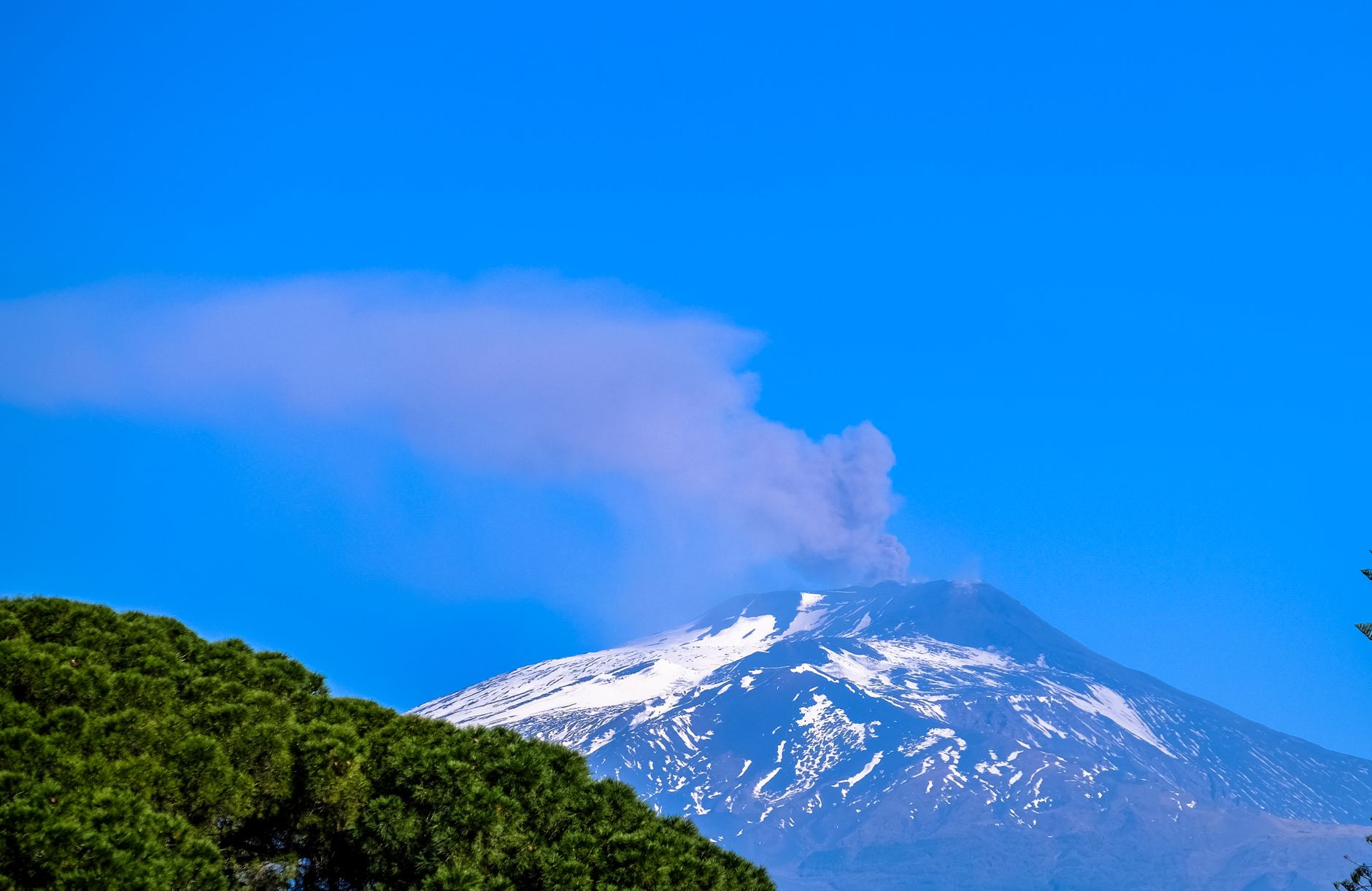
Europe's largest active volcano and a UNESCO site — a smoking summit, the lava flows, the cable car, and the vineyards on its slopes. Worth a day for the cable car and the lunar landscape; skip if it's erupting dangerously.
Why go
To take the cable car to 2,500m and walk the lunar landscape of Europe's largest active volcano — with the view of Sicily to the sea.
The Field Guide take
The Living Volcano
Mount Etna is not just a peak; it is a sprawling, active geological system on the eastern coast of Sicily that dominates the skyline of Catania. Rising to over 3,300 meters, it is Europe's largest and most active volcano. Its slopes are a patchwork of fertile vineyards, dense forests, and desolate, black lava fields from past eruptions. The mountain is a UNESCO World Heritage site, recognized for its frequent volcanic activity and the influence it has had on the surrounding ecology and history. It is a place of extremes, where the heat of the lower slopes quickly gives way to freezing temperatures at the summit.
Accessing the Summit
The main access point for visitors is through the Rifugio Sapienza on the southern side. From here, a cable car climbs to approximately 2,500 meters, leaving you at the edge of the crater zone. While guided tours are necessary for reaching the higher summit craters—and are subject to immediate closure based on volcanic volatility—the plateau area itself offers a stark, lunar landscape that is accessible for a half-day trip. You should wear sturdy footwear, as the terrain is loose volcanic ash and jagged rock. Even in mid-summer, the wind at this elevation can be severe; dress in layers regardless of how warm it feels in Catania.
Agriculture and Volcanic Soil
Beyond the craters, the lower slopes of Etna are highly productive. The volcanic soil is rich in minerals, supporting a distinct viticulture industry that has expanded significantly in recent years. Many vineyards here specialize in Nerello Mascalese, a grape that thrives in the high altitude and specific soil composition of the volcano's base. If you have time, visiting these vineyards provides a better sense of how the local economy and culture are inextricably linked to the mountain's activity. Be mindful that Etna is genuinely dangerous. Check local reports before traveling, as access to the summit zones is restricted when seismic readings show increased instability. It is a mountain to be observed with caution, not just a standard hiking destination.
What makes it worth going
Europe's largest active volcano, a UNESCO site — the smoking summit (3,357m), the black lava flows, and the vineyards on its slopes. Sicily's mountain.
Things to do
- experience
Cable car to 2,500m & the summit
The cable car from Rifugio Sapienza to 2,500m, then a 4x4 bus to 2,900m and a guided walk to the summit craters. The reason to come. Weather can close it; the volcano decides.
half day
- hiking_trail
The lava flow walks
The walks on the older lava flows (the 2002 flow, the Silvestri craters) — the lunar landscape, the black sand, the smoking vents. The easy version of the summit.
- wine_region
The Etna vineyards
The vineyards on the volcanic slopes (Etna DOC), at 600-1000m — the black soil, the Nerello Mascalese red, the Carricante white. The highest vineyards in Sicily; the volcanic terroir.
Eat
- wine
Etna wine (Nerello Mascalese)
The red of the volcano, from the high-altitude volcanic soil — the 'Etna Rosso'. The white (Carricante) is the other. The volcanic terroir, in a glass.
- dish
Pasta alla Norma
The Catania classic — eggplant, tomato, ricotta salata, basil — born at the foot of Etna.
Stay
- hotel
Catania or the Etna villages
Stay in Catania for the city, or the Etna villages (Linguaglossa, Castiglione di Sicilia) for the mountain and the vineyards.
Experiences Worth Booking
Guided summit crater hike
6 hrsThe cable car, the 4x4, the guide, the summit craters. The live volcano, up close.
The summit (above 2,900m) is guide-only by regulation; the volcano is active and unpredictable.
Suits: Hikers and adventurous travelers.
What to eat here
The regional specialties — not tonight's restaurant, the food worth understanding before you go.
Dish
Caponata
Caponata represents the complex culinary intersection of Sicily's history. The dish likely traces its roots to the Arab occupation of Sicily in the 9th century, drawing inspiration from the North African influence on the island's produce. The term itself is debated; some linguists point to the Latin 'caupona,' implying it was a dish served in taverns for travelers, while others argue it relates to 'capone,' the Sicilian name for the dolphinfish, which was allegedly once served in a similar sweet-sour sauce for the island's elite. By the 18th century, it had firmly established itself in the cookbooks of Sicilian households, evolving from an aristocratic fish dish into the vegetable-forward staple recognized today. It serves as a culinary encapsulation of the 'agrodolce' philosophy, a technique perfected in the region to preserve and balance flavors using vinegar and sugar.
Dish
Pasta con le Sarde
Pasta con le sarde is the culinary embodiment of Sicily's complex history, specifically the period of Arab rule in Palermo between the 9th and 11th centuries. The dish reflects the medieval Arab influence on Sicilian gastronomy, where the combination of savory fish with sweet aromatics like raisins and saffron was a hallmark of sophisticated courtly cuisine. It is, perhaps more than any other Sicilian plate, a record of the island's role as a cultural crossroads in the Mediterranean. While the dish is most famously associated with the capital of Palermo, its roots are tied to the coastal landscape where fresh sardines and the wild fennel that carpets the Sicilian hillsides are readily available. The use of toasted breadcrumbs, or 'muddica,' serves as a historical substitute for the expensive imported cheeses that were often inaccessible to the local working classes, solidifying the dish as a quintessential product of Sicily’s ingenuity and resourcefulness.
Dish
Granita
Granita traces its roots to the Arab occupation of Sicily, which began in the 9th century. The occupiers brought the technique of snow harvesting from the slopes of Mount Etna and the Hyblaean Mountains, mixing it with fruit syrups, herbs, and flowers to create a primitive sorbet known as 'sherbet.' Over centuries, this evolved from snow-based mixtures into a sophisticated freezing technique using sugar, water, and local agricultural products. By the 17th century, the 'nevaroli'—specialized workers who managed the ice supply—played a critical role in the growth of this trade across the island. The transformation into the modern granita saw the replacement of packed snow with water-based slush, solidified by salt and ice barrels, eventually leading to the mechanical freezing processes used today in cities like Messina, Catania, and Noto.
Dish
Arancini
Arancini are the pride of Sicilian street food, reflecting the island's complex history of Arab influence, where rice and saffron were introduced. They are essentially portable, fried feasts, designed for snacking on the go. The shape varies by city, indicating whether you are in the east or west of Sicily.
Dish
Pasta alla Norma
Named after Bellini's opera, 'Norma' is a tribute to the landscape and produce of Catania. It is the definitive expression of Sicilian summer, combining the smokiness of fried eggplant with the saltiness of local ricotta. It is a dish that shows off how much can be done with very little.
Dish
Cannoli
Cannoli are a Sicilian institution, with roots reaching back to the Roman occupation. The crispy shell and sweet, creamy filling represent the island's diverse culinary influences, including the use of sheep's milk ricotta, which is a regional staple. It is a dessert that balances crunch, cream, and subtle sweetness.
Local wine
Wine Appellation
Nero d'Avola
Sicily's signature red grape — plush, dark-fruited, and increasingly well-made.
Wine Appellation
Etna Rosso DOC
Nerello Mascalese-based red from the volcanic slopes of Mount Etna — nervy, mineral, and unlike anything else in Italy, from old bush-trained vines.
Wine Appellation
Etna Bianco DOC
Carricante-based white from the volcanic slopes of Mount Etna — saline, mineral, and piercingly bright.
Wine Region
Etna Wine Region
Vineyards on the slopes of Mount Etna in Sicily — Italy's most exciting emerging wine region, on volcanic soils from an active volcano.
Getting there & around
Train
Limited or no direct rail access.
Car
A car adds value here.The south side (Rifugio Sapienza) is the cable car base; the north (Piano Provenzana) is the jeep tour. Park at the base; the cable car is the access.
We don't publish real-time schedules. Confirm train times on Trenitalia or Italo, and check current ZTL boundaries locally.
Ready to plan?
Ready to turn discovery into a trip?
Italy Field Guide helps you decide where to go. When you're ready to build the actual day-by-day itinerary, take your saved places to Travel Itinerary Co — your interests go with you.
Turn your saved Italy places into a trip