The Verdict
Catania is worth a night as the base for Etna and the east coast. It is grittier than Palermo but has a great fish market and a Baroque center built from Etna's lava stone. Use it as a hub.
Why go
Baroque in black lava stone at the foot of Etna, and the Pescheria fish market at dawn.
The Field Guide take
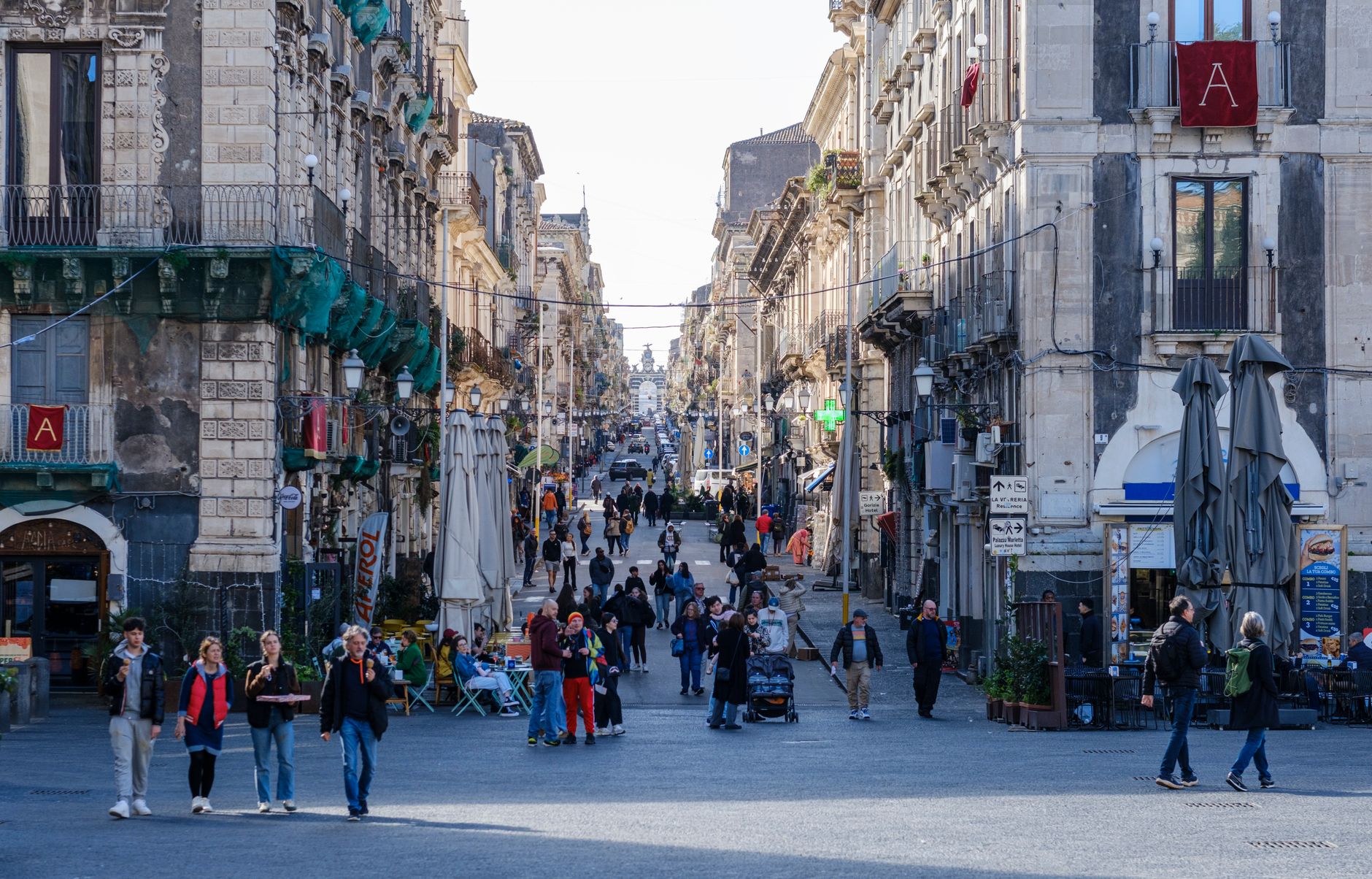
Catania is a city of aggressive intensity, built from the black lava rock of Mount Etna. It sits on the edge of the Ionian Sea, constantly shadowed by the presence of the volcano that has both destroyed and rebuilt it multiple times over the centuries. It is not a polished, delicate city; it is grimy, loud, and deeply alive. For those who can handle the soot and the chaotic traffic, it offers the most visceral experience in eastern Sicily, acting as the necessary logistical hub for the surrounding region. ## The Lava Stone Aesthetic The architecture of Catania is a masterclass in the Baroque style applied to unusual materials. Because the city was rebuilt after the 1693 earthquake using volcanic stone, the churches and palazzi have a dark, brooding quality that separates them from the golden, limestone-heavy Baroque of the Val di Noto. The Piazza del Duomo, with its central lava-stone elephant fountain, serves as the city’s stage. The streets here are broad and imposing, reflecting the ambition of the post-earthquake reconstruction, yet the underlying feeling is one of relentless activity. ## The Market and the Mountain The Pescheria is the heart of Catania, a fish market that starts before dawn and continues until the afternoon. It is an honest, unrefined spectacle of Sicilian commerce, where vendors shout over piles of fresh swordfish and tuna. It is not an experience for the faint of heart, but it is the truest part of the city. Beyond the market, Catania is a gateway. It is the closest major urban area to the slopes of Etna, making it the practical choice for logistics. You come here to use the transit connections, to see the market, and to stand in the shadow of the volcano. It is not a place for those looking for a quiet beach getaway or a refined, gentle walking city; it is for travelers who want to see how a city persists at the base of the most active volcano in Europe.
What makes it worth going
Sicily's second city — Baroque rebuilt in black lava stone, at the foot of Mount Etna, with the best market in eastern Sicily.
Things to do
- Market
La Pescheria
The historic fish market is loud, vibrant, and a true sensory experience of Sicily.
1 hour
- Historic center
Via Etnea
The main artery of the city; lined with black lava-stone buildings and grand cafes.
2 hours
- Viewpoint
Mount Etna Excursion
Use Catania as your jumping-off point for mountain treks; it's unavoidable and majestic.
Half day
Eat
- Dish
Pasta alla Norma
Named after the Bellini opera, this is the absolute signature dish of Catania.
- Snack
Granita con Brioche
Almond or coffee granita served with a warm bun for breakfast; a must.
Stay
- Neighborhood
Centro Storico
Close to the market and the main sights; ideal for short-term visitors.
- Neighborhood
Lungomare
The seaside area, offering a cooler, more relaxed vibe away from the gritty center.
What's nearby & pairs with
What to eat here
The regional specialties — not tonight's restaurant, the food worth understanding before you go.
Dish
Caponata
Caponata represents the complex culinary intersection of Sicily's history. The dish likely traces its roots to the Arab occupation of Sicily in the 9th century, drawing inspiration from the North African influence on the island's produce. The term itself is debated; some linguists point to the Latin 'caupona,' implying it was a dish served in taverns for travelers, while others argue it relates to 'capone,' the Sicilian name for the dolphinfish, which was allegedly once served in a similar sweet-sour sauce for the island's elite. By the 18th century, it had firmly established itself in the cookbooks of Sicilian households, evolving from an aristocratic fish dish into the vegetable-forward staple recognized today. It serves as a culinary encapsulation of the 'agrodolce' philosophy, a technique perfected in the region to preserve and balance flavors using vinegar and sugar.
Dish
Pasta con le Sarde
Pasta con le sarde is the culinary embodiment of Sicily's complex history, specifically the period of Arab rule in Palermo between the 9th and 11th centuries. The dish reflects the medieval Arab influence on Sicilian gastronomy, where the combination of savory fish with sweet aromatics like raisins and saffron was a hallmark of sophisticated courtly cuisine. It is, perhaps more than any other Sicilian plate, a record of the island's role as a cultural crossroads in the Mediterranean. While the dish is most famously associated with the capital of Palermo, its roots are tied to the coastal landscape where fresh sardines and the wild fennel that carpets the Sicilian hillsides are readily available. The use of toasted breadcrumbs, or 'muddica,' serves as a historical substitute for the expensive imported cheeses that were often inaccessible to the local working classes, solidifying the dish as a quintessential product of Sicily’s ingenuity and resourcefulness.
Dish
Granita
Granita traces its roots to the Arab occupation of Sicily, which began in the 9th century. The occupiers brought the technique of snow harvesting from the slopes of Mount Etna and the Hyblaean Mountains, mixing it with fruit syrups, herbs, and flowers to create a primitive sorbet known as 'sherbet.' Over centuries, this evolved from snow-based mixtures into a sophisticated freezing technique using sugar, water, and local agricultural products. By the 17th century, the 'nevaroli'—specialized workers who managed the ice supply—played a critical role in the growth of this trade across the island. The transformation into the modern granita saw the replacement of packed snow with water-based slush, solidified by salt and ice barrels, eventually leading to the mechanical freezing processes used today in cities like Messina, Catania, and Noto.
Dish
Arancini
Arancini are the pride of Sicilian street food, reflecting the island's complex history of Arab influence, where rice and saffron were introduced. They are essentially portable, fried feasts, designed for snacking on the go. The shape varies by city, indicating whether you are in the east or west of Sicily.
Dish
Pasta alla Norma
Named after Bellini's opera, 'Norma' is a tribute to the landscape and produce of Catania. It is the definitive expression of Sicilian summer, combining the smokiness of fried eggplant with the saltiness of local ricotta. It is a dish that shows off how much can be done with very little.
Dish
Cannoli
Cannoli are a Sicilian institution, with roots reaching back to the Roman occupation. The crispy shell and sweet, creamy filling represent the island's diverse culinary influences, including the use of sheep's milk ricotta, which is a regional staple. It is a dessert that balances crunch, cream, and subtle sweetness.
Local wine
Wine Appellation
Nero d'Avola
Sicily's signature red grape — plush, dark-fruited, and increasingly well-made.
Wine Appellation
Etna Rosso DOC
Nerello Mascalese-based red from the volcanic slopes of Mount Etna — nervy, mineral, and unlike anything else in Italy, from old bush-trained vines.
Wine Appellation
Etna Bianco DOC
Carricante-based white from the volcanic slopes of Mount Etna — saline, mineral, and piercingly bright.
Wine Region
Etna Wine Region
Vineyards on the slopes of Mount Etna in Sicily — Italy's most exciting emerging wine region, on volcanic soils from an active volcano.
Getting there & around
Train
Well-connected by rail.
Car
A car adds value here.ZTL in the center. Bus or train to Taormina.
We don't publish real-time schedules. Confirm train times on Trenitalia or Italo, and check current ZTL boundaries locally.
Ready to plan?
Ready to turn discovery into a trip?
Italy Field Guide helps you decide where to go. When you're ready to build the actual day-by-day itinerary, take your saved places to Travel Itinerary Co — your interests go with you.
Turn your saved Italy places into a trip