The Verdict
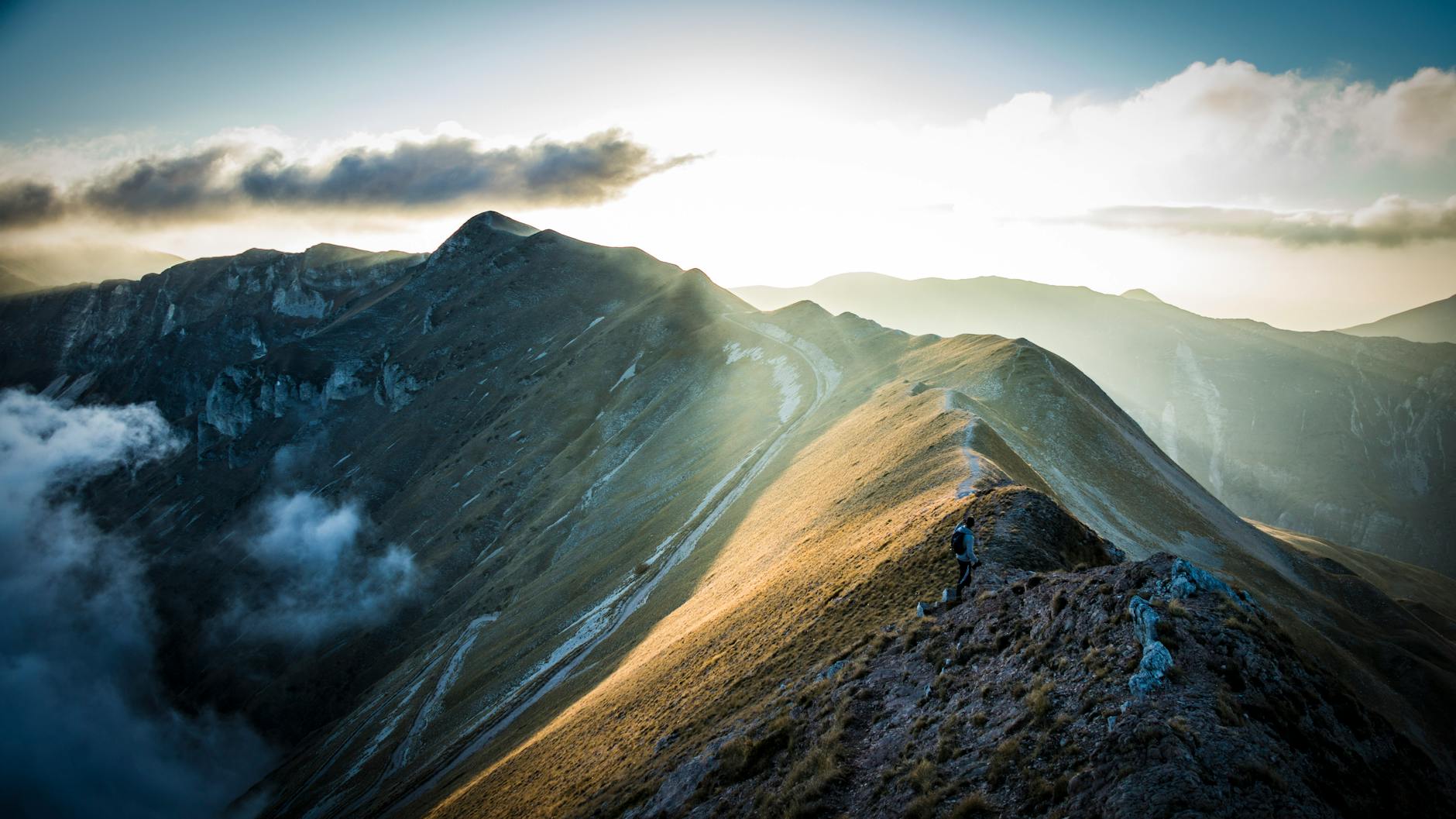
The 'blue mountains' of the Marche-Umbria border — the Sibilla (the sibyl's cave, the legend), the Castelluccio plain, and the wildflower bloom. Worth a day or two for the plateau and the legend.
Why go
For the Castelluccio plain (the high plateau, the wildflower ' Fiorita' in June-July) and the Sibilla (the sibyl's cave, the legend of the Apennines).
The Field Guide take
The Monti Sibillini represent the most rugged terrain in the central Apennines, straddling the border between the Marche and Umbria regions. These peaks earned their name from the mythical sorceress Sibilla, who was long said to inhabit a cave high in the range. Unlike the groomed trails of the Dolomites, the Sibillini remain a quiet, stark environment characterized by limestone massifs and glacial valleys. ## The Castelluccio Plateau In early summer, the Piano Grande plateau below the village of Castelluccio transforms into a massive mosaic of color. Known as the Fiorita, this seasonal bloom sees the fields covered in lentils, poppies, and cornflowers. It is a strictly controlled natural event that draws significant crowds despite the isolation of the high altitude. The plateau itself is a vast tectonic basin, offering a flat expanse that contrasts sharply with the jagged peaks surrounding it. ## The Legend and the Landscape The Sibilla Cave remains a core part of the local mythology, fueling centuries of literary and artistic speculation. While access to the actual cave has been restricted due to seismic stability concerns, the trail towards Monte Sibilla remains a popular trek for those looking to engage with the folklore of the region. The terrain is demanding, prone to rapid weather shifts, and largely devoid of the commercial infrastructure found in more famous Italian ranges. ## Who Should Go This is terrain for experienced hikers and those seeking solitude. The lack of mountain huts and luxury services means you need to be prepared for self-sufficient travel. It suits the traveler who prefers mapping out topographical routes over visiting curated viewpoints. If you want to see the central Apennines in their most untamed state, this is the place, but do not expect resort comforts.
What makes it worth going
The 'blue mountains' of the Marche-Umbria border, with the Sibilla (the sibyl's cave), the Castelluccio plain, and the wildflowers. The wildest of the central Apennines.
Things to do
- valley
Piano Grande di Castelluccio
The 15km² high plain (1,300m) below the Vettore (2,476m), the 'Fiorita' (the wildflower bloom, June-July) is one of the great Italian natural events. The reason to come; the village of Castelluccio (damaged in the 2016 earthquake) is at the edge.
- viewpoint
The Sibilla (the sibyl's cave)
The cave of the Sibilla (the Apennine sibyl, the legend of the mountains), on Monte Sibilla — the medieval pilgrimage, the folklore. The legend beyond the view.
- settlement
Norcia (the base)
The walled town at the foot of the Sibillini (the birthplace of St. Benedict, the black-truffle capital) — the base and the food.
Eat
- local
Norcia black truffle
The black truffle of Norcia — the Sibillini are the truffle country; the town is the capital.
- local
Lentils of Castelluccio
The tiny lentils of the Piano Grande, a Slow Food presidium — the plain is the crop; the lentil is the ingredient.
Stay
- hotel
A B&B in Norcia or a refugio
Stay in Norcia for the base, or a refugio on the mountain. Castelluccio for the plateau (limited, post-quake).
What's nearby & pairs with
What to eat here
The regional specialties — not tonight's restaurant, the food worth understanding before you go.
Dish
Brodetto di Pesaro
Brodetto di Pesaro is a quintessential Adriatic seafaring dish, born of necessity among the fishing communities of the Marche region. Historically, fishermen utilized the 'scarti'—the undersized, broken, or less commercially valuable fish left over after the day's catch was sold—to feed their families. These disparate species were simmered together in a single pot, providing a nutrient-dense, filling meal for those spending long hours at sea or returning to the port after a shift. The dish serves as a point of fierce regional pride, with the coastal towns of Marche each claiming their specific iteration as the original or most authentic. While often grouped under the general term 'brodetto alla marchigiana,' the version from Pesaro is defined by its strict adherence to a multi-species requirement and a specific balance of acid and sweetness. It reflects a Mediterranean culinary philosophy where local availability dictates the recipe rather than a static list of ingredients.
Dish
Olive Ascolane
Olive Ascolane originate from the city of Ascoli Piceno in the Marche region. Their history is often traced back to the 19th century, when local wealthy families commissioned their personal chefs to create elaborate dishes using the local Tenera Ascolana olives. These olives, characterized by their large size and delicate, tender flesh, were stuffed with a rich filling of various meats, reflecting the prosperity of the area's culinary tradition at the time. Over time, the recipe migrated from aristocratic kitchens to the tables of ordinary citizens, becoming the quintessential festive food of the city. While the exact origins are debated by local culinary historians, it is widely accepted that they evolved as a way to utilize leftover roasted meats and slow-cooked stews, making them a resourceful yet luxurious snack. They have since become the defining culinary symbol of Ascoli Piceno, served at weddings, saint's days, and as a staple in the city's lively bar scene.
Dish
Vincisgrassi
Vincisgrassi originated in the Marche region, specifically centered around the province of Ancona. Its name is widely attributed by local tradition to the Austrian General Alfred von Windisch-Graetz, who commanded troops in Ancona during the siege of 1799. As the legend goes, the local cooks created a refined version of lasagna to honor the general, with the name eventually evolving from his surname into the Italianized 'Vincisgrassi'. While the etymology is largely accepted in the region, the dish itself draws from a long history of Marche's rural culinary traditions, utilizing ingredients common to the region's farmhouse kitchens. It was historically a celebratory dish, prepared for weddings, religious feast days, and significant family gatherings, serving as a display of resourcefulness and hospitality in the face of local scarcity. Unlike many other regional pasta dishes that rely on simple tomato-based sauces, Vincisgrassi represents a more complex, aristocratic influence applied to peasant-style proteins, particularly the use of offal.
Local wine
All wine in Marche →Getting there & around
Train
Limited or no direct rail access.
Car
A car adds value here.The massif is in the Monti Sibillini national park; the access is from Norcia, Visso, or Amandola. A car is the way; the roads are winding.
We don't publish real-time schedules. Confirm train times on Trenitalia or Italo, and check current ZTL boundaries locally.
Ready to plan?
Ready to turn discovery into a trip?
Italy Field Guide helps you decide where to go. When you're ready to build the actual day-by-day itinerary, take your saved places to Travel Itinerary Co — your interests go with you.
Turn your saved Italy places into a trip