The Verdict
Herculaneum is worth a half-day and is the better archaeological site than Pompeii if you can only do one. It is smaller, shaded, less crowded, and the preservation is more intimate.
Why go
Better preservation than Pompeii — wood, fabric, food, and the boathouse skeletons — in a compact, manageable site.
The Field Guide take
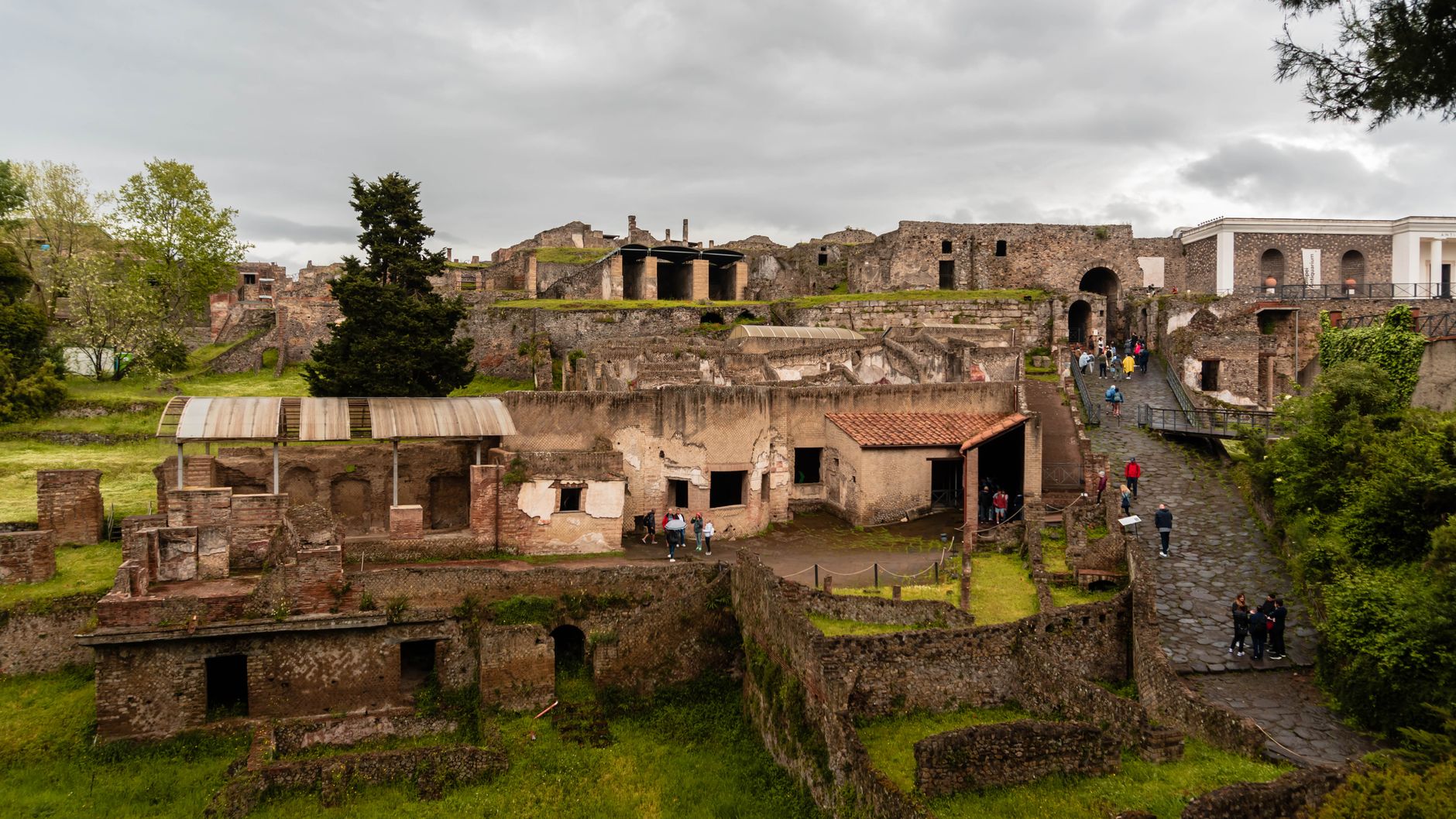
Herculaneum, located in the shadow of Vesuvius in the province of Napoli, offers a starkly different experience than its neighbor, Pompeii. While Pompeii is a horizontal, expansive city, Herculaneum is compact and vertical. It was buried by pyroclastic surges that effectively carbonized wood, food, and textiles, leading to a level of preservation that feels intimate and domestic rather than purely architectural.
The Preservation of Interiors
In Herculaneum, you can see upper floors of houses, carbonized wooden furniture, and intricate mosaic flooring that remains remarkably intact. Because the city was buried in a different manner than Pompeii, the organic material survived. This allows for a glimpse into the actual belongings of the Roman residents. You can look into shops and private homes and feel as though the inhabitants left only recently.
The Waterfront Skeletons
The most sobering part of the site is the series of boat sheds where hundreds of refugees waited for rescue that never came. Their remains were found in situ, offering a visceral reminder of the human cost of the eruption. It is a quiet, heavy part of the site that contrasts with the domestic focus of the streets above.
Why It Outclasses Pompeii
Herculaneum is objectively easier to manage than Pompeii. It is smaller, largely shaded by the modern city surrounding it, and significantly less crowded. The site allows for a contemplative pace. If you are choosing between the two Roman sites in Campania, choose this one. It provides a more personal and complete look at ancient life without the exhaustion of walking miles through exposed stone streets.
What makes it worth going
The smaller, better-preserved Roman town buried by Vesuvius — wooden structures, frescoes, and skeletons in place.
Things to do
- archaeological_site
House of the Mosaic Atrium
A stunning example of the preservation found in Herculaneum.
1 hour
- museum
Herculaneum Thermal Baths
So well-preserved you can almost see the steam rising.
1 hour
- archaeological_site
Ancient Waterfront
Provides context for the town's history as a resort destination.
1 hour
Eat
- Street food
Cuoppo
A paper cone filled with fried seafood, a local coastal treat.
- Dish
Babà
Rum-soaked yeast cake that is a staple in the region.
Stay
- Neighborhood
Ercolano
The modern town located right next to the archaeological site.
- Neighborhood
Naples
Perfect for combining ancient history with modern urban energy.
What's nearby & pairs with
What to eat here
The regional specialties — not tonight's restaurant, the food worth understanding before you go.
Dish
Pizza Napoletana
Pizza Napoletana is the result of the convergence of New World tomatoes and local Neapolitan ingenuity. It was originally street food for the city’s working class, intended to be eaten quickly. It remains regulated by the AVPN to ensure it adheres to the specific, centuries-old Neapolitan standards.
Dish
Spaghetti alle Vongole
This dish represents the maritime tradition of coastal Campania, where simplicity is the highest form of sophistication. It emerged from the needs of local fishermen who cooked their daily catch directly on the docks. The recipe relies entirely on the quality of the mollusks and the timing of the pasta.
Cheese
Mozzarella di Bufala Campana
Mozzarella di Bufala Campana is a product of the water buffalo introduced to southern Italy centuries ago. Its status as a DOP product ensures that it is made exclusively from the milk of the Italian Mediterranean buffalo. It is not a cheese to be cooked or stored; it is a fresh product meant to be eaten within hours of its production.
Local wine
Wine Appellation
Taurasi DOCG
Aglianico-based red from Irpinia — the 'Barolo of the South.'
Wine Appellation
Greco di Tufo DOCG
Mineral-driven white from the Greco grape on volcanic and calcareous soils in Irpinia.
Wine Appellation
Fiano di Avellino DOCG
Aromatic, textured white from the Fiano grape in Irpinia — one of Italy's most age-worthy whites.
Getting there & around
Train
Well-connected by rail.
Car
A car is not necessary.Circumvesuviana from Naples to Ercolano station.
We don't publish real-time schedules. Confirm train times on Trenitalia or Italo, and check current ZTL boundaries locally.
Ready to plan?
Ready to turn discovery into a trip?
Italy Field Guide helps you decide where to go. When you're ready to build the actual day-by-day itinerary, take your saved places to Travel Itinerary Co — your interests go with you.
Turn your saved Italy places into a trip