The Verdict
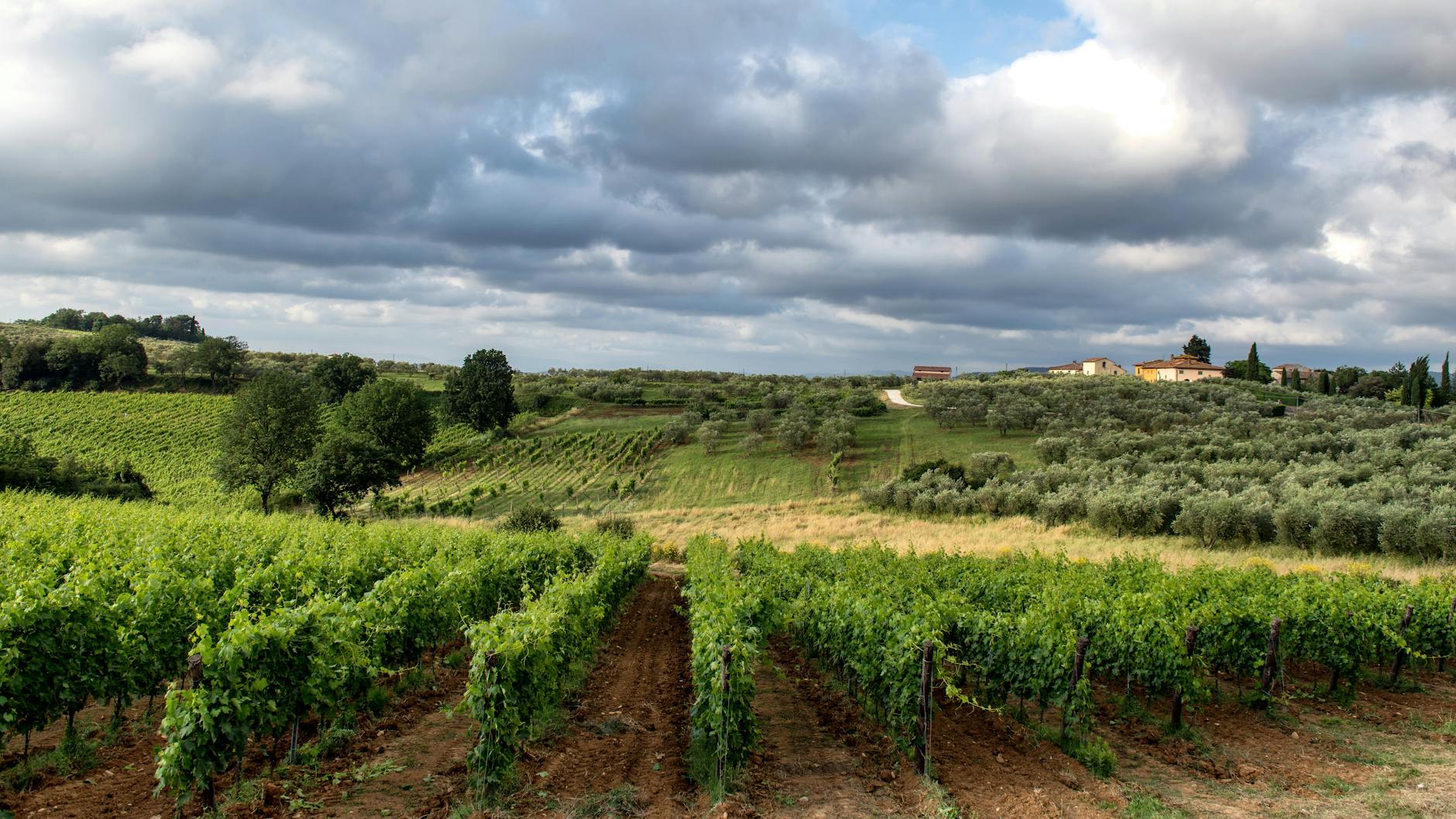
The wine landscape everyone pictures when they think of Tuscany. Chianti Classico is the historic core, demarcated in 1716; the broader Chianti zone spreads across seven sub-regions. It's touristy because it's genuinely beautiful — cypress trees, stone farmhouses, and rolling vineyards. Go in shoulder season if you can, and stay off the main road.
Why go
The definitive Tuscan wine landscape, between Florence and Siena, with the best tourism infrastructure of any Italian wine region.
The Field Guide take
Chianti is the defining landscape of Tuscany, a rolling expanse of hills, vineyards, and oak forests that has become the international shorthand for the Italian countryside. Situated between the cities of Florence and Siena, the region is divided into a complex hierarchy of production zones. While the name "Chianti" is applied to a broad area spanning several provinces, the historic core is Chianti Classico, a territory officially demarcated by the Grand Duke of Tuscany in 1716. It is a region shaped by centuries of viticulture, where the geography is as much a part of the traveler’s experience as the wine itself.
The place
The topography of Chianti is a series of ridges and valleys defined by the Greve, Pesa, and Elsa rivers. The region is characterized by medieval stone farmhouses, known as casali, and hilltop towns that historically served as defensive fortifications between the warring city-states of Florence and Siena.
Administratively, the region is fractured. Chianti Classico is the central zone, occupying the land between the two cities. Beyond this, there are seven distinct sub-zones, including Chianti Rufina, Colli Fiorentini, and Colli Senesi, each with specific geological and climatic characteristics. While the central Classico zone remains the most visited, the broader Chianti landscape extends into the provinces of Arezzo, Pisa, and Pistoia, meaning the "Chianti experience" varies significantly depending on whether you are near the densely populated tourist hubs or in the quieter, more remote stretches of the eastern hills.
The land and grapes
The backbone of all Chianti production is the Sangiovese grape. To qualify as Chianti, a wine must contain a minimum of 70% to 80% Sangiovese, depending on the specific sub-zone and classification.
The terroir is defined by two primary soil types: galestro, a crumbly, slate-like clay that provides excellent drainage and encourages deep root growth, and alberese, a hard limestone that helps the vines retain moisture during the hot, dry summers. The elevation ranges from 200 to 600 meters above sea level. Higher altitudes often yield grapes with higher acidity and more delicate aromatics, while lower-lying vineyards in the valleys tend to produce fuller, more structured wines. While many producers add small percentages of Canaiolo or Colorino—local red varieties—or international grapes like Merlot and Cabernet Sauvignon, the most traditional producers focus on the high-acid, high-tannin profiles that define pure Sangiovese.
The wines
The hierarchy of Chianti can be confusing, but it follows a clear path of quality designation. At the base is Chianti (or a sub-zone), which is typically meant for early consumption. Chianti Classico is produced within the historic demarcated zone and carries stricter regulations regarding yield and aging.
Within Chianti Classico, there are three tiers: Annata (the base level), Riserva (aged for at least 24 months), and Gran Selezione (introduced in 2014, requiring 30 months of aging and stricter vineyard selection). The wine itself is generally dry, medium-to-full-bodied, and marked by notes of tart cherry, dried herbs, and, with age, leather or tobacco. The high acidity and firm tannins make these wines particularly well-suited to the high-fat, high-protein nature of the regional cuisine.
Visiting
Chianti is the most accessible wine region in Italy, offering a density of wineries, hotels, and restaurants unmatched elsewhere in the country. However, this accessibility is a double-edged sword. In the peak months of July and August, the primary roads—specifically the SR222, known as the Chiantigiana—can experience significant traffic, and the most famous hilltop towns become crowded with day-trippers.
To avoid the heaviest concentration of tourists, prioritize the shoulder seasons of May, September, and October. When planning a visit, stay in the smaller villages rather than the larger towns like Greve or Castellina. Renting a car is essential, as public transportation in the rural zones is sporadic and poorly suited to visiting wineries. If you intend to visit specific estates, email them in advance; many of the smaller, family-run vineyards do not operate consistent walk-in tasting hours.
What to eat with it
Chianti is designed for the table. The region’s cuisine relies on simple, rustic preparations that prioritize ingredient quality over complexity.
The most iconic pairing is Bistecca alla Fiorentina, a thick, bone-in T-bone steak from the Chianina breed of cattle, grilled over wood coals and seasoned only with salt, pepper, and olive oil. Because the wine is naturally acidic, it cuts through the fat of the meat. Other staples include pappa al pomodoro (a tomato and bread soup), ribollita (a kale and bean vegetable soup thickened with stale bread), and pici—a thick, hand-rolled pasta served with either a wild boar (cinghiale) ragù or simple garlic and tomato sauce. Local pecorino from the nearby Pienza region is also standard, often served with chestnut honey.
What makes it worth going
The wine region between Florence and Siena — the most famous wine landscape in Italy, and the historic core of Italian wine tourism.
Things to do
- scenic_drive
The Chiantigiana (SR222)
The road from Florence to Siena through the Chianti hills — one of the best drives in Italy. Take it slow and stop in the villages.
half day to 1 day
- village
Greve, Castellina, Radda, Gaiole
The four historic Chianti towns. Greve is the hub; the other three are quieter and more charming.
1 day
- castle
Castello di Brolio
The estate where modern Chianti was born under Bettino Ricasoli. Vineyards, a castle, and a tasting room with a view over the Chianti hills.
half day
- experience
The Black Rooster (Gallo Nero) trail
Follow the consorzio's marked estates for the official Chianti Classico tastings — the seal that distinguishes the historic zone from broader Chianti.
1-2 days
Eat
- dish
Bistecca alla fiorentina
T-bone from Chianina beef, grilled over wood, served rare — the dish of the region. Order by the kilo for a group.
- dish
Ribollita
Bread and bean stew with cavolo nero — the peasant dish of Tuscany.
- dish
Crostini toscani
Toasted bread with chicken liver pâté — the starter of every traditional Tuscan meal.
- dish
Pappa al pomodoro
Bread and tomato soup — summer comfort food, thickened with stale bread.
Stay
- agriturismo
Countryside estate or agriturismo
The classic Chianti experience — a farmhouse among the vineyards between Greve and Castellina. Book a wine estate for tastings on site.
- base
Greve in Chianti
For convenience — the most services and the most tourists. Good for a single night, less so for atmosphere.
Experiences Worth Booking
Chianti Classico estate day
full dayTwo estate visits with cellar tours and Sangiovese tastings, lunch at a Chianti osteria
Chianti Classico is the most accessible serious wine region in Italy — many estates welcome walk-ins and offer English-language tastings. A guided day connects the best of them.
Suits: All levels
What's nearby & pairs with
More wine from Toscana
Wine Appellation
Brunello di Montalcino DOCG
100% Sangiovese from the hill town of Montalcino — Tuscany's most structured, age-worthy, and expensive red, from a small, strictly defined zone.
Wine Appellation
Chianti Classico DOCG
Sangiovese-based red from the original historic Chianti zone between Florence and Siena — the most famous wine landscape in Italy.
Wine Appellation
Bolgheri DOC
Coastal Tuscan appellation on the Bibbona plain — where Super Tuscans were born, with Bordeaux varieties that broke Italian wine rules and won.
Wine Appellation
Vino Nobile di Montepulciano DOCG
Sangiovese-based red from Montepulciano — the third of Tuscany's noble reds, often the best value.
Getting there & around
Train
Limited or no direct rail access.
Car
A car adds value here.Greve, Castellina, Radda, and Gaiole all have historic-center ZTLs. Park in the signed lots.
We don't publish real-time schedules. Confirm train times on Trenitalia or Italo, and check current ZTL boundaries locally.
Ready to plan?
Ready to turn discovery into a trip?
Italy Field Guide helps you decide where to go. When you're ready to build the actual day-by-day itinerary, take your saved places to Travel Itinerary Co — your interests go with you.
Turn your saved Italy places into a trip