The Verdict
The most beautiful mountains in the Alps — pale limestone spires, the 'Enrosadira' (the pink at sunset), the Sella Ronda ski circuit, and the rifugi. Worth a week for skiing or hiking; worth a few days for anyone.
Why go
For the pale limestone spires (the Sella, the Tre Cime, the Catinaccio), the 'Enrosadira' (the pink glow at sunset), and the Sella Ronda — the mountains of the Alps.
The Field Guide take
Limestone Spires and Alpine Culture
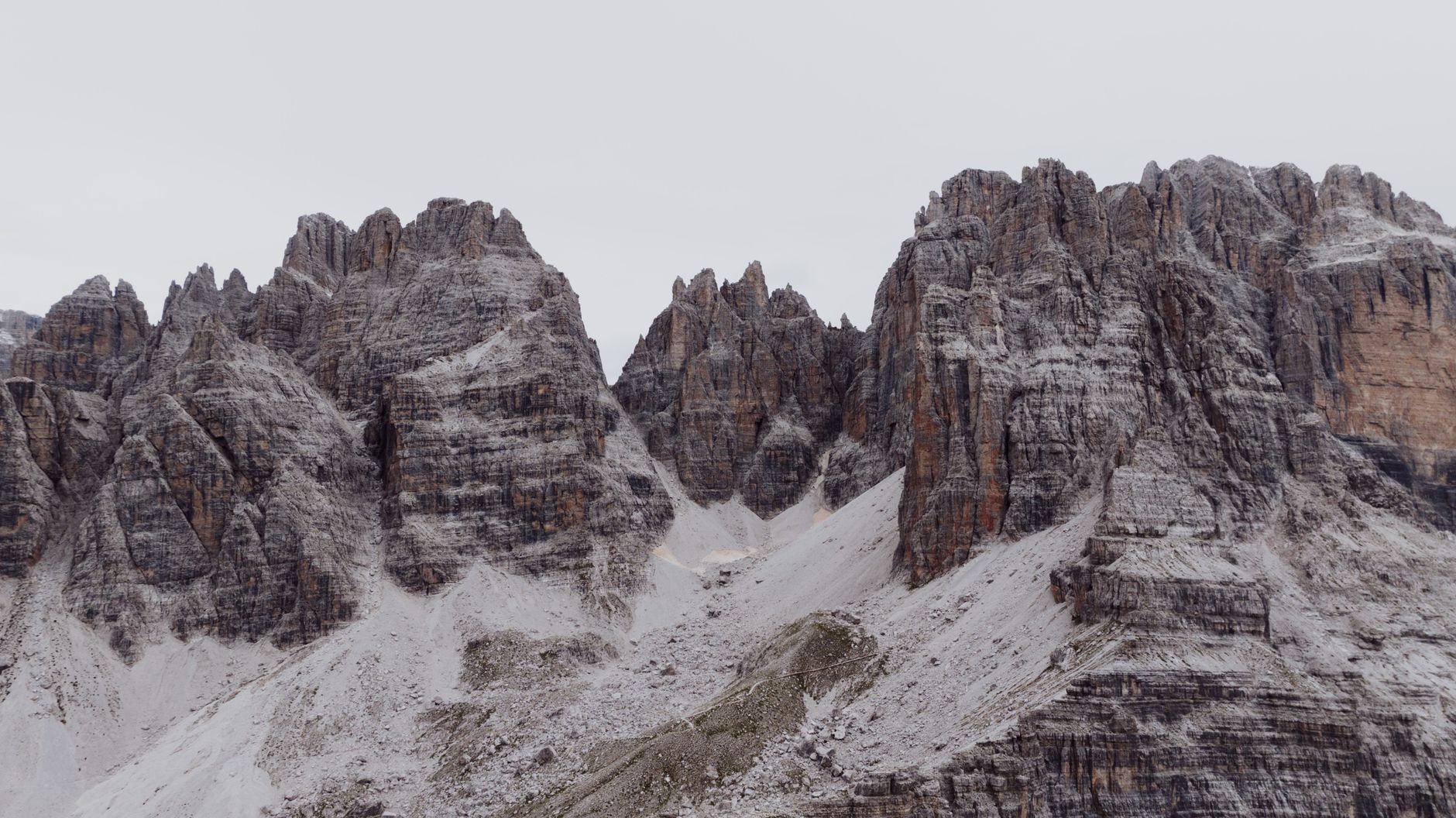
The Dolomites represent a distinct geological and cultural landscape in northeastern Italy. Spanning parts of Trentino-Alto Adige and Veneto, these mountains are composed of pale dolomite rock, which gives the peaks their characteristic craggy appearance and their habit of turning pink during the 'Enrosadira'—a sunset phenomenon caused by the mineral composition of the stone. This is not a single mountain, but a collection of massifs, including the Sella, the Catinaccio, and the Tre Cime di Lavaredo, connected by a network of valleys and high-altitude mountain huts known as rifugi.
Skiing and Hiking Infrastructure
What sets the Dolomites apart is the level of infrastructure integrated into the wilderness. The Sella Ronda, a circuit of lifts and runs, allows for massive movement across the mountain range, making it perhaps the most accessible high-alpine ski area in Europe. In the summer, this same infrastructure—cable cars and chairlifts—allows hikers to reach elevations that would otherwise take hours of difficult climbing. While this makes the mountains accessible to families and casual walkers, it also means that the areas directly surrounding the lift stations can be crowded during the peak of the July and August holiday season.
Finding Solitude
Despite the heavy development around the main hubs like Cortina d'Ampezzo or Ortisei, the Dolomites remain vast enough to offer solitude. The key is to move beyond the immediate radius of the cable cars. There are hundreds of kilometers of marked paths leading into the more remote valleys, where you can find older, simpler rifugi that offer basic accommodation and local food, such as polenta, speck, and mountain cheeses. The region is effectively bilingual; signs are in Italian and German, and the culture is a blend of Mediterranean and alpine traditions. If you are planning a trip, be aware that the mountains dictate the pace. Weather is the primary variable; even in mid-summer, temperatures can drop rapidly at night, and thunderstorms are frequent in the afternoon. Whether you are a skier or a summer hiker, the Dolomites are the standard-bearer for alpine landscapes in Italy, but they require a traveler who is comfortable adjusting plans based on the environment.
What makes it worth going
The UNESCO mountain range of the eastern Alps — pale limestone spires, alpine meadows, the Sella Ronda ski circuit, and the 'Enrosadira' (the pink sunset). The most beautiful mountains in the Alps.
Things to do
- scenic_drive
Sella Ronda (the ski circuit)
The 40km ski (or bike) circuit around the Sella massif, through four valleys (Val Badia, Val Gardena, Val di Fassa, Arabba) — the most famous ski tour in the world. The winter reason; the summer mountain-bike version is the other.
- mountain
Tre Cime di Lavaredo
The three iconic spires (the 'three peaks'), the most photographed in the Dolomites — the hike around (the 3 Cime circuit, 10km) is the classic. A UNESCO site.
- scenic_drive
The Great Dolomites Road (SS241)
The 110km road from Bolzano to Cortina (via the Carezza lake, the Fassa valley, the Pordoi pass), one of the great mountain drives. The summer reason; the way most travelers see the range.
Eat
- dish
Canederli (the dumplings)
The South Tyrolean bread dumplings, in broth or with butter and cheese — the alpine staple, the cross of Italian and Austrian.
- cured_meat
Speck & the South Tyrolean cured
The alpine cured, the juniper-and-smoke; the South Tyrol specialty.
Stay
- hotel
A rifugio or a hotel in a valley
Stay in a rifugio for the mountain, or a hotel in the valleys (Val Gardena, Val Badia, Cortina) for the resort. Book early for ski season and the summer peak.
Experiences Worth Booking
Rifugio dinner & overnight
full dayThe hike, the rifugio, the dinner, the night on the mountain. The alpine experience.
The Dolomites are a rifugio culture — the mountain huts with the food, the beds, and the sunrise over the spires. The overnight is the experience.
Suits: Hikers and mountain lovers.
What's nearby & pairs with
What to eat here
The regional specialties — not tonight's restaurant, the food worth understanding before you go.
Dish
Canederli
Canederli, or Knödel in the local German dialect, represent the culinary synthesis of the Alpine borderland between Italy and Austria. The dish emerged as a quintessential peasant solution to the problem of food waste in the mountainous Trentino-Alto Adige region, where the harsh climate made the preservation of bread critical. By soaking stale, hardened bread in milk and binding it with eggs, mountain families could create a filling, high-calorie meal from ingredients that would otherwise be discarded, extending the utility of their limited wheat supply. The dish serves as a culinary marker of the South Tyrol's unique identity, which shifted from Austro-Hungarian rule to Italian administration after World War I. While its roots are firmly rooted in the Germanic bread-dumpling tradition, it has been fully absorbed into the regional Italian lexicon. It is a dish born of scarcity and physical labor, designed specifically to provide the necessary fuel for life at high altitudes in towns such as Bolzano, Merano, and Bressanone.
Dish
Strudel di Mele
Apple strudel, or Apfelstrudel, is the signature pastry of the Trentino-Alto Adige region, a testament to the area's complex history as part of the Austro-Hungarian Empire until the end of World War I. While the dish is rooted in Central European culinary traditions—with roots tracing back to the Baklava brought to the region via Ottoman influence—it evolved in the Alpine valleys of South Tyrol into a distinct, localized staple. It represents the cultural synthesis of Germanic baking techniques and the abundant apple orchards that define the landscape of the Adige Valley. In towns like Bolzano, Merano, and Bressanone, the strudel is not merely an imported treat but a domestic foundation of the local diet. The preservation of this dish in Northern Italy highlights the resilience of Tyrolean identity, which maintains a clear culinary distance from the Mediterranean styles of central and southern Italy. It remains a primary example of how regional borders have historically mattered less than geographical and cultural continuity.
Cured Meat
Speck
Speck is a product of Trentino-Alto Adige, representing the intersection of Northern European smoking techniques and Italian dry-curing. Historically, it was created by farmers looking to preserve the family pig for the long Alpine winter. It carries the distinct smokiness of the North but maintains the elegant, silken texture of a prosciutto.
Local wine
All wine in Trentino-Alto Adige →Getting there & around
Train
Limited or no direct rail access.
Car
A car adds value here.The range is in three provinces; a car is the way (the Great Dolomites Road, the SS241). The Sella Ronda is by ski or bike. The towns are walkable.
We don't publish real-time schedules. Confirm train times on Trenitalia or Italo, and check current ZTL boundaries locally.
Ready to plan?
Ready to turn discovery into a trip?
Italy Field Guide helps you decide where to go. When you're ready to build the actual day-by-day itinerary, take your saved places to Travel Itinerary Co — your interests go with you.
Turn your saved Italy places into a trip